My name is Arbel Yehoud. I am 30 years old, born and raised in Kibbutz Nir Oz. My partner, Ariel Cunio, is 28 years old and grew up in the same community in southern Israel. Within this modest settlement, we lived just a few steps apart, unknowingly preparing for a future where survival would define our lives.
SCHOLAR CHALLENGES MS RACHEL’S GAZA MESSAGING AS ANTISEMITISM SURGES GLOBALLY
On October 7, 2023, our lives were irrevocably changed when Hamas terrorists kidnapped us from our home. I was held captive for 482 days, while Ariel endured 738 days in captivity. Though we were taken together, we were separated just hours later.
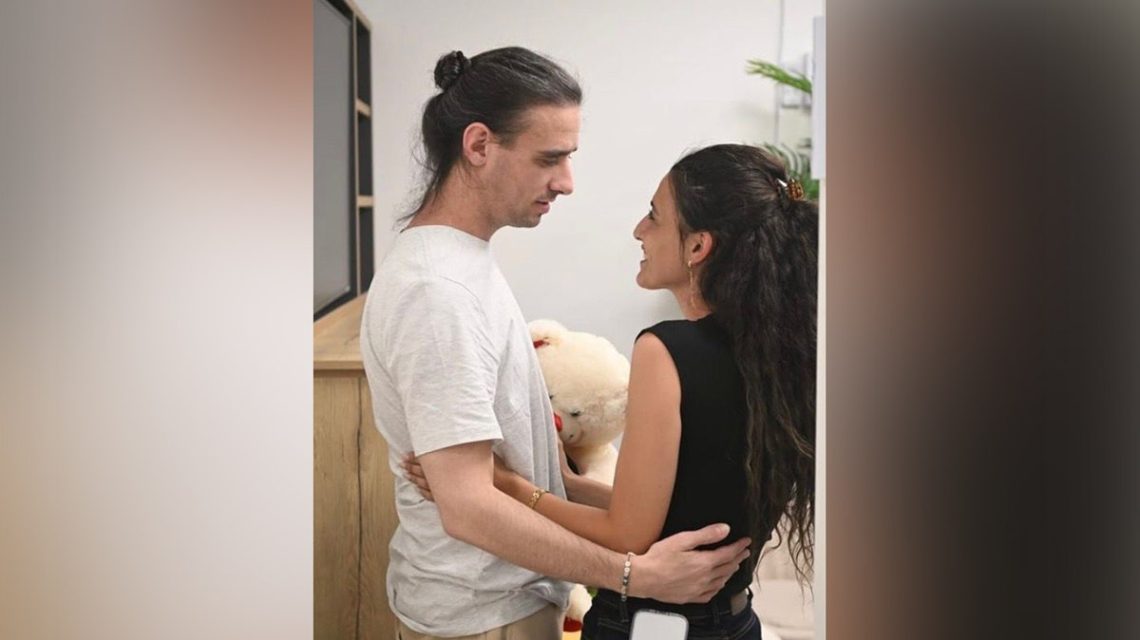
Throughout those excruciating days, love became our guiding light. It wasn’t certainty, strength, or abstract hope that carried us through; it was the profound connection we shared. Ariel and Arbel reunite on the day of Ariel’s release.
(Israel Government Press Office)
Growing up together offered us a familiar comfort. Our parents were neighbors and dear friends. Love blossomed between us quietly and unexpectedly. Initially, it was a relationship we guarded, especially since Ariel was preparing for an extended trip abroad. Despite the physical distance, our bond only deepened. Upon Ariel’s return, it was clear that we wanted to spend our lives together.
We settled into a humble home on the kibbutz, establishing a simple, joyful routine filled with shared meals, living room dances, and leisurely countryside walks. We often imagined a future with children and family, all rooted in the same place where we once played as children. In early October 2023, we adopted a puppy named Murph. Our lives felt full and peaceful.
Yet, on October 7, our peaceful lives shattered. Hamas terrorists attacked Israel, violently impacting civilians, including women, children, and the elderly. (Israel Defense Forces via AP)
At the first sound of sirens, we were jolted awake. Initially, we hoped the gunfire outside was the army’s doing. We secured ourselves inside, but as Arabic voices approached, fear tightened its grip on us. Our front door was violently breached, forcing us into hiding beneath the bed. The terrorists found us, executed our dog right before our eyes, and brutally beat us, breaking our ribs and dragging us out into a nightmare.
Our world crumbled as we passed Ariel’s brother’s burning home, unsure of his family’s fate. We were transported via motorcycle, violently interrogated in Gaza, and within three hours of our kidnapping, we were forcibly separated. Our screams echoed, but no farewells were exchanged. Left in solitude, we wondered if we would ever reunite.
SIGN UP FOR ANTISEMITISM EXPOSED NEWSLETTER
In captivity, each of us faced inhumane conditions characterized by hunger, fear, humiliation, and an omnipresent threat. We endured days void of sunlight and hope, without knowledge of our loved ones’ safety or each other’s survival. The profound loneliness was the hardest to endure, as we battled despair and terror, uncertain if survival was possible.
During those darkest times, memories offered solace. In our minds, we clung to each other. I kept a notebook filled with dreams of our future—sketches of our wedding, visions of family life—that eventually reached Ariel. It became his lifeline, a testament that someone awaited him.
At our lowest points, both of us faced thoughts of ending our lives. Yet, we found strength in the same place—the knowledge that losing either of us would mean the other’s demise. Scenes of chaos in Khan Younis, as hostages Gadi Moses and Arbel Yehoud were forced to walk on foot through a Palestinian mob to waiting Red Cross vehicles on Jan. 30, 2025.
(Majdi Fathi/TPS-IL)
Upon my release after 482 days, freedom felt alien. Ariel remained a captive, and the guilt weighed heavily. The ability to experience light and air, to feel safe while he was not, was agonizing. I embarked on a relentless mission to advocate for his release, traversing the globe to share our story and seek allies.
In time, against all odds, Ariel was released after 738 days. Our reunion was bittersweet. We had no home to return to; the kibbutz where we imagined our future had been devastated. Roughly a quarter of our kibbutz were murdered or kidnapped that horrific Saturday
. What once was our community lay in ruins. Yet, we stand together, determined.
Despite everything, we have each other, and our resilience defines us as we begin anew.
Ariel Cunio and his girlfriend Arbel Yehoud. After 482 days, Arbel was finally freed in February’s hostages-for-prisoners exchange. (Cunio family)
 A Shifting Political Landscape: The Decline of Autocratic Power
  Trump Delivers Warning to Iran, Cuba at UN General Assembly
  Lukashenko and Putin’s Unique Relationship and Belarus’ Strategic Role
  Alan Ritchson Faces Backlash Over Political Remarks
  Himalayan Pilgrimage: A Couple’s Narrow Escape and Lingering Questions
  Former CEO Sentenced for Bank Fraud and Sanctions Evasion