
As told to Aditi Bharade, this article is based on a conversation with Kunal Bahl, cofounder of the Indian companies AceVector Limited and Titan Capital. It has been edited for length and clarity.
The Beginning of an Entrepreneurial Path
Kunal Bahl always had entrepreneurship in mind. When his H-1B visa application was denied, it accelerated his journey. Bahl grew up in New Delhi and pursued a blended engineering and business program at the University of Pennsylvania in the US. During his college years, the tech world experienced significant developments, with Google going public and Facebook gaining immense popularity by 2006, the year he graduated.
The internet economy was booming. Despite having numerous business ideas, Bahl realized he couldn’t launch a company due to his visa status. On an F-1 visa, he needed an employer to sponsor an H-1B visa to potentially create a startup in Silicon Valley. After interning at Microsoft as a junior, he returned in 2006 for a full-time position.
A Turning Point: Visa Rejection
While awaiting his H-1B visa selection, Bahl watched the days pass until his Optional Practical Training period expired. In June or July of 2007, he received the unexpected news: his H-1B visa petition was rejected. It was a shock. Working at Microsoft, he hadn’t imagined his visa would be denied. Even Microsoft suggested he work in their India office and reapply for the H-1B after a year.
This situation forced Bahl to consider returning to India. Upon deciding to go back, he resolved to work for himself rather than for Microsoft.
The Birth of a Startup
Liberated from visa concerns, Bahl reached out to his high school friend Rohit Bansal with whom he had often discussed starting a business. Bansal agreed to partner with him. They officially incorporated their company on September 12, 2007, just before Bahl returned to India.
Challenges of the 2007 Startup Scene in India
The startup ecosystem in India was not as vibrant then as it is today. In 2007, internet users and smartphones were scarce, and digital payments were uncommon. Launching a startup invited skepticism. People questioned their decision to start a business instead of seeking employment.
Their initial venture was a physical coupon book business, catering to India’s love for value. Raising funds posed difficulties due to the lack of angel investors. Both partners pooled their savings of roughly $60,000 as seed capital, residing with family to save on living costs. Working from a small office in a residential building’s basement, they labored tirelessly, often facing complaints from neighbors about late work hours.
Over time, their company evolved from an online coupon platform to Snapdeal, one of India’s pioneering e-commerce platforms. They have now launched two publicly listed companies branching from the initial business. Bahl and Bansal aimed to contribute to India’s startup ecosystem by establishing Titan Capital in 2011 to invest in early-stage startups.
Embracing India’s Transformation
Kunal Bahl reflects on his visa denial as a blessing in disguise. It was part of a journey to return to India and support upcoming entrepreneurs. His return was relatively easy, given that he was unmarried and without children, unlike others with family dependencies in the US.
Today, India presents vast opportunities. The country boasts a billion internet users, widespread smartphone use, and numerous coworking spaces for startups. A robust funding environment and government support for technology startups make it an ideal time for returning to India.
 Neuralink’s Impact on Brain-Computer Interfaces
 AI Companies Pioneering Workforce Transformation
 Ecovacs Deebot X12S OmniCyclone: Effective Cleaning for Holiday Preparations
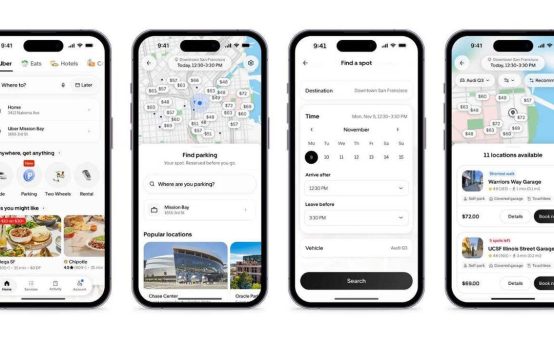 Uber Introduces Reservation Feature for Parking
 AI and the Potential for Prolonged Life According to Nick Bostrom
 Eccentric Leaders of AI Giant Anthropic and Their Upcoming IPO