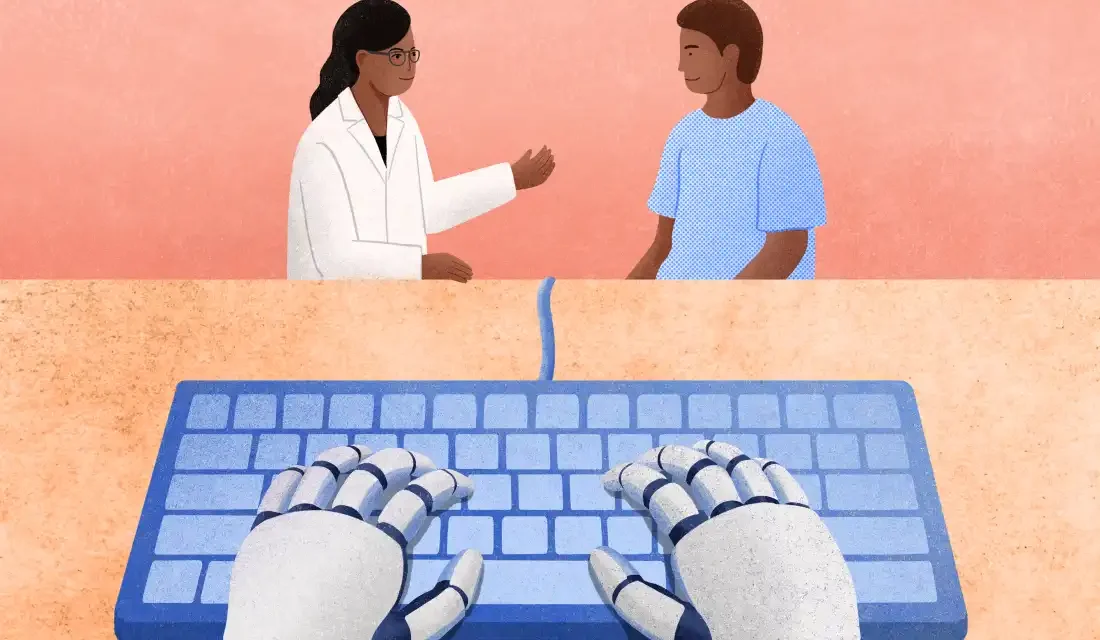
Dr. Mara Gordon, a family physician in Camden, NJ, regularly answers health questions for NPR. Patients often express concern about the use of artificial intelligence (AI) in medical practices. One common question involves the use of AI scribes during office visits and the privacy implications of such technology.
Understanding AI Scribes
AI scribes have become widely used in various medical settings, including gynecologists’ offices and emergency rooms. The technology employs automatic speech recognition to document doctor-patient conversations. Physicians use smartphone apps to record these interactions, which the AI then transcribes into preliminary medical notes. This process allows doctors to focus more on patient interaction rather than note-taking.
Despite the convenience, patients and physicians alike worry about privacy and the impact on the doctor-patient relationship. Concerns exist about possible pressure from corporate health systems to use any time saved for seeing more patients. Some physicians also fear that AI might eventually replace human jobs.
Privacy Concerns with AI Scribes
When using AI scribes, recordings do not stay on personal devices. They upload to a HIPAA-compliant cloud where they are transcribed before being securely deleted. HIPAA compliance ensures that all data is protected and companies are held accountable for any potential data breaches.
Potential for Errors
AI scribes, while helpful, can make critical errors. For instance, a simple misinterpretation of statements can have serious medical consequences. Dr. Eileen Kim, an assistant professor of internal medicine at UC San Diego, emphasizes that overburdened doctors may not always catch these mistakes before they propagate throughout medical records. Ultimately, physicians remain responsible for reviewing AI-generated notes before integrating them into patient records.
Health Equity Implications
AI scribes predominantly support English-speaking patients, raising concerns about unequal access to the technology. This limitation might contribute to existing health disparities. Patients may either find comfort in the AI scribe allowing for better interaction or feel apprehensive about privacy, potentially affecting their willingness to discuss sensitive issues.
Recordings Beyond Scribing
Currently, recordings from AI scribes do not serve purposes other than scribing, unless part of a research study. These recordings could potentially help assess AI output quality or study patient-doctor interactions, but widespread analysis of regular appointments remains uncommon.
Opting Out of AI Scribes
Patients can choose not to use AI scribes by informing their physicians, who would then revert to traditional note-taking methods. However, completely avoiding AI in healthcare is challenging due to its integration in billing, clinical decision-making, and diagnostic tools.
Will AI Replace Doctors?
While AI might alter the primary care experience, experts like Dr. Kim believe that human intelligence remains essential. AI can mimic human interaction, but it lacks the emotional intelligence and relational aptitude vital to effective medicine. The doctor-patient relationship’s foundational role in medical care cannot be substituted by technology.
Dr. Mara Gordon continues to contemplate the role of AI scribes in enhancing or hindering healthcare delivery. At the heart of her practice lies the irreplaceable connection she fosters with her patients.
 Trump Gives Unexpected Push to El-Sayed’s Universal Health Care Proposal
 Christina Applegate Raises Concerns About Breast Implants and MS Symptoms
 Challenges for the U.S. Power Grid: Transformer Shortages Looming
 Concerns Rise Over Tear Gas and Reproductive Health in France
 Handling Identity Theft and Cybersecurity Breaches
 Protests Rise in Spain Against Data Center Expansion