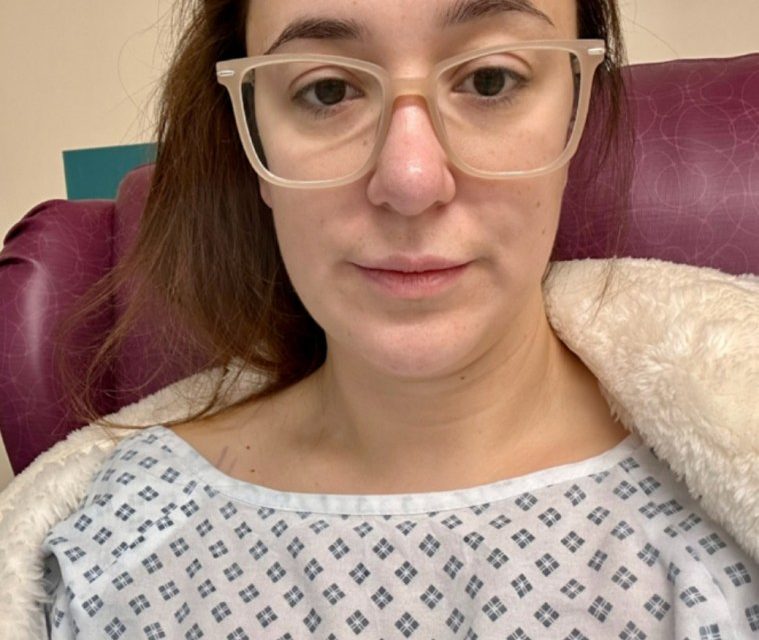
Maxine White, at 34, discovered she had breast cancer after noticing a subtle lump. She attributes this life-changing discovery to the period-tracking app, Natural Cycles. Designed to plan or prevent pregnancy, the app also prompted her to check her breasts, ultimately leading to her diagnosis.
This app determines a user’s cycle phase using daily temperature readings and manual symptom logging. Maxine, from Northern England, shared with The Post, “A notification from the app would say, ‘Now is a good time to check your breasts,’ and that was news to me.” She recognized something unusual in her body and insisted on medical evaluation.
Despite initial skepticism from her doctor, Maxine persisted, leading to an ultrasound, mammogram, and biopsy. Eventually, a diagnosis confirmed stage 2 breast cancer, later downgraded to stage 1, which hadn’t spread to her lymph nodes. A lumpectomy followed, with a radioactive seed used to locate the small tumor. By catching it early, Maxine avoided chemotherapy and only underwent radiation.
Maxine’s vigilance, aided by her app, made a significant difference. Early detection spared her chemotherapy, and she now takes tamoxifen while managing potential future pregnancies by freezing her eggs.
Many use period-tracking apps for fertility and symptom management, highlighting their wider benefits.
An Ohio State University study reveals that nearly half of American women use such apps. Grace Lemire, 27, from Florida, found her app crucial in understanding chronic gynecological issues. Severe pain led to her seeking multiple medical opinions. Eventually, tracking symptoms using Natural Cycles helped her present persuasive evidence of her condition.
Despite consulting multiple specialists, Grace’s self-tracked data led to a diagnosis of endometriosis. It took twelve years for confirmation. Surgery, the gold standard for diagnosing this condition, revealed several lesions. Dr. Stephanie Kuku emphasizes that these apps empower women to present compelling personal health data to doctors.
Users find value in cycle-tracking apps beyond predicting periods.
Emmi Stead, 40, from the UK, uses an Oura ring to track her cycle, aiding her adenomyosis management. This condition involves uterine tissue growing into the muscular wall, causing pain and heavy bleeding. Cycle tracking helps her understand symptoms linked to her menstrual cycle stages.
These apps allow users to connect complex health insights and habits, enhancing personal understanding. Diana Laird of UCSF notes that while such insights are valuable, they don’t replace professional medical care. Patients, however, can use their observations to foster productive medical dialogues.
Emmi’s app use grants her mental control, preparing her for the physical challenges of her condition. Dr. Kuku asserts that while these tools enrich understanding, they must be used in conjunction with expert medical advice.
 Protests Rise in Spain Against Data Center Expansion
 Managing Holidays While on GLP-1 Medications
 Highlights from Recent News Stories
 DEA Dismantles First U.S. Large-Scale Nitazene Lab
 Lego Fortnite Supply Llama: A Tween’s Dream Gift with Huge Savings
 Jensen Huang’s Controversy Highlights Challenges for Corporate America