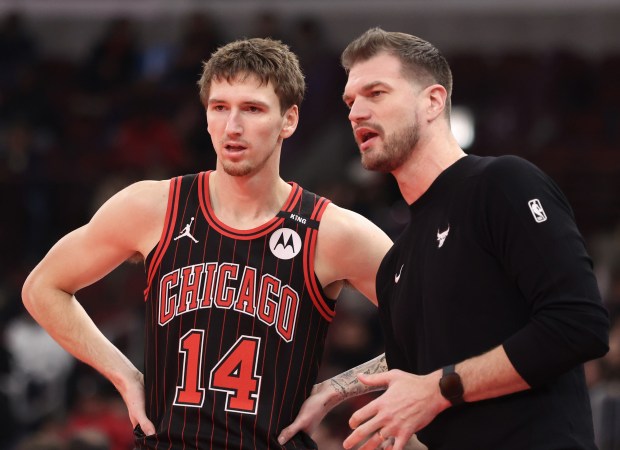
Matas Buzelis and Josh Giddey could only watch as Norman Powell lofted a floater, leaving the Chicago Bulls one final chance in Friday’s loss against the Washington Wizards at the United Center. The Bulls managed to reduce an 11-point deficit to a single possession, creating an opportunity to win or tie in the last minute. For Buzelis and Giddey, delivering in such clutch moments is something they aspire to achieve. However, they were absent during the critical final minutes of the tightly contested game. Both players exited the game 3 minutes and 59 seconds into the fourth quarter, not to return.
Coach Tiago Splitter provided a straightforward reason for his decision, stating, “I thought they didn’t have a good game.” This isn’t a new scenario for either player. In Game 2 of the season, Buzelis was benched for the entire fourth quarter, with Isaac Okoro playing instead. Similarly, Giddey was pulled early in the fourth quarter during a loss to the Cleveland Cavaliers.
Fifteen games into the season, forming a definitive opinion about the Bulls under Splitter can be challenging. Yet, the decision to exclude these young starters from late-game situations is a concern. Are these standard growing pains under a new coach, or is there a larger issue with the playability of these players? Splitter acknowledged the dual nature of the issue, “I’m concerned. And that’s something we’ve got to get better and learn from.”
On Friday, turnovers were a clear problem. Giddey turned over the ball on the first play of the second half, followed by Buzelis being intercepted by AJ Dybantsa. These mistakes allowed the Wizards to initiate a 9-0 run, overturning the eight-point lead the Bulls held at halftime. Despite not committing further turnovers that quarter, neither player could effectively counter the Wizards’ defense.
Splitter’s decision to bench them was a direct response to their poor performance in the third quarter. However, the reasons delve deeper. Despite needing improved defense and playmaking, Splitter continues to start Giddey and Buzelis but has not guaranteed them spots in the closing rotation. This situation should raise concerns among the Bulls front office.
Buzelis and Giddey represent the future for the Bulls, but progression hinges on their ability to secure late-game minutes. Despite needing improvements in tactics and technique, Splitter often points to mentality as a significant issue. “Even if shots aren’t falling, we must keep playing the right way,” said Splitter. “If you miss a few shots without playing correctly, you must learn from it, watch film, and improve.”
Giddey, regardless of the coach, never contested a benching in Chicago. He experienced a similar situation during a November 2024 game against the Cavaliers, where his defensive weaknesses were exploited. Although he’s tried to improve defensively, combining lackluster defense with turnovers renders him a potential liability.
Giddey is open about his performance issues, often self-criticizing after games. After the Cleveland benching, he admitted, “I wouldn’t have played myself in the fourth quarter either and probably shouldn’t be a point guard if I can’t handle the ball better.” Despite this awareness, inefficiencies persist during bad games.
Buzelis’ issues are more nuanced. He isn’t a notably weak defender, though he struggles at times, particularly when required to guard smaller players while playing alongside larger forwards. Despite shooting 37.7% from 3-point range, his performance drops in the second half. Buzelis frequently exits the locker room flat in the third quarter, echoing a broader problem for the Bulls this season.
His most significant challenges arise when handling the ball. This season, Buzelis faces more ball-handling duties, often leading to errors. Opposing defenses put pressure at half-court, disrupting both Giddey and Buzelis. Buzelis averages 2.6 turnovers per game without an increase in assists, marked at two per game. These mistakes often heighten as games progress into crucial stages.
Both players display their frustration after poor performances, especially following defeats. When the Bulls lost to the Spurs, Buzelis openly expressed his regret, feeling “that he lost the game for the Bulls.” Their ability to accept criticism contributes to their reputations as coachable players, yet the core issue remains unsolved.
For the Bulls, progress is essential beyond verbal acknowledgment. Until Buzelis and Giddey demonstrate reliability in closing games, the future of this rebuild remains uncertain.
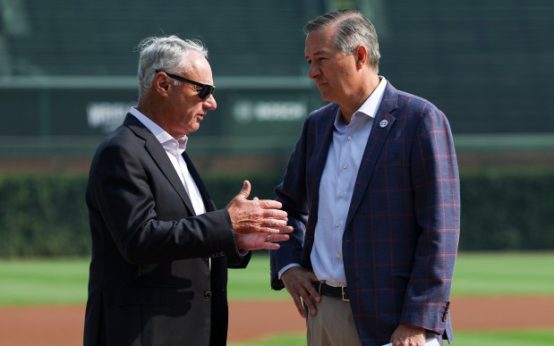 Shohei Ohtani’s Landmark Deal and MLB’s Impending Lockout
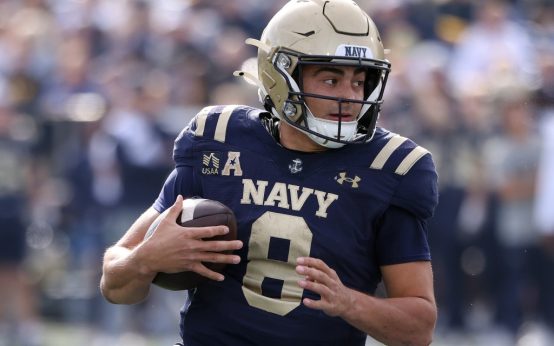 Army-Navy Football Rivalry Ignites with Prank Ahead of Annual Game
 Deaf Student-Athlete Kaleb Phifer Secures College Football Scholarships
 Tennessee Titans’ Jaylen Harrell Hospitalized After Serious Car Crash
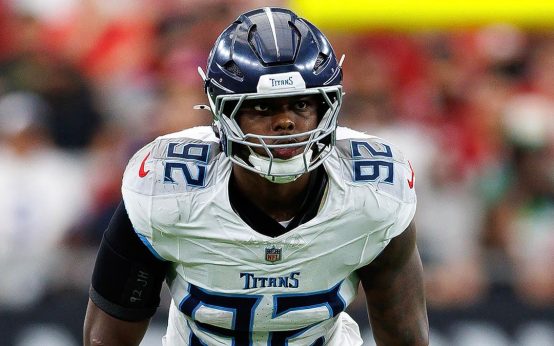 Tennessee Titans’ Jaylen Harrell Hospitalized After Car Accident
 Tyler Lundblade: Shooting Star with a Purpose