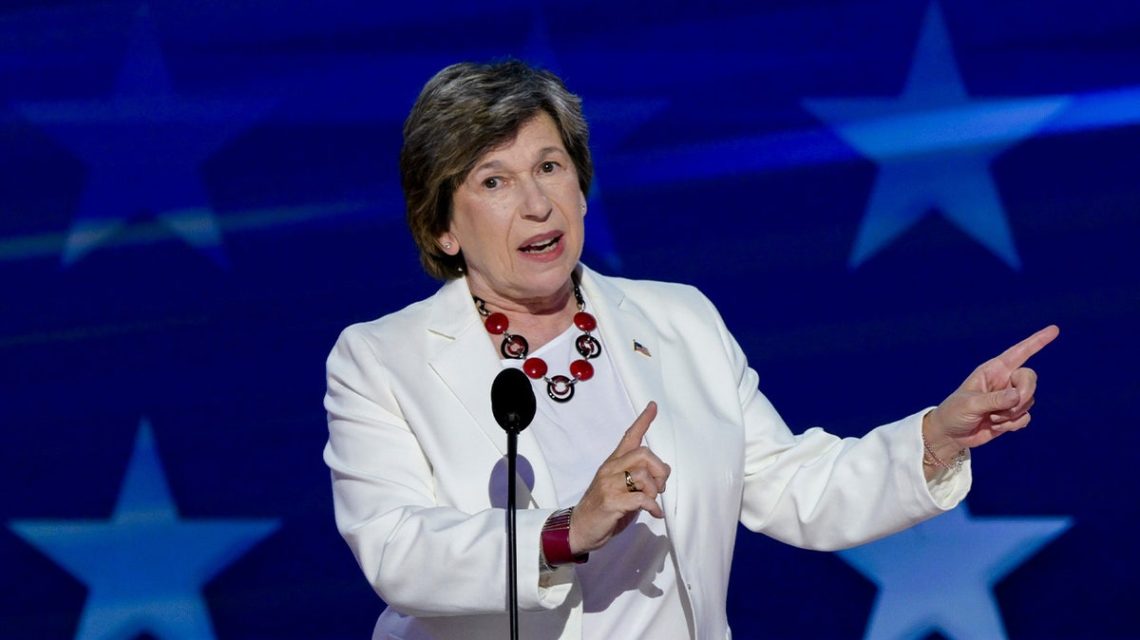
Randi Weingarten, head of a major teachers union, argues that Republicans lost ground in the midterm elections due to their stance on school choice. She suggests that voters rejected the privatization agenda and culture wars associated with the far-right. However, data on school choice in Texas challenges this narrative.
Texas Democrat Governor-elect Gina Hinojosa criticized school choice by referring to it as the “Texas voucher scam” during her victory speech. Despite campaigning on making education more affordable, Texas Democrats plan to remove scholarships from over 100,000 mainly low-income students. Ironically, many of the Democratic Senate cosponsors either attended or sent their children to private schools themselves.
The popularity of the program discredits claims of a backlash. In the first year, over 274,000 students applied for Texas Education Freedom Accounts, and more than 100,000 received funding, with many remaining on a waitlist due to funding shortages.
NBC exit polls from 2022 and 2026 indicate that Governor Greg Abbott maintained strong support among rural voters, with a vote share of 64-66%. If school choice had negatively impacted Abbott, such support would likely have decreased, yet it remained stable.
Local issues such as the economy and immigration ranked higher than education for Texas voters. Although over 20 seats in the Texas House switched from Republican to Democrat, only one switch occurred in the 30 most rural districts, hinting at the complex dynamics of voter priorities.
Texas voters significantly rejected nearly $7 billion in additional funding for public schools. Instead, they approved a measure to increase the homestead exemption from school district property taxes, suggesting a preference for reduced local tax burdens.
An October poll from the University of Texas at Austin found equal trust between the gubernatorial candidates on public education. Historically, Democrats enjoyed a double-digit advantage. The University of Houston poll indicates that 69% of voters in Texas support universal education savings accounts, while a University of Texas at Tyler poll shows 60% support for school choice.
Republican support for school choice is strong, with 88% backing it in the 2022 primary ballot. Anti-school-choice incumbent Glenn Rogers lost his primary by 27 points in 2024, highlighting the unpopular stance against school choice in elections.
Opponents of school choice often argue it harms rural communities. Contrary to this, the expansion of school choice provides families with alternatives if traditional district schools do not meet their needs. Programs in states like Maine and Vermont have offered educational options in rural areas since the late 1800s. These long-standing programs illustrate the value of increasing education choices, rather than limiting them.
Nationwide, changes in Senate seats in Mississippi and Alaska to Democrats occurred despite the absence of a universal school-choice program, indicating broader political shifts.
The evidence suggests that supporting school choice does not harm political success. In fact, it could bolster support as families fight to retain choice once provided. Attempting to withdraw these opportunities might hold political risks for those in power.
 Allegations of Anti-Jewish Discrimination at CUNY School
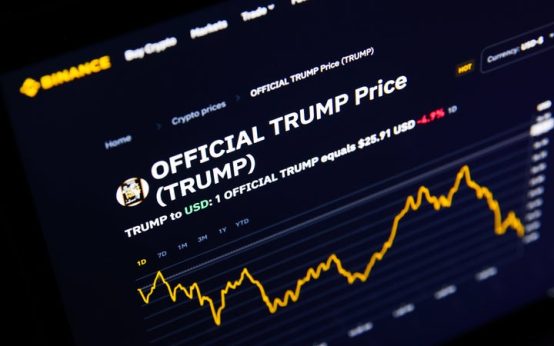 Trump’s Cryptocurrency Ventures and Their Impact on Supporters
 Deaf Student-Athlete Kaleb Phifer Secures College Football Scholarships
 Amy Klobuchar’s Challenge as Minnesota Governor
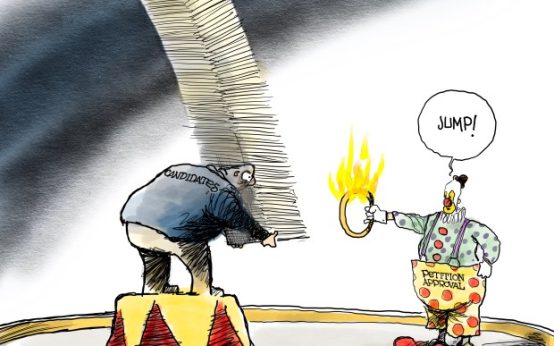 The Purpose and Challenges of Signature Collection for Political Candidates in Illinois
 Gray Wolves Stir Controversy Over Wildlife Management