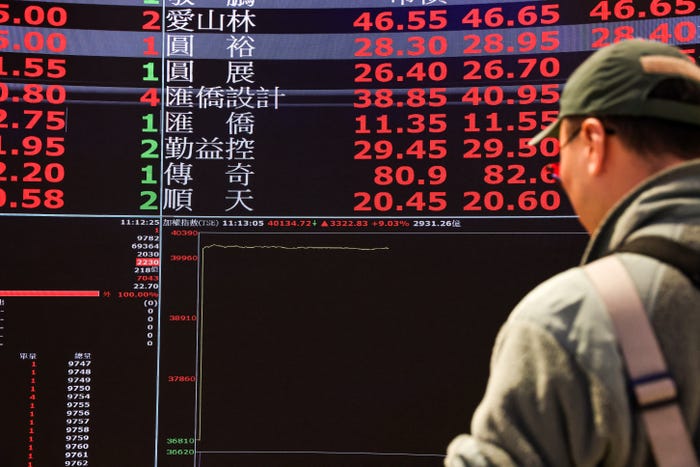
Asian technology stocks experienced a significant downturn on Wednesday, following a brief rally triggered by Jensen Huang’s return to Nvidia. The initial optimism quickly dissipated. South Korea’s Kospi index saw a decline of up to 6%, while Taiwan’s Taiex plummeted by 9%. Japan’s Nikkei 225 registered a 4% drop.
The losses were pronounced among companies involved in the global AI industry. Notably, South Korean memory-chip giants Samsung Electronics and SK Hynix each faced a 10% decrease. In Japan, chipmaker Kioxia experienced a substantial 16% drop. Chip-testing equipment manufacturer Advantest was down by 15%, with Tokyo Electron and SoftBank Group also facing significant declines.
SoftBank Group, a major Japanese technology investor heavily involved in AI through investments like OpenAI and holding a substantial share in chip designer Arm, saw its shares fall by up to 17%, hitting a 52-week low. The company’s shares have decreased by nearly 70% since their peak in June, driven by investor concerns regarding the financial risks and potential returns of its extensive AI investments.
Taiwan Semiconductor Manufacturing Company (TSMC), a key partner for Nvidia’s chip production, dropped about 9%. This downturn followed an initial surge on Tuesday, when Huang’s return as Nvidia’s CEO caused Taiwan’s benchmark index to rise by 9%, with TSMC reaching its daily price limit. South Korean stocks also witnessed a temporary surge that activated automated buy order restrictions.
The renewed decline in stock prices followed a challenging session for US chipmakers. Nvidia saw a 6% drop on Tuesday after a previous 30% surge. The Philadelphia Semiconductor Index fell by 8%, and the Nasdaq Composite decreased by 1%. Analysts suggest the selling may be due to profit-taking after the sharp rally, with no new catalyst evident.
Joe Mazzola, a trading strategist at Charles Schwab, commented that a single strong day in the market does not necessarily signal a bottom. Markets are still pricing in expectations for a potential Federal Reserve rate hike in the coming month.
Investors continue to navigate unresolved political risks associated with AI, including tighter chip-export controls and potential limits on data-center development. Huang is set to testify before the US Senate Banking Committee on December 3 regarding these export controls amidst increasing scrutiny from Congress. Macquarie Group strategists noted that Huang’s return hasn’t eliminated the political uncertainties surrounding AI.
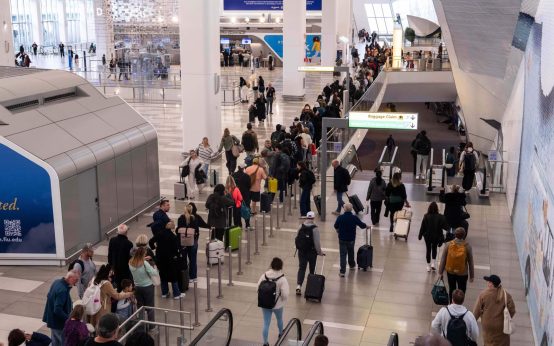 FAA Implements New Staffing Rule for LUAW Operations
 Tidal’s New Policy Bans AI-Generated Music
 Jensen Huang Retains Security Clearance Amid Scrutiny
 Upgrade Your Audio Experience with Apple AirPods Pro 3
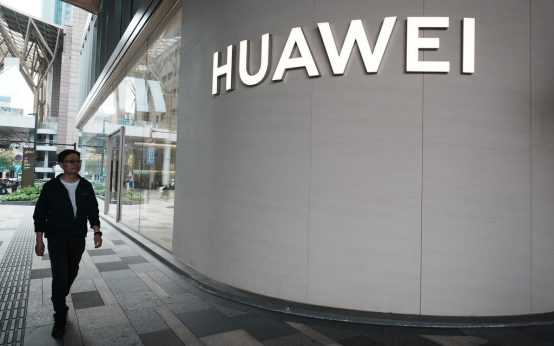 Huawei Convicted of Trade Secret Theft and Deception
 Pentagon Considers $15 Billion Loan to Startup Linked to Trump Jr.