Community Misunderstanding and Action
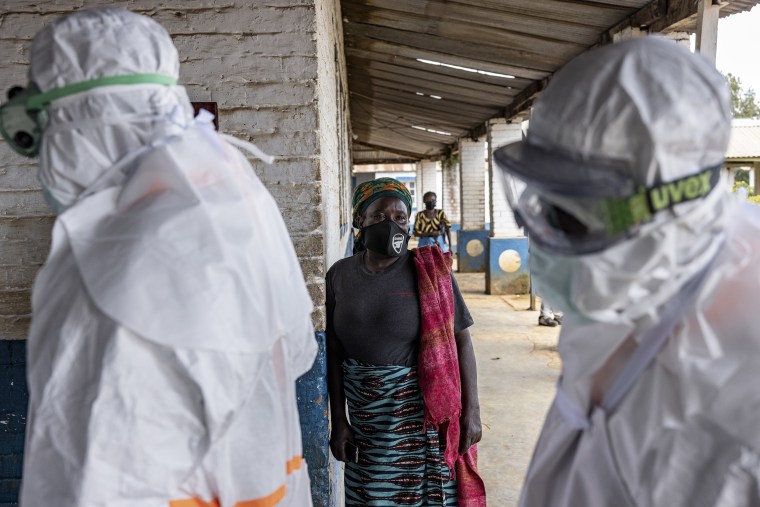
Rose Tchwenko shares her experience with one of the early Ebola cases during the current outbreak in the Democratic Republic of the Congo. A healthcare worker was affected, but instead of accessing medical facilities, he sought help from his family. Tchwenko, who serves as the Congo country director for Mercy Corps, notes that the family initially attributed the disease to traditional beliefs or witchcraft. The illness was managed mostly within the family, involving caregivers and community figures.
The healthcare worker’s death followed, with a traditional burial likely increasing the spread of the virus. Additionally, his wife became infected. Tchwenko highlights persistent misinformation about Ebola and distrust towards humanitarian efforts.
Further complicating matters, in Rwampara, protesters set hospital tents ablaze after being denied the return of their deceased relative’s body for burial. Ebola bodies remain contagious for days, and traditional preparation for funerals accelerates the virus’s transmission.
Current State of the Outbreak
Healthcare teams in Congo face multiple challenges due to the uncontained Ebola outbreak, which has rapidly worsened. The World Health Organization reported 750 cases and 177 fatalities by Friday. Although Congo has experienced 17 outbreaks, this one shows potential to become the most severe. Ebola attacks the body’s immune system, organs, and blood vessels, leading to multi-organ failure.
Ky Luu, from International Medical Corps, warns of the outbreak’s severity. The usual rapid detection of cases was absent, and the virus went undetected for weeks. Standard testing returned negative results despite deaths, unable to detect the rare Bundibugyo strain responsible for the current outbreak, explains Alan Gonzalez from Médecins Sans Frontières. The more prevalent Zaire strain was detected, delaying identification of Bundibugyo.
Diagnostic and Treatment Hurdles
Testing now occurs in Kinshasa, slowing result delivery due to distance. Gonzalez explains the delay limits quick diagnosis. While suspected cases enter isolation immediately, no vaccines or therapeutics exist for Bundibugyo, restricting transmission control strategies.
Unlike Zaire strain outbreaks manageable through ring vaccination, options are limited. Luu draws parallels to the West Africa outbreak from 2014-2016, emphasizing the absence of authorized vaccines leaves responders reliant on basic Ebola control methods.
Response teams prioritize contact tracing, patient isolation, and infection control. Inadequate isolation space has emerged as another obstacle, forcing improvisation in Bunia. With escalating cases and logistical issues, response teams work urgently to halt the spread.
International Response and Local Efforts
The U.S. State Department pledged $23 million in foreign aid, supporting organizations like the International Medical Corps in deploying rapid response teams and creating new treatment facilities. Locally sourcing supplies like gowns, gloves, and chlorine becomes necessary amidst fast-paced efforts.
Resources remain insufficient, according to Greg Ramm from Save the Children. Budget cuts in humanitarian aid contribute to inadequate disinfectants and protective gear, limiting health centers and community health workers.
Obstacles in Conflict Zones
The outbreak’s epicenter in a conflict zone further complicates response. Rebel and government control divides regions, with 100 armed groups present. Luu notes these conditions hinder access, surveillance, and logistics, compounded by remote, densely populated areas and prolonged conflict.
 Potential Changes in Medicare Reimbursement for Lab Tests
  Understanding and Addressing the Complexity of Suicide
  Recall of Meat Products from Star Meat Delivery Inc.
  Questions Arise After Presley Gerber’s Death in Rehab
  Upcoming Concerns and Influence in Health Politics
  Fraud Task Force Saves Billions by Tackling Obamacare Misuse