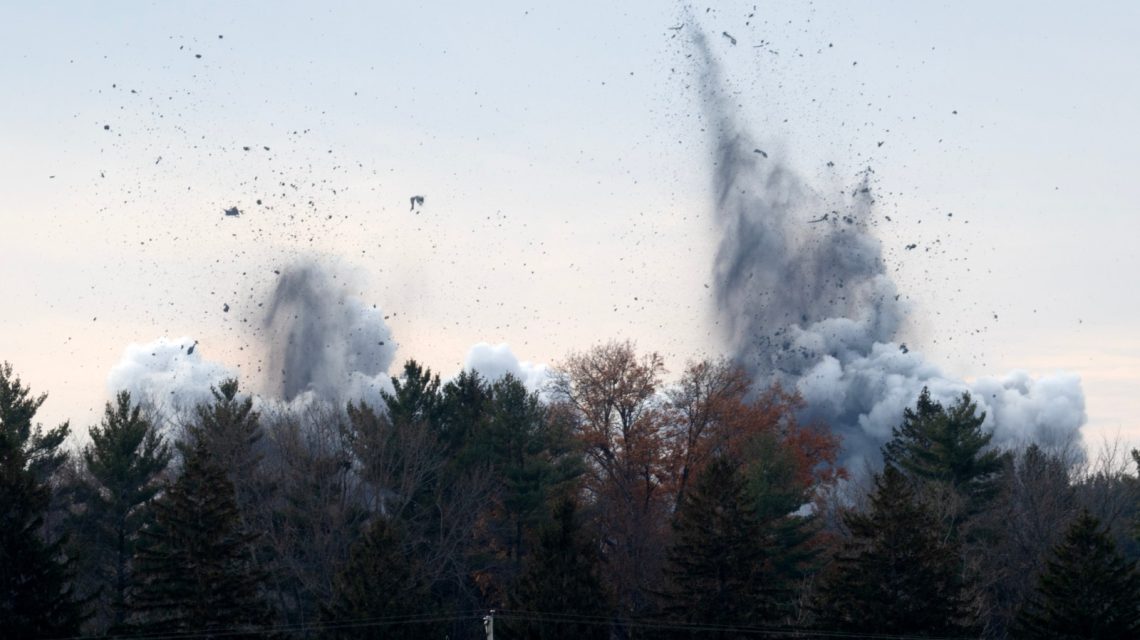
Preliminary results from water sampling in Iowa show no increase in lead levels following the U.S. Army’s detonation of its entire stockpile of lead azide. The Environmental Protection Agency (EPA) announced that its testing detected no lead in 38 water samples taken from public supplies. These samples included both treated drinking water and untreated intake water. Lead, a heavy metal, poses significant risks to children and pregnant women.
EPA found no lead in the 38 water samples taken post-detonation at public water supplies, which included samples of finished treated drinking water and untreated water at the intake,the agency stated.
Prior to the controlled detonation, the EPA sampled 35 drinking water sources across Iowa, Illinois, and Missouri to set a baseline. Xact air monitoring systems have not found airborne lead in the region since the detonation occurred.
On Wednesday, the Army detonated five tons of lead azide at the Iowa Army Ammunition Plant in Middletown. This explosive, stored for nearly two decades, was at risk of uncontrolled explosion due to temperature changes. Although environmentalists filed lawsuits to prevent the detonation, citing health and environmental concerns, the operation proceeded.
‘Best-Case Scenario’ Confirmed by EPA Administrator
Lee Zeldin, EPA Administrator, praised the results of the detonation. He described it as a “best-case scenario.” Former President Donald Trump echoed this sentiment on Truth Social, stating that mitigation efforts exceeded expectations. Vice President JD Vance credited White House Chief of Staff Stephen Miller for making crucial decisions that prevented potential disasters.
Republican Iowa Governor Kim Reynolds thanked key figures involved in the detonation, emphasizing the Trump Administration’s effective response. The Army implemented safety measures, such as barriers and ballistic gels, to contain potential lead dust. Water was also used to control dust post-explosion.
Concerns from Democrats
Despite these reassurances, some Democrats criticized the Trump administration’s handling of public health and safety issues. House Minority Leader Hakeem Jeffries expressed concerns about the potential impacts on multiple states. He highlighted unknowns regarding the explosion’s effect on agriculture, clean air, and water, as well as long-term community health.
Extensive Sampling by EPA
The EPA collected 1,632 samples of air, water, soil, and dust before the detonation and an additional 1,607 samples afterward. Testing took place at multiple laboratories. Sampling was conducted at 187 structures, including public parks, schools, and churches. The EPA has completed post-detonation sampling at 88% of homes sampled initially. Some properties remain unsampled due to residents’ absence.
For further information, Newsweek editors Matthew Robinson and Anthony Murray can be contacted.
 Fiery Crash in Little Village Sends Two to Hospital in Critical Condition
 Medical Case: AI Technology and Rare Fetus in Fetu Condition
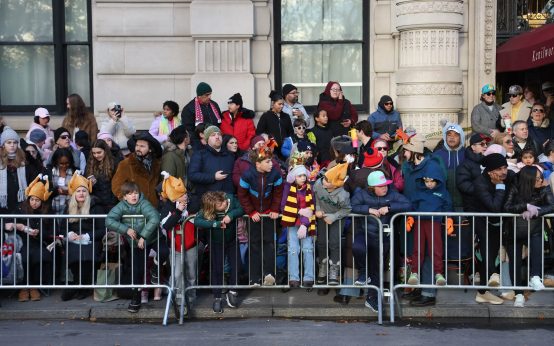 Macy’s Thanksgiving Day Parade Rescheduled and Filled with Exciting Events
 Macy’s Thanksgiving Day Parade Rescheduled Due to Severe Weather
 Guide to the Macy’s Thanksgiving Day Parade
 The Assassination and Funeral of President John F. Kennedy