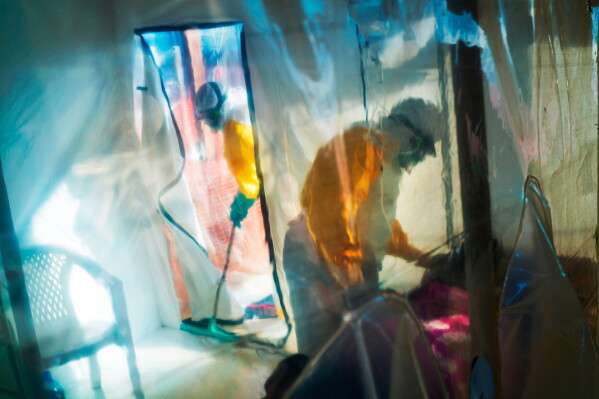
The World Health Organization (WHO) has declared the Ebola outbreak in the Democratic Republic of Congo and neighboring Uganda a public health emergency of international concern. More than 300 suspected cases and 88 deaths have been reported. However, WHO stated the outbreak does not meet the criteria for a pandemic like COVID-19 and advised against closing international borders.
In a social media post, WHO reported a confirmed laboratory case in Congo’s capital, Kinshasa, approximately 1,000 kilometers from the outbreak’s epicenter in Ituri province. This suggests a possible wider spread. The patient visited Ituri, and suspected cases have surfaced in North Kivu province, a populous area neighboring Ituri.
In Goma, the largest city in eastern Congo, authorities confirmed the first Ebola case. The infected person traveled from Ituri and is now in isolation. Goma recently faced a rapid rebel advance; conflict between Congolese forces and the Rwanda-backed M23 militia has displaced hundreds of thousands.
The Ebola virus is highly contagious, spreading through bodily fluids like vomit, blood, or semen. The disease is rare but often fatal. WHO’s emergency declaration aims to prompt donors and countries to act. This declaration signifies a severe event with risk of international spread, necessitating a coordinated global response.
Meanwhile, WHO’s Regional Office for Africa noted that a team of 35 experts from WHO and the Congolese Ministry of Health has arrived in Bunia, Ituri’s capital, with seven tons of medical supplies and emergency equipment. Previous responses to similar declarations have varied. In 2024, WHO declared monkeypox outbreaks across Congo and Africa, which had limited impact on the swift delivery of diagnostics, treatments, and vaccines.
The current outbreak, confirmed last Friday, is caused by the Bundibugyo virus, a rare Ebola variant with no approved treatments or vaccines. Despite over 20 Ebola outbreaks in Congo and Uganda, the Bundibugyo virus has been detected only thrice, first in Uganda’s Bundibugyo district during a 2007-2008 outbreak and in Isiro, Congo, in 2012.
Dr. Richard Kitenge, operations director at the Congolese Public Health Emergency Operations Center, expressed confidence in handling the outbreak, citing past experiences without treatment for the Zaire virus variant.
Dr. Jean Kaseya, Director General of Africa CDC, acknowledged ongoing challenges in containing and tracking the outbreak, particularly in Mongwalu, where active cases complicate efforts. Militant violence, some linked to the Islamic State group, and population movements due to mining further hinder response efforts.
Africa CDC reported 336 suspected cases and 87 deaths in Congo on Saturday. WHO’s Director General, Tedros Adhanom Ghebreyesus, noted uncertainty about the true number of infections and the epidemic’s geographic spread. Two suspected cases in Uganda include one death in Kampala and another traveler previously in Congo.
WHO highlighted the high positivity rate among analyzed samples and deaths in Ituri indicate a potential larger outbreak than currently detected, posing a significant risk of local and regional spread.
US health officials rate the risk to Americans as low. Dr. Satish Pillai from the US CDC stated the agency works with global health officials to contain the outbreak. The CDC has a team in Congo and plans to deploy more staff. Travelers to Congo must avoid symptomatic individuals. Measures to identify symptomatic individuals at entry points are underway, Pillai noted.
The late detection of the Congo outbreak, which began in April, delayed responses, allowing the virus to spread. Dr. Kaseya revealed the index case remains unidentified, leaving the outbreak’s scale uncertain. The earliest reported case, a 59-year-old man, developed symptoms on April 24 and died on April 27 in Ituri. When health authorities were alerted via social media on May 5, 50 deaths had already occurred, as reported by Africa CDC.
WHO documented at least four health workers died with Ebola symptoms.
Associated Press contributor Mike Stobbe reported from New York.
This story was translated from English by an AP editor using an AI tool.
 Upcoming Concerns and Influence in Health Politics
  Fraud Task Force Saves Billions by Tackling Obamacare Misuse
  Presley Gerber’s Passing Raises Addiction Recovery Concerns
  Understanding October SNAP Benefits: Payment Dates and Changes
  Managing Distress and Discomfort Effectively
  Trump Administration Seeks to Influence NIH Grantmaking