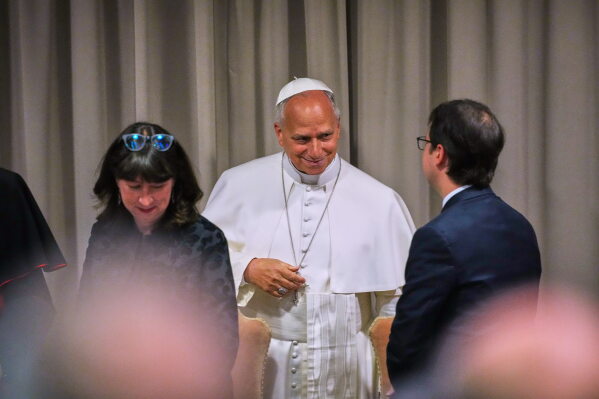
Pope Leo XIV has called for stringent regulation of artificial intelligence and urged developers to prioritize the common good over profits. His first encyclical, ‘Magnifica Humanitas,’ has been highly anticipated since the pope declared AI as humanity’s biggest challenge, shortly after his election as the first U.S.-born pontiff.
In the document, Pope Leo criticized the ‘culture of power’ driving AI development, particularly in its use in sophisticated remote warfare. He stated that irreversible, lethal decisions should not be entrusted to AI systems, creating a potential conflict with the Trump administration’s approach to AI regulation.
‘Artificial Intelligence must be disarmed, liberated from the logic that turns it into an instrument of domination, exclusion, and death,’ Leo expressed during a special presentation at the Vatican.
Experts from technology, academia, and Catholic morality predict the encyclical will serve as a reference point for the ongoing AI debate. Concerns about AI replacing human jobs and intelligence are rising as technological developments progress daily.
‘It invites pioneers of these tools to ponder what it means to be human,’ remarked Taylor Black, a Microsoft AI executive and the director of Catholic University of America’s AI institute.
The Vatican presentation included remarks by the co-founder of Anthropic, engaged in legal battles with the Trump administration regarding AI technology. Though Anthropic was involved in this event, Leo’s text still criticized the concentration of power and data within a few private sector entities, emphasizing the threat they pose to children and vulnerable groups.
‘Ethics in the abstract are insufficient; robust legal frameworks, oversight, informed users, and political responsibility are essential,’ Leo highlighted.
AI competitors like OpenAI and Anthropic hold significant valuations, rivaling the GDP of numerous nations. Anthropic co-founder Christopher Olah acknowledged Leo’s critique, affirming the importance of external checks for AI’s appropriate deployment.
‘We need the world to follow His Holiness’s example: address it seriously, examine closely, and encourage positive progress,’ Olah stated.
Experts believe the encyclical will become a benchmark for AI policies. Law professor Paolo Carozza from Notre Dame recognized the document as a prophetic urging for technology to serve human interests rather than degrade them.
In a critical section, Leo condemned AI’s role in normalizing war, desensitizing its deadly impact. He called for transparency and accountability in AI weaponry, suggesting ‘just war’ theory was outdated due to technological advances.
Pope Leo XIV signed ‘Magnifica Humanitas’ on the 135th anniversary of ‘Rerum Novarum’ by Pope Leo XIII, addressing workers’ rights and capitalism limits during the Industrial Revolution. Echoing this historic document, Leo connects the challenges posed by AI today to past industrial concerns.
‘The pursuit of profits must not sacrifice jobs because humans are ends, not means, and the economic order should prioritize human dignity and common good,’ Leo wrote.
Leo also apologized for the Church’s historical role in legitimizing slavery, emphasizing the significance of upholding human dignity in labor.
Although Vatican officials didn’t specify contributors to Leo’s encyclical, the Church has maintained dialogue with Silicon Valley firms, aiming to address AI’s risks.
Anthropic’s inclusion in the Vatican event faced criticism as it could be perceived as endorsement. Brian Boyd from the Future of Life Institute viewed it as recognition rather than approval.
‘Anthropic, a powerful player in the AI race, shows goodwill and interest in dialogue,’ Boyd remarked.