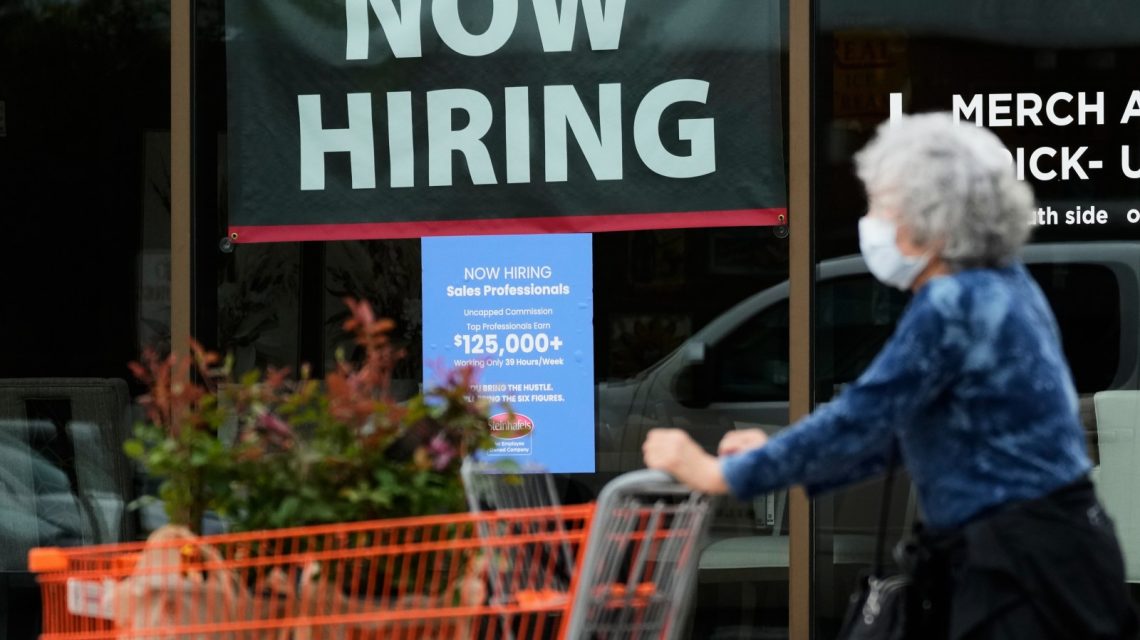
The latest jobs report, revealing a weaker labor market, suggests that the Federal Reserve is likely to hold off on raising interest rates this year. This could offer some relief to homebuyers facing high mortgage rates, though it comes with consequences. According to the Bureau of Labor Statistics, U.S. employers cut 23,000 jobs in July, and hiring in previous months was revised downward. Significant employment declines occurred in local government, education, and retail trade, indicating a weaker labor market than analysts had anticipated.
Charlie Ripley, a senior investment strategist at Allianz Investment Management, highlighted the significance of the report, stating that the labor market may be losing momentum. He suggested that the report shifts the focus back to employment in the Fed’s mandate, raising the bar for any potential rate hikes. Jamie Cox of Harris Financial Group noted the loss of 23,000 jobs further justifies the Fed’s decision to refrain from raising rates in July.
In late July, the Federal Reserve kept interest rates between 3.5% and 3.75%, despite ongoing concerns about inflation. Federal Reserve Chair Kevin Warsh acknowledged the challenge of bringing down inflation to 2% and emphasized its potential persistence due to international conflicts.
Cox expressed optimism that the weak jobs report reflects temporary labor market softness but emphasized its concern for the economy. A continued weak labor market could deter the Fed from hiking its key interest rate later this year. Jeffrey Roach, LPL Financial’s chief economist, said the decline in unemployment and hiring slowdown complicates the Fed’s decision-making process but strengthens arguments for maintaining the current rates.
The Fed doesn’t directly set mortgage rates but influences them by affecting long-term Treasury yields linked to the federal funds rate decisions. An increase in interest rates to curb inflation would likely raise mortgage rates further, impacting homebuyers. Chris Zaccarelli of Northlight Asset Management noted that the strong job market assumption compelling the Fed to raise rates is challenged by the latest report.
The Fed’s next meeting is scheduled for September, and any pause in rate hikes could benefit homebuyers by preventing mortgage rate increases, though a weaker job market might affect buyer confidence. Realtor.com senior economist Jake Krimmel mentioned a pause is favorable, and cuts would be even better, but it depends on the labor market’s state.
A weaker labor market reduces buyer confidence, making homebuyers more hesitant due to fears of layoffs and economic uncertainty. Financing conditions might improve, reducing demand simultaneously. According to Realtor.com data, the housing market was calmer in July, though signs of a summer slowdown exist. Despite the labor market challenges, sellers are pricing realistically, and pending sales surpass last year’s pace.
The inflation rate fell to 3.5% in June from 4.2% in May, its first decline in five months. The Federal Bank of Cleveland projected core inflation rose 0.2% in July, leading to a 2.5% increase for the 12 months ending in July. An upcoming Bureau of Labor Statistics July inflation report will provide further clarity on inflation trends.
 Mortgage Rate Surpasses 7 Percent Amid Economic Challenges
  Inland Empire Faces Rising Housing Costs
  Waterline Tower Transforms Austin Skyline
  Chicago Bears QB Caleb Williams Avoids Major Hamstring Injury
  Challenges in L.A.’s Multifamily Housing Market
  Former Federal Prosecutor Sells Lincoln Park Mansion