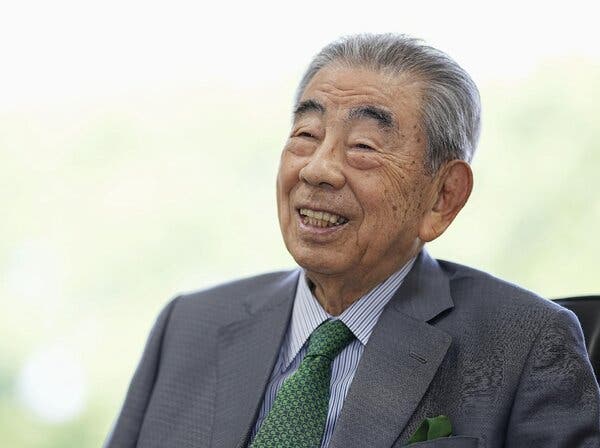
Toshifumi Suzuki, a key figure in revolutionizing the convenience store industry in Japan, passed away on May 18 at the age of 93. He was instrumental in turning 7-Eleven into an integral part of daily life in Japan.
Mr. Suzuki served as an honorary adviser for Seven & i, the company operating the 7-Eleven franchise in Japan. The company confirmed his passing, attributing the cause to heart failure. Details about the location of his death were not disclosed.
For four decades, Mr. Suzuki led the transformation of 7-Eleven Japan from a solitary store in Tokyo into an expansive enterprise with tens of thousands of outlets. He was renowned for his relentless innovation, integrating features like in-store banking and introducing products such as crisp seaweed-wrapped rice balls. These became popular not only in Japan but also among international consumers.
Following his resignation in 2016, 7-Eleven encountered several challenges. The company experienced stagnant profits, a tumultuous takeover attempt by a Canadian competitor, and the complexities of appointing a new CEO to stimulate growth. Some within the company have noted a decline in the culture of innovation since Mr. Suzuki’s departure.
Mr. Suzuki was born in Nagano Prefecture, located northwest of Tokyo. Before his tenure at 7-Eleven, he worked in publishing sales. In 1971, Masatoshi Ito, the founder of Ito-Yokado, recruited him. Mr. Suzuki then joined the company as a director.
Soon thereafter, he identified an opportunity with the American convenience store chain 7-Eleven, operated by Southland Corporation in Dallas. Despite skepticism about the American convenience store model’s success in Japan, which was dominated by small, local shops, he proceeded with the venture.