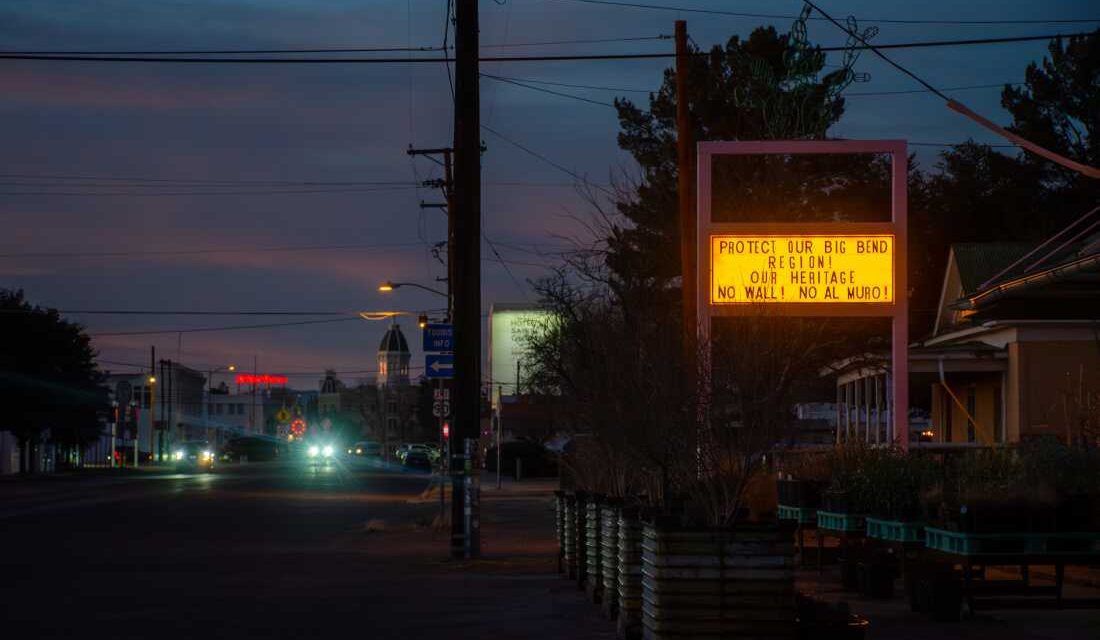
Redford, Texas — On a tranquil morning in spring, Joe Pineda navigates his property near the Rio Grande in his pickup truck. The 52-year-old farmer points out his cattle run and alfalfa fields, mentioning the family cemetery dating back to the late 1800s. Reaching the river’s edge, he slows down to reflect on his family’s history in the Big Bend region of West Texas. Memories of childhood days spent here and the time shared with his own children fill him with nostalgia. “I’ll miss these moments,” Pineda says, as the wind rustles through mesquite trees. “This land holds our heritage, our family history, and it’s about to be taken.”
The Pineda family received a warning from the government regarding possible eminent domain proceedings. If they refuse to sell or allow access, a border wall will proceed through their land. This scenario unfolds across Big Bend as plans for a 175-mile “border barrier” move forward. This untouched frontier will soon face steel fences, patrol roads, and surveillance setups.
Pineda once extracted water from the Rio Grande for his alfalfa and pecan trees. He has paused cattle farming this year due to concerns about the wall. The government’s construction plans have unified diverse political groups opposing the wall. They cite risks to the environment, Indigenous sites, the region’s dark skies, and local wildlife as primary concerns. The local economy, driven by a $56-million tourism industry, risks decline. “They’re threatening our economy,” Pineda states. “Tourism thrives here. Its loss will change everything.”
U.S. Customs and Border Protection promises to “avoid or minimize environmental impacts” in planned construction areas. Historically, Big Bend’s harsh landscape has discouraged border crossings. Under President Trump’s second term, numbers fell further. In the year’s first three months, 498 apprehensions occurred in the Big Bend Sector, much lower compared to Texas’ busiest sectors.
Ronny Dodson, Brewster County Sheriff, notes the region’s low crossing frequency. Dodson and other sheriffs communicated concerns to officials about the wall’s practicality. “We support border security but this isn’t the spot for a wall,” Dodson explains. “We need monitoring and manpower here.” His area includes Big Bend National Park. While a wall here was once planned, CBP now opts for vehicle barriers and patrol roads. Yet, experts argue these changes will still impact sensitive lands.
“This fight is one we did not ask for.” — Raymond Skiles
Opposition grows among residents. Brewster County and other local officials penned a letter requesting a say in border security plans. Hudspeth County Judge Joanna Mackenzie is stunned by the finances involved. “These costs are mind-boggling,” she says. “Such money can change generations.”
Residents like Raymond Skiles, a wildlife biologist and landowner, are prepared to sue the government to halt the border wall. Inside his Alpine, Texas home, he studies a CBP map. “This plan would scar our Big Bend landscape,” Skiles laments. Holding back emotion, he compares it to defacing a masterpiece.
For residents such as Skiles, an extensive barrier across Big Bend would symbolize a permanent loss, unwanted in the land they cherish.
 Vice President JD Vance Tackles Widespread Fraud with Focus on Migrant Communities
  Mothers Face Legal Challenges Due to THC Testing
  Germany’s Concerns Over Low-Cost Drone Threats
  North Carolina Father Sues School District Over Bathroom Policy
  North Carolina Father Sues School Over Restroom Policy Disclosure
  Tragic Boat Capsize Near Liberty Island Leaves Two Dead