
The administration of former U.S. President Donald Trump discreetly instructed federal prosecutors in Miami to avoid initiating criminal investigations against Venezuela’s interim President, Delcy Rodríguez. This move aimed to foster relations between the U.S. and Venezuela. Rodríguez, a long-time target of the DEA, was reportedly preserved from investigation at the urging of high-level officials concerned with stabilizing Venezuela.
DEA records obtained by The Associated Press show Rodríguez has been on the agency’s radar since 2018. Still, she has never faced criminal charges in the U.S., unlike other high-ranking Venezuelan officials. A Department of Justice spokesperson stated there was no ongoing investigation on Rodríguez to shutter.
The guidance to curb scrutiny was purportedly to not disrupt U.S. efforts to stabilize Venezuela following former President Nicolás Maduro’s detainment. It remains unclear whether the White House was involved in this decision, with questions referred to the Department of Justice.
Pressure on Rodríguez has eased as a result, providing a window for the Trump administration to engage with her to stabilize Venezuela post-Maduro and open it to U.S. investments. Trump praised Rodríguez shortly after the U.S. military detained Maduro and his wife in New York. The pair face federal narcotics charges to which they have pleaded not guilty.
In recent months, the U.S. lifted sanctions against Rodríguez and recognized her as Venezuela’s sole head of state. This change allowed her to restore connections with Western banks and engage more freely with U.S. investors keen on Venezuela’s vast oil reserves. As ties deepened, some touted this approach as an internal regime change model while the U.S. opposed long-standing adversaries, including Iran and Cuba.
Rodríguez and her brother, Jorge Rodríguez, faced sanctions during Trump’s first term for their roles in undermining democracy and supporting Maduro’s autocratic regime. Trump lauded her efforts on social media in March, noting improvements in oil flows and professionalism in bilateral relations.
Despite the positive relations, electoral discussions within Venezuela remain postponed even after Rodríguez exceeded the 90-day temporary office period set by Venezuela’s top court. U.S. Senator Jeanne Shaheen urged the government to clarify its favorable stance towards Rodríguez, labeling her a key figure in Maduro’s oppressive regime. Both Shaheen and Senator Elizabeth Warren raised concerns in a letter to U.S. officials regarding Rodríguez’s actions and sanctions relief without democratic restoration commitments.
The CIA’s former Caracas station chief, Rick de la Torre, stated that delaying investigations on Rodríguez aligns with U.S. foreign policy goals in Venezuela, despite her ties to corruption. He suggested her immunity might be temporary, with eventual justice likely.
DEA records indicated Rodríguez’s involvement in intelligence files since 2018, with allegations ranging from drug trafficking to gold smuggling. Reports added she used Caribbean hotels to launder money, with DEA investigations spanning regions from Paraguay to New York. She also has connections to Maduro’s alleged financier, Alex Saab, who U.S. authorities arrested in 2020 on money laundering charges.
Uncertainty surrounds the Miami-related investigations involving Rodríguez, though former officials noted her appearance in discussions led by ex-Justice Secretary Pam Bondi in Tampa. Regional probes explored financial crimes in Venezuela, with Rodríguez serving as Maduro’s vice president at the time.
Trump’s administration similarly paused investigations into Colombian President Gustavo Petro, a significant leftist figure. Alleged narcotrafficking links positioned Petro as a DEA target. Still, U.S. assurances to Colombia confirmed no charges against him. Ex-federal prosecutor Duncan Levin criticized using law enforcement as a diplomatic tool, stressing justice decisions should hinge on law, evidence, and public safety, not political utility.
Durkin Richer contributed reporting from Washington, with Mustian reporting from New York. Regina García Cano of The Associated Press also contributed from Mexico City. This story is part of an investigation including FRONTLINE’s documentary “Crisis in Venezuela,” aired on February 10, 2026, on PBS, viewable on pbs.org/frontline, the PBS app, and FRONTLINE’s YouTube channel.
 Federal Appeals Court Decision Against Trump’s ‘Third-Country’ Deportation Policy
 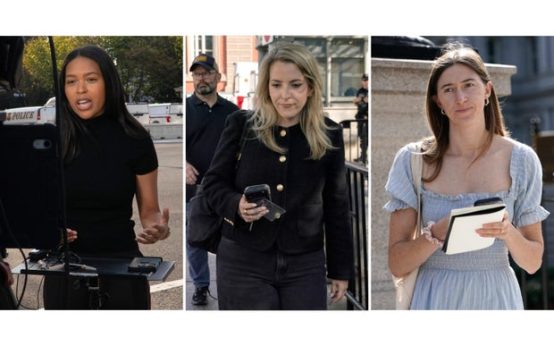 President Trump’s Controversial Ban on Media Outlets Sparks Press Freedom Concerns
 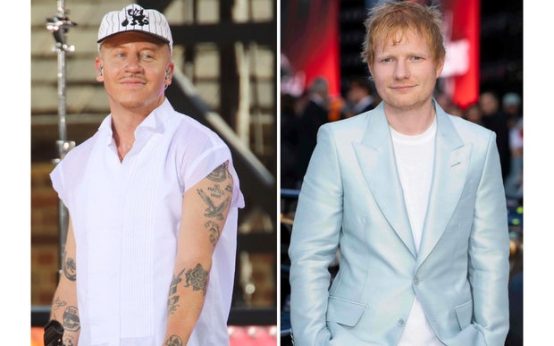 Ed Sheeran’s Philadelphia Concert Amid Controversy
 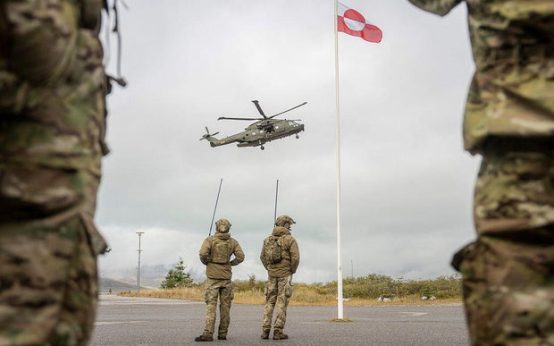 U.S. Secures Strategic Control Over Greenland
  U.S. Security Agreement in Greenland Sparks Optimism and Concerns
  Cook County’s Property Tax Bridge Loans