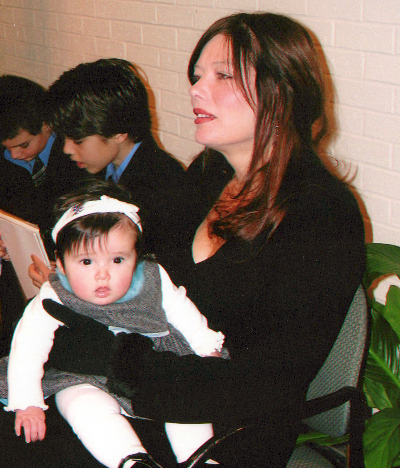
Lucia Adarve, at 18, had seen more doctors than many do in a lifetime. Her medical journey began at birth with missed milestones, seizures leading to collapses and communication struggles. Her sensitivity to stimuli complicated her life, affecting her balance and schoolwork.
Lisa, Lucia’s mother, faced this challenging situation determinedly, pursuing answers for her daughter’s complex array of symptoms. Lucia accumulated numerous diagnoses such as epilepsy, lupus, fibromyalgia, ADHD, and dyslexia, yet none fully fit her condition. Lisa, witnessing the growing pile of medical records, questioned the multitude of labels her daughter received.
“Her stack of medical records was getting bigger and bigger,” Lisa stated, thinking, “There has to be something underlying.”
Lucia’s condition profoundly impacted her life early on. Failing to thrive at conventional schools, Lisa, a former Montessori teacher, took charge of her education at home from the third grade. She developed creative teaching methods, including knitting for motor skills and horseback riding for balance improvement.
Outside the classroom, Lucia’s siblings enjoyed outdoor activities, climbing over walls into wooded areas. Lisa adapted the environment for Lucia, ensuring all the children used a ladder instead.
Despite family support, health challenges persisted, causing fainting, anemia, and emotional strains. Lucia’s pessimism about medical appointments grew, and she cherished time with her service dog more than doctor visits.
“No one listened to me,” Lucia expressed, seeing doctors as futile visits compared to the comfort her dog provided.
Discovering the Rare Condition
In 2025, the situation changed during a visit to Dr. Todd Arthur at Cincinnati Children’s Hospital Medical Center. Notable for his attentive approach, Dr. Arthur reviewed Lucia’s extensive medical history and began research into her condition.
This journey led them to the Cleveland Clinic’s Undiagnosed Disease Clinic, directed by Dr. Adnan Alsadah, which aims to resolve lengthy diagnostic quests using innovative techniques like whole genome sequencing.
After extensive screening and genetic testing, Lucia’s unique condition was identified: a mutation on her PPP2R5D gene, known as PPP2R5D-associated neurodevelopmental disorder or Jordan syndrome. Fewer than 500 cases exist globally.
Dr. Wendy Chung, a pediatric medical geneticist, detailed the syndrome’s impact on children’s development, potentially causing movement, speech, or learning difficulties, along with seizures, autism, and ADHD. Aging individuals may face challenges similar to Parkinson’s disease.
The diagnosis brought a bittersweet revelation for Lucia and Lisa.
Lisa felt validated: “It finally felt like, wow, these things were real. I knew something was different.”
Lucia experienced mixed emotions, initially relieved but later frustrated by the lengthy path to answers.
Building a Path Forward
With a confirmed diagnosis, actionable steps emerged. Medications reduced Lucia’s seizures, and the Cleveland Clinic coordinated a comprehensive management plan addressing her symptoms.
Lucia engaged with advocacy and support groups active in Jordan syndrome research and trials, exploring treatment potentials. Her involvement in a clinical trial seeks to repurpose a medication for Jordan syndrome patients.
Lucia’s mother noticed positive changes, observing her daughter regain her childhood demeanor.
Lisa shared, “She knows what she has, so she can kind of stand up and advocate for herself.”
Freeing herself from constant doctor visits, Lucia progresses toward a degree in criminal behavioral psychology. Her journey reflects remarkable independence, credited to her mother’s steadfast caring efforts.
“I was extremely lucky to get my mom,” Lucia acknowledged, valuing her mother’s compassionate presence.
 Upcoming Concerns and Influence in Health Politics
  Fraud Task Force Saves Billions by Tackling Obamacare Misuse
  Celebrating Day of the Dead: Students Craft Calaveras in Pilsen
  Presley Gerber’s Passing Raises Addiction Recovery Concerns
  Understanding October SNAP Benefits: Payment Dates and Changes
  Managing Distress and Discomfort Effectively