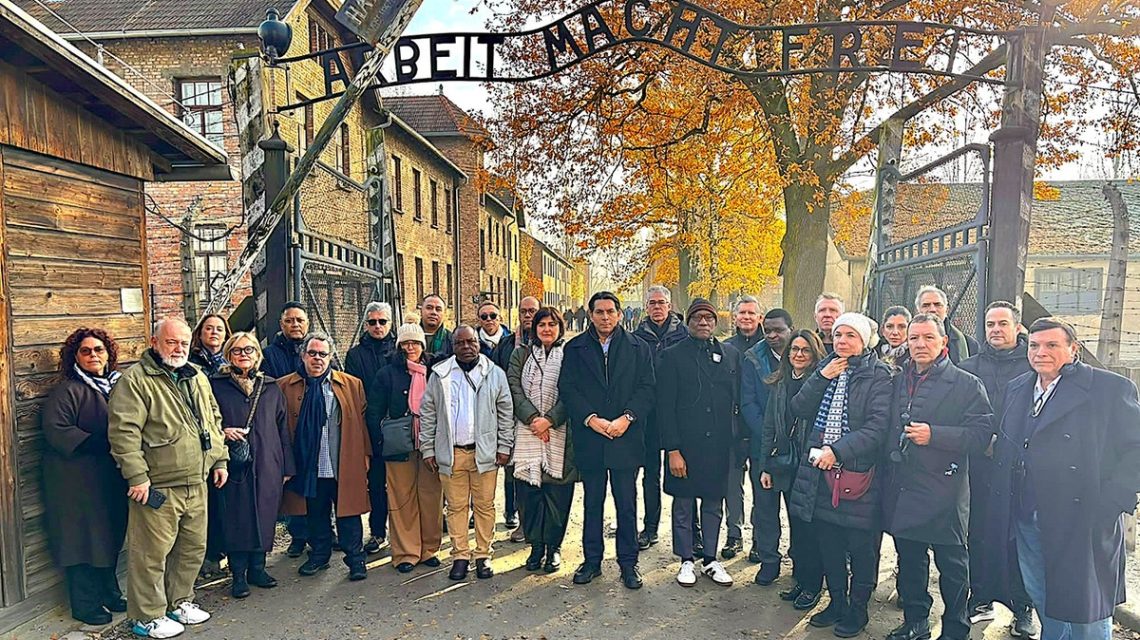
Recently, amidst a global rise in antisemitism, I joined numerous United Nations ambassadors to visit Auschwitz. Each visit to this somber site reinforces the immense damage of antisemitism and the dire outcomes of ignoring hatred. This diplomatic mission came at a crucial juncture with the selection of the next U.N. secretary-general underway. They must tackle the issue of institutional antisemitism at the U.N.
Challenges of Institutional Antisemitism
The presence of institutional antisemitism is a significant issue at the U.N. It appears in reports, statements, and speeches by officials. An organization established post-Holocaust cannot claim to combat antisemitism while serving as a podium for demonizing Israel.
As representatives of the Jewish state, we must lead this battle, but collaboration is vital. We need to form alliances with other nations to prioritize the fight against antisemitism globally. To this end, we established a task force in September with U.N. member states to combat antisemitism both within the organization and worldwide. During our first meeting, we focused on turning rhetoric against Jew hatred into tangible action.
Commitment to Remember History
The visit to Poland aimed to ensure the Holocaust’s memory remains in global consciousness. Forgetting past atrocities means abandoning the promise of ‘never again.’ Many ambassadors experienced their first encounter with Holocaust remnants, transitioning from historical learning to on-site witnessing.
My allies must now return to their nations with resolve to tackle antisemitism beyond the U.N. alone. In 2025, antisemitic violence peaked with unprecedented attacks worldwide. FBI data from the U.S. highlights that antisemitism remains the leading religiously motivated hate crime, targeting Jews despite their small population percentage.
Facing Ongoing Hatred
Philadelphia recently witnessed an anti-Israel rally targeting Jewish businesses, echoing historical antisemitic narratives by attributing collective guilt and intimidation. Confronting these realities alongside peers against a historical canvas strengthened our position.
Support for Israel
In Israel, I showcased the nation’s resilience, heritage, and contemporary challenges. Colleagues saw firsthand the aftermath of the October 7 massacre and learned about Israel’s ongoing realities. The visit highlighted Israel’s crucial role as a sanctuary from antisemitism and as a homeland preserving Jewish history and autonomy.
Despite challenges at the U.N., disengaging is not an option. We should stand firm, challenge biases, and seek innovative paths for diplomatic triumphs. Education, historical encounters, and debunking misconceptions are key in combatting antisemitism.
Leadership and Responsibility
Leadership remains crucial in this endeavor. The next U.N. secretary-general faces a significant credibility crisis and must prioritize antisemitism as a core leadership challenge. Antisemitism cannot be just another campaign promise. It must test the mettle of any aspiring leader.
Diplomats on this mission learned beyond meetings or lectures: hatred must be addressed proactively. Effective opposition to antisemitism demands action, accountability, and confronting those who perpetuate hate.
The lesson from this journey will return to the U.N., where we continue to build partnerships, challenge antisemitism, and insist on the institution’s fidelity to its founding principles. The upcoming leadership must choose to confront antisemitism or allow its persistence. We will ensure they face this decision actively.
 High Russian Military Death Toll Highlighted in Leaked Data
 Colombian Security Forces End Hostage Situation in Cartagena
 Investigation Launched on Shanghai’s Party Secretary Chen Jining
 U.S. Defense Secretary’s Decision Delays Patriot Missile Aid to Ukraine
 Jennifer Barreto Crowned Miss Universe 2026
 Living Through the Polar Night in Utqiaġvik