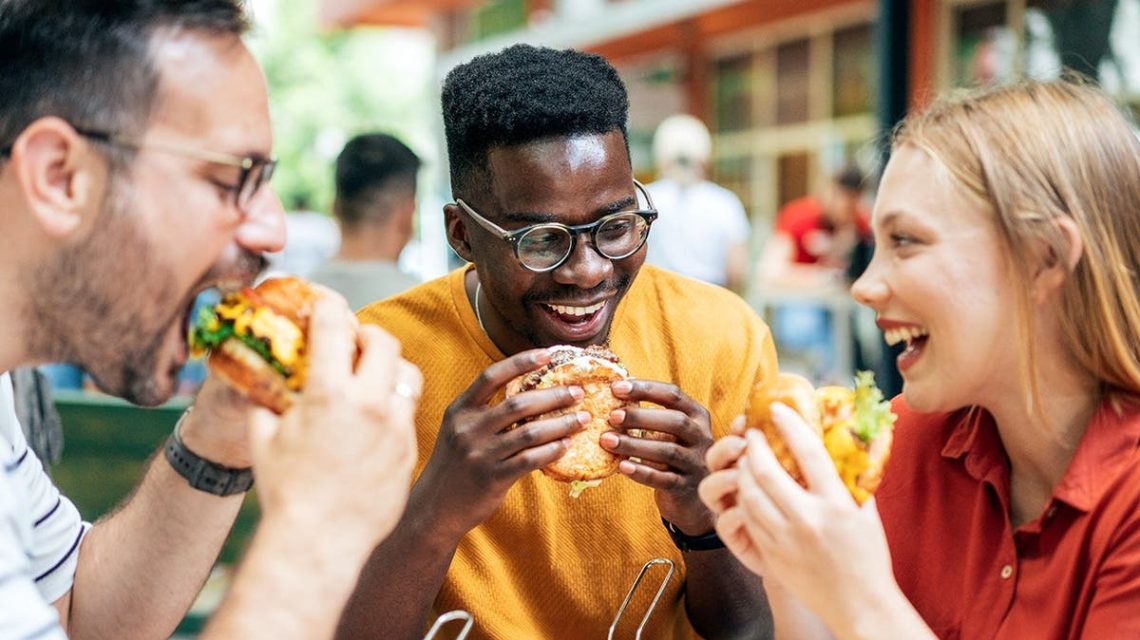
Stanford University researchers have developed an artificial intelligence (AI) system named BurgerAI, capable of designing burger recipes that match or even outperform those from a renowned fast-food chain. By incorporating 2,216 burger recipes from Food.com, BurgerAI generated innovative recipes that received high ratings.
In blind taste tests documented in npj Science of Food, some burgers designed by BurgerAI equaled or surpassed a reconstructed version of McDonald’s Big Mac. One AI-generated recipe closely resembled the Big Mac without using it in initial training data, showcasing the AI’s learning capability based on human taste preferences.
Researchers have created an AI tool that develops burger recipes that are not only tastier but also more nutritious and environmentally sustainable than popular restaurant options.
According to a Stanford Report news release, BurgerAI is capable of customizing burgers to enhance nutritional value, sustainability, and specificity concerning gender, age, and physical activity.
“Food choices are among the most significant decisions humans make daily,” stated Vahidullah Tac, a researcher on the project. He emphasized the impactful dual role of food in promoting both planetary and personal health.
Ellen Kuhl, a Stanford professor leading the research, explained that most AI tools predict existing solutions. However, BurgerAI aims to invent new possibilities, focusing on optimal satisfaction concerning complex objectives.
In a blind taste test participated by over 100 diners at a San Francisco restaurant, AI-designed burgers prepared by an executive chef received favorable evaluations in overall liking, flavor, and texture compared to the Big Mac.
The study highlighted BurgerAI’s mushroom burger for its exceptionally low environmental impact score and the bean burger’s superior nutritional profile.
“We anticipated a trade-off between sustainability and consumer acceptance,” Tac noted. “Surprisingly, burgers with reduced environmental impacts held their ground against a globally successful counterpart.”
Generative AI holds transformative potential across various fields, including pharmaceuticals and product design. Kuhl pointed out that traditional food design heavily relied on intuition and experience. Now, AI shifts it toward a quantitative science model applicable in diverse areas.
The AI-generated mushroom burger stood out for its remarkable environmental sustainability. According to Kuhl, the project signifies only the beginning of AI’s partnership in scientific and engineering discovery.
 Congressional Inaction Amid AI Concerns
  Rising Demand for Data Centers Driven by AI Development
  Understanding AI’s Impact Compared to Historical Threats
  Debate Over AI’s Governance Amidst Fearful Predictions
  Navigating AI Responses: A Personal Experience with Google’s New Approach
  Concerns About AI Responses in Health Information