
In the lead-up to Manny Rutinel’s victory in the Democratic primary for Colorado’s 8th Congressional District on June 30, artificial intelligence (AI) regulation played an unexpected role in the race. This district, located in the northern Denver suburbs with a Latino plurality, might determine control of the U.S. House. Although the general election in November remains uncertain, the primary was decisive. Rutinel defeated former state representative Shannon Bird by a margin of 26 points. Bird conceded shortly after polls closed.
The noteworthy aspect of this race was not Rutinel’s sizable win, but the financial backing he received, particularly from tech donors. This represents a shift as debates over AI governance start impacting electoral contests that determine rule-makers. Colorado’s 8th district served as an initial testing ground.
Money Followed the Rule-Writer
Superficially, Rutinel’s success appeared as a standard Democratic primary win in a high-profile district. However, financial contributions were peculiar. Outside groups linked to the tech industry funneled $5.5 million into television ads to support Rutinel and oppose Bird. Employees from companies such as Anthropic, Google, Meta, and OpenAI collectively contributed $265,000 to his campaign, with most coming from Anthropic.
A super PAC, solely funded by Ripple co-founder and cryptocurrency billionaire Chris Larsen, invested around $977,000 to assist Rutinel. Former Google CEO Eric Schmidt and his wife Wendy contributed $2 million to the Latino-focused Somos PAC through a connected nonprofit.
Interestingly, the funding did not favor a deregulation-leaning candidate. Instead, it supported Rutinel, who was instrumental in crafting Colorado’s 2024 Consumer Protections for Artificial Intelligence law, a pioneering initiative nationwide. While Rutinel backed the legislation, Bird opposed it.
The situation clarifies when recognizing that the AI industry is divided into factions. One group, financially supported by OpenAI’s president and Andreessen Horowitz, resists stricter regulations. The other, aligning with Anthropic, advocates for safety measures and allocated $20 million to a nonprofit supporting safety-focused candidates. Much of the tech-related funding in Rutinel’s campaign came from this regulation-friendly side.
The dollars endorsed a candidate with a proven track record for enacting AI regulations, rather than the one with less restrictive views. This division showcases the industry’s preference for a lawmaker capable of translating theory into practicable legislation.
Colorado Softened the Law
On May 14, Democratic Governor Jared Polis signed a law altering the state’s initial AI regime. The new legislation replaced the 2024 act with a more concise framework targeting automated decision-making. The adjustments eased some obligations while maintaining others related to disclosure and review, along with granting individuals the right to request corrections to adverse automated decisions.
Neither version of the law was operational during the primary, as the 2024 law had yet to take effect and faced an injunction. The replacement is not effective until 2027. The candidates debated a framework, not an existing rulebook.
Colorado encountered significant opposition to its first-in-the-nation legislation. The 2024 law faced resistance from the tech industry, a lawsuit from Elon Musk’s company xAI, and intervention from the U.S. Justice Department. The ongoing struggle reflects the difficulty of maintaining pioneering AI regulations.
The most valuable lawmakers are neither extreme deregulators nor stringent watchdogs. Instead, they are those capable of establishing clear, sustainable standards that balance public reassurance with industry stability.
Bird Points to the Money
As tech-related spending increased in the primary, Bird addressed this issue, noting that her district “isn’t for sale.” Her complaint was valid as Rutinel outraised Bird, collecting nearly twice the amount. However, interpreting the race as a straightforward purchase oversimplifies the dynamics.
Much of the pro-Rutinel spending, while linked to tech interests, was not explicitly labeled as tech money. Instead, it was often funneled through Latino-representation super PACs. These subtle ties indicate a more complex donor landscape.
Bird also received external support from organizations backing women candidates, including a super PAC related to EMILY’s List, which spent $1.3 million against Rutinel. The primary reflected diverse donor interests rather than a singular financial sway.
Rutinel positioned himself as the more progressive candidate, advocating for stronger stances on immigration and economic policy. He argued that his background, including personal financial struggles and shared cultural heritage, fit the district’s profile.
Donor contributions influenced the race, but they do not entirely explain Rutinel’s victory. The race integrated biography, identity, and policy issues.
The New Tech Politics Wants Survivable Rules
This competitive, working-class, Latino swing district attracted regulation-oriented tech donors precisely as Colorado rewrote key AI legislation. The evolving tech political landscape favors candidates capable of crafting meaningful, practical regulations.
The focus now lies on electing individuals who can establish rules addressing public concerns while withstanding legal challenges and providing industry predictability. Rutinel’s involvement in pioneering AI legislation, combined with his primary success backed by tech-linked support, exemplifies this trend.
Although Bird highlighted the influence of outside money, this critique does not entirely capture the voter dynamics. Colorado’s 8th district served less as a purchase than as a testing ground for AI policy debates blending local and national concerns.
While the AI industry continues to navigate its regulatory path through lobbyists and legal challenges, elections like Colorado’s primary highlight its growing strategic sophistication. Future candidates shaping AI regulation might not prominently campaign on the issue.
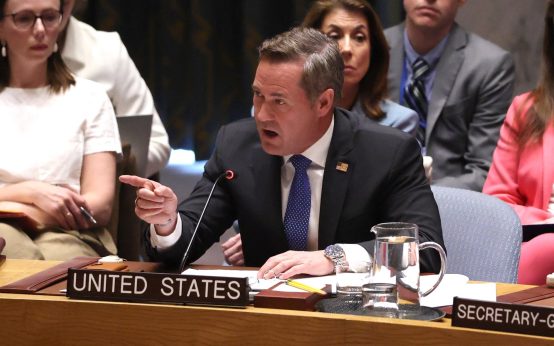 Growing Concerns Over Prolonged Iran Conflict and Political Implications
 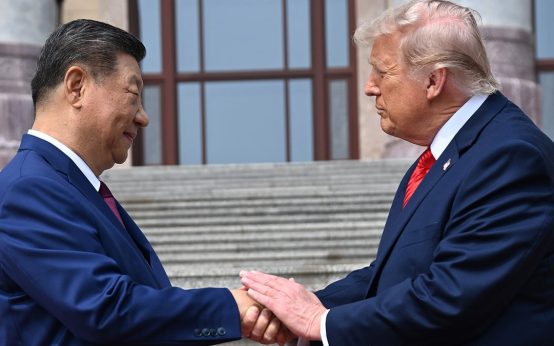 Concerns in U.S.-China Relations Ahead of Summit
 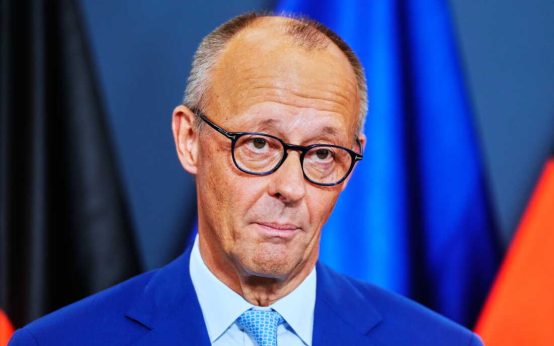 German Chancellor Friedrich Merz Vows to Continue Amid Election Losses
 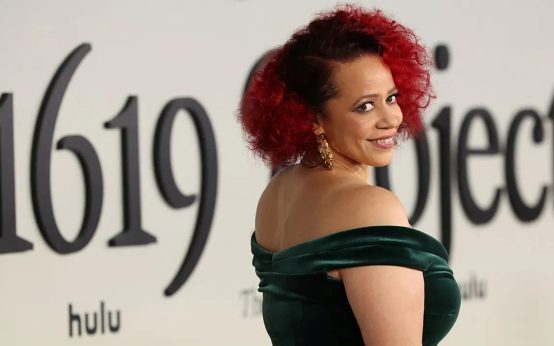 Nikole Hannah-Jones Reflects on School Choice and Its Impact
  Republican Senator Criticizes Trump’s $5,000 Check Proposal
  Trump’s Approach to Iran at the United Nations