AI’s Role in Financial Services
New AI tools are transforming the way financial professionals conduct research, analysis, presentations, and client work effectively. These advancements offer potential for increased productivity. The challenge lies in how firms utilize this capacity, according to Kevin Buehler, chief innovation officer at Rogo and senior partner emeritus at McKinsey & Company.
Key Questions
Buehler raises important questions. Can AI be used to serve more clients, analyze additional markets, and focus on intricate tasks? Or will AI simply provide isolated productivity gains across organizations?
Upcoming Webinar: AI in Finance
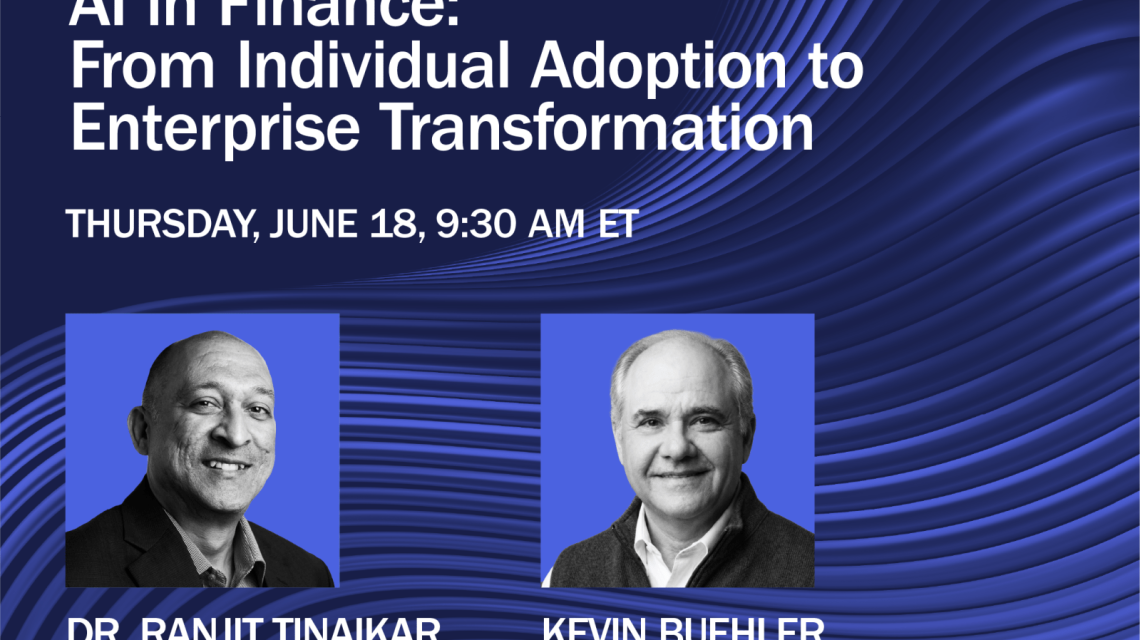
This topic will be at the core of Newsweek’s upcoming webinar titled “AI in Finance: From Individual Adoption to Enterprise Transformation”. Scheduled for Thursday, June 18, at 9:30 a.m. Eastern, the session will be hosted by Dr. Ranjit Tinaikar. He will converse with Buehler on how agentic AI could reshape financial services. This discussion will explore impacts on analysts, investors, software companies, and services firms.
Impact on Work Practices
Buehler highlighted a clear impact of AI among junior professionals, particularly in tasks related to PowerPoint, Excel, communication, and analysis. AI tools and agentic AI are significantly improving work efficiency. However, individual adoption is just the first step.
Moving Beyond Individual Tasks
The next phase involves applying AI across complete business processes. Buehler suggests that complex financial workflows, such as client onboarding and M&A transactions, could be re-engineered with AI.
Buehler noted, “How do you use AI to take a process like that and really transform it? That’s what I see as the frontier today.”
Impact on Jobs and Capacity
The conversation extends to job impacts, though Buehler sees the immediate issue as determining how institutions redeploy the time and capacity that AI furnishes. Options include cost savings, expanding coverage, deepening client interactions, pursuing new business, or investing in training for younger employees.
Stages of AI Adoption
Buehler outlined three stages of AI adoption within firms. The first involves junior-level usage, where analysts and associates use AI to streamline tasks. The second sees senior leaders adopting AI consistently and learning to manage teams reliant on AI assistance. The third is end-to-end workflow redesign.
Achieving the third stage demands an economically driven approach, senior leadership involvement, improved data, talent development, and change management.
Data and Talent Challenges
Buehler identified data and talent as critical hurdles. Effective utilization requires robust data, which is often a weak point. Talent must be upskilled and reskilled, as relying solely on hiring is insufficient. “They probably need data, and that’s often the Achilles’ heel of these programs,” Buehler explained. “They need talent, and that talent has to be upskilled and reskilled because you’re not going to hire new folks to do this.”
Economic Impact of AI in Finance
The June 18 discussion aims to link AI adoption within financial firms to its broader economic impact. Tinaikar and Buehler will explore areas where human curation and enterprise context remain crucial. They will discuss domain-specific applications that may add value and how commercial models might evolve as AI assumes substantial roles in processes rather than merely supporting them.
Competitive Edge
The competitive edge may hinge on whether AI remains a tool for individual acceleration or becomes foundational to business operations. “Many firms are still in the very early innings of that process,” Buehler noted.
Register for the webinar, free of charge, today.
 Elon Musk Increases Political Contributions Ahead of Midterms
  DIRECTV’s Flexible Streaming Options
  French Supermarkets Hit by Cyberattack Affecting Refrigeration Systems
  Pennsylvania’s New Tracker Highlights Data Center Development Amid AI Debate
  The Role of AI in Economic Growth Amidst Rising Debt
  Safeguarding Your Finances Against Cyber Threats