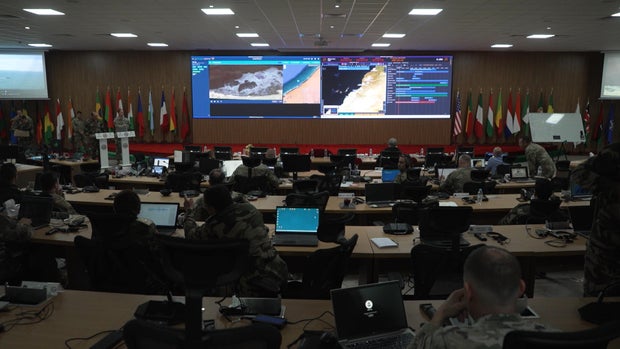
In southern Morocco, where the Sahara meets the Atlantic, powerful explosions and gunfire cut through the desert silence. This month, the African Lion 2026 military exercise showcased the intersection of traditional tactics and advanced technology. American forces, alongside 30 partner nations, collaborated in this large-scale U.S.-led exercise, focusing on the future of warfare driven by artificial intelligence.
During the drill, the quiet movement of a robot across the desert with a machine gun stood out. Drones armed with explosives, another quadcopter carrying a rifle, added to the array of AI-powered systems on display.
AI and the Kill Chain
Lt. Col. Ramon Leonguerrero highlighted the effort to shorten the ‘kill chain.’ This term describes the process from target identification to the use of lethal force. During a drill, a decision that once took hours now needed only three minutes. This demonstrates the capability of Project Maven, a Pentagon AI initiative created by Palantir. The system processes vast battlefield data, helping prioritize information for commanders.
U.S. military personnel in the Joint Operations Center in Agadir used this AI-driven platform, which was integral during the exercise. Although a human still controlled the final decision to strike, the move towards autonomous systems indicates a change.
Anthropic’s Role and Ethical Concerns
Despite tensions between the Pentagon and Anthropic, their Claude AI model remained essential. It facilitates interaction with battlefield intelligence in everyday language, providing a user-friendly interface. Soldiers, however, expressed reluctance to let autonomous systems make critical decisions. Skepticism remains about delegating life-and-death decisions to machines.
General Dagvin R.M. Anderson spoke about the rapid evolution of AI in warfare. He emphasized the need to adopt new technologies, warning against falling behind adversaries.
Robotic Advantages on the Battlefield
Overland AI, a defense contractor, demonstrated its ULTRA autonomous vehicle in the exercise. Controlled remotely, it carries a machine gun and explosive devices. The goal is to keep soldiers away from direct combat, using robots to provide covering fire and lay mines.
Lt. Vincent Gasparri of the 173rd Airborne Brigade discussed the life-saving potential of such technologies. By replacing soldiers with robots, exercises became safer. The innovation, aimed at protecting lives, continues to evolve, focusing on efficiency and speed in combat situations.
AI’s application in military exercises like African Lion shows a balance between advanced technology and ethical decision-making. The central goal remains saving lives while preparing for future combat scenarios.
 Trump’s Vision on Iran, AI, and Global Security at the UN
  Lithuanian Leader Seeks U.S. Military Commitment Amid Rising Russian Threats
  Italian PM Giorgia Meloni Skips UN General Assembly Amid Growing Tensions
  Calls Grow for Ireland’s Soccer Team to Boycott Matches Against Israel
  New U.S. Military Bases Planned in Greenland Amid Strategic Security Deal
  Twitch Streamer Hasan Piker Discusses Controversial Commentary