
For ten years, Alabama death row inmate Jeffrey Lee has been clear in his preference against execution by lethal injection. However, he faces this fate on September 17. His preference for nitrogen hypoxia, an alternative execution method, remains unfulfilled due to the state’s legal complications and failure to develop a constitutionally acceptable protocol.
Alabama has struggled to prove that its nitrogen hypoxia protocol meets constitutional standards. The 11th Circuit Court of Appeals found in June that this method presents a significant risk of severe pain, marking it as unconstitutionally cruel. The controversy remains as Alabama pushes to proceed with lethal injection despite having previously agreed to use nitrogen hypoxia.
In 2016, Lee filed a lawsuit challenging Alabama’s lethal injection protocol, citing a substantial risk of cruel and painful execution. Two years later, both Lee and the state agreed to dismiss the suit based on Alabama’s option to execute via nitrogen hypoxia. The court noted the agreement with clear terms.
Despite this agreement, Alabama now intends to execute Lee by lethal injection. Lee returned to court seeking enforcement of the previous agreement, arguing his reliance on the state’s promise. He contends that reversing course is unfair, as it denies him the method he elected.
Lee’s complaint highlights that Alabama’s execution statute limits available methods to those chosen by the inmate. Lethal injection can only proceed if nitrogen hypoxia is ruled unconstitutional by higher courts, which has not occurred.
Federal District Judge Emily Marks ruled against Lee, permitting lethal injection on July 22. Marks cited changes in essential facts, referencing the court’s ruling on nitrogen hypoxia. She emphasized victims’ interests in sentencing enforcement, despite potential execution delays needed to develop a new protocol.
This decision raises questions concerning Alabama’s legal obligation to provide adequate procedures for chosen execution methods. Marks’s ruling challenges the state’s commitment to fulfill its agreement, potentially rewarding negligence.
Ultimately, Alabama’s execution plan for Lee remains controversial. If the state cannot uphold its promise of a humane execution method, it should refrain from proceeding altogether.
Austin Sarat is the William Nelson Cromwell Professor of Jurisprudence and Political Science at Amherst College. Copyright 2026 Nexstar Media Inc. All rights reserved. This material may not be published, broadcast, rewritten, or redistributed.
 Former UnitedHealthcare CEO Murder: Luigi Mangione Pleads Guilty
 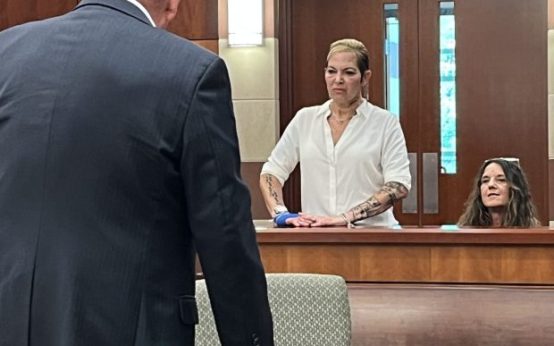 Kim Mathers Jailed Following Violations in Court Cases
  Parents Struggle With Loss of University of Idaho Student
 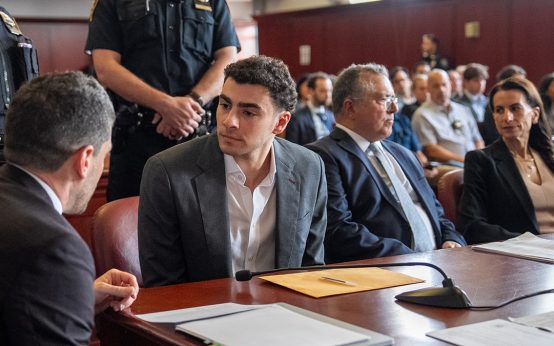 Potential Plea Deal Looms for Assassin Luigi Mangione as Federal Trial Nears
  Chicago Investigates Off-Duty Sergeant’s Confrontation
  Nick Reiner Indicted for Parents’ Fatal Stabbing