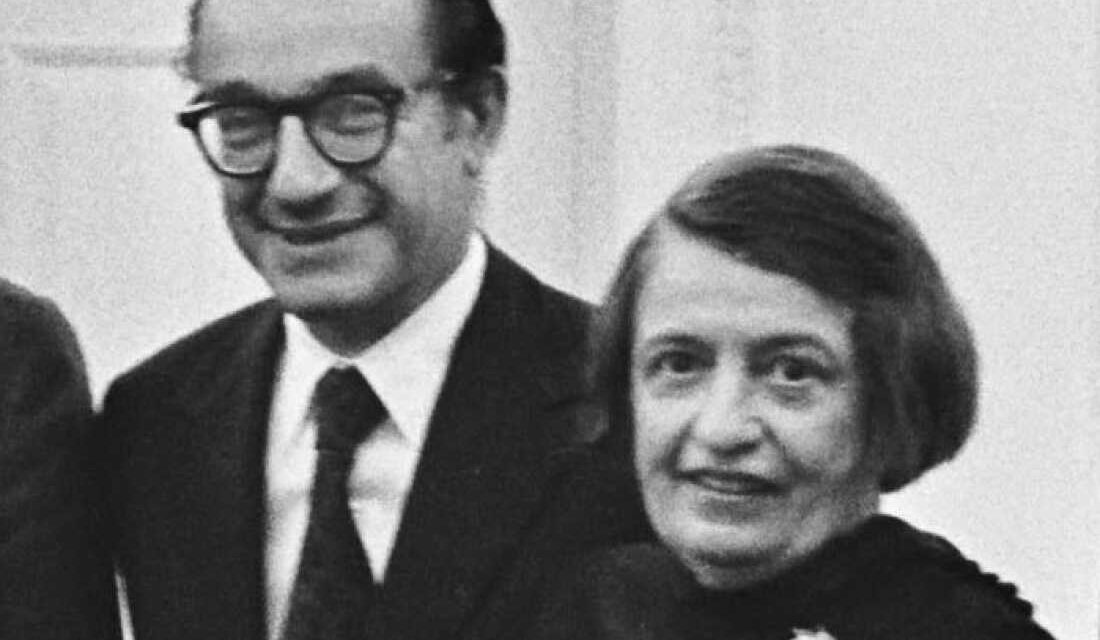
An influential figure in Alan Greenspan’s life was author Ayn Rand. Rand’s 1957 novel, Atlas Shrugged, is a favorite among conservatives and named by the Library of Congress as a book that has shaped America. Greenspan first met Rand in his mid-twenties, while she was already renowned for her 1943 novel The Fountainhead, a best-seller at the time.
Greenspan connected with Rand through his then-wife, Canadian art historian Joan Mitchell, who was a close friend of Nathaniel Branden’s wife. Branden was Rand’s protégé and longtime lover. Greenspan and Mitchell married in 1952 but divorced within a year. However, Greenspan’s friendship with Rand proved more enduring, lasting until her death in 1982.
Greenspan joined Rand’s “Collective,” a small group that met regularly at her Manhattan apartment to discuss politics, world events, and ideas. He became a regular attendee. In his 2007 memoir, The Age of Turbulence: Adventures in a New World, Greenspan recollects how Rand dubbed him “the undertaker” due to his penchant for dark suits and serious demeanor.
Greenspan had earlier artistic pursuits as a talented musician, studying clarinet at Juilliard and playing in a swing band with jazz great Stan Getz. However, his musical preferences remained conservative, viewing most post-big band popular music as “on the edge of noise.”
He contributed writings to Rand’s magazine, The Objectivist, including a significant essay on the gold standard in 1966, later reprinted in Rand’s book Capitalism: The Unknown Ideal. Rand was present at Greenspan’s swearing-in as Chairman of the Council of Economic Advisers during the Ford administration, alongside her husband, Frank O’Connor, and Greenspan’s mother, Rose Goldsmith.
Greenspan credited Rand as a stabilizing force in his life. He described her as an original thinker, analytical, strong-willed, and principled, with a firm belief in rationality as the highest value. Their shared values, particularly the importance of mathematics and intellectual rigor, drew them into a lasting friendship.