Democrats Aim to Secure Congressional Control
Democrats are poised to capture control of both chambers of Congress. The competitive Senate race in Alaska will be crucial in determining the size of their majority.
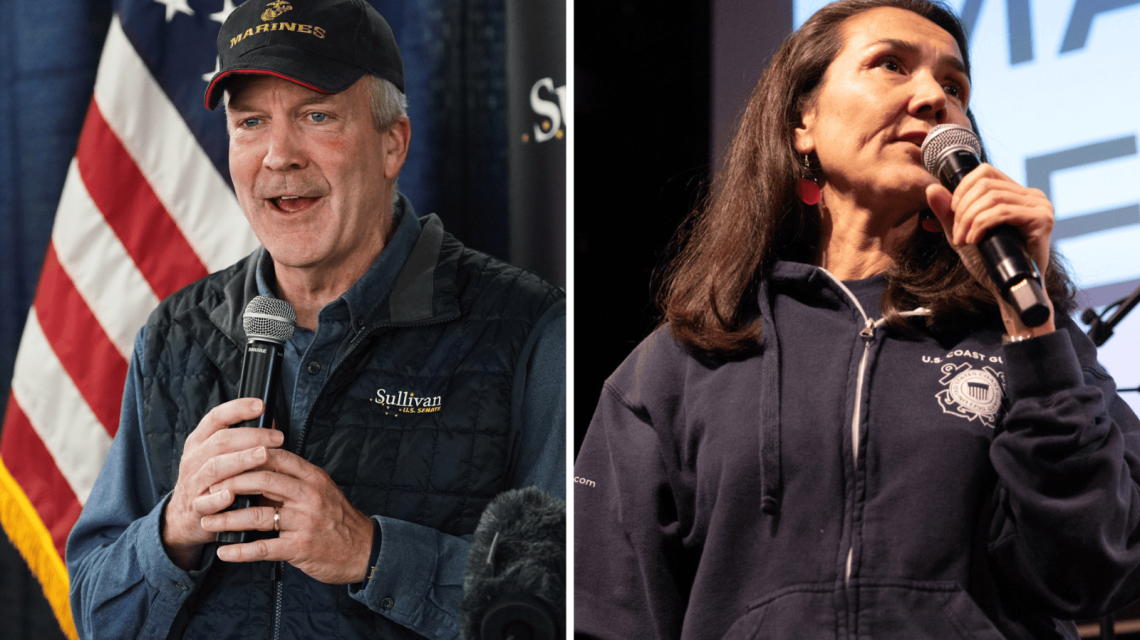
As of 9:24 p.m. Alaska time, Democrat Mary Peltola led incumbent Republican Sen. Dan Sullivan by 298 votes. Unofficial results from the Alaska Division of Elections showed Peltola with 48.3 percent (79,017 votes) and Sullivan with 48.1 percent (78,719 votes). Republican Gerald L. Heikes garnered 2 percent, while independent Daniel J. Sullivan received 1.6 percent, with 211 out of 403 precincts reporting.
CNN, CBS News, ABC News, and Decision Desk HQ project that Democrats will control the Senate. Alaska’s race will shape the margin by which Democrats hold their majority.
Why the Alaska Senate Race Matters
The size of a Senate majority influences its power. Alaska’s outcome remains pivotal.
Should Peltola win, she would become the 55th or 56th Democratic senator. Conversely, a Sullivan victory would keep the margin narrower, potentially strengthening the Republican base for 2028.
Forrest Nabors from the University of Alaska Anchorage had anticipated a split outcome, saying, “It would not surprise me if the Democrats win the Senate majority but Sullivan retains his seat,” according to Newsweek.
Implications of a Mary Peltola Victory
A Peltola triumph would mark the first Democratic Senate seat in Alaska since Democrat Mark Begich’s defeat to Sullivan in 2014. Her win would grant Democrats influence in a state won by Trump in his campaigns.
Peltola’s success might stir legal disputes too. The Justice Department contested that votes for Daniel J. Sullivan could impact the election if Peltola won by fewer votes than Sullivan received. Despite a judge’s dismissal of the suit, plans to appeal exist. Currently, Peltola leads by 298 votes, while the other Sullivan holds 2,693.
Consequences of a Dan Sullivan Win
Should Sullivan retain his seat, it would preserve a Republican position held since 2015, potentially nullifying the federal lawsuit due to its focus on Sullivan’s defeat.
Timeline for Final Results
The official call for the Alaska Senate race may take days or even weeks.
Election night figures represent roughly 70 percent of the total vote, explained consultant Burke Croft to Alaska Public Media. Over 131 of the state’s precincts hand-count ballots, and absentee votes from overseas can arrive up to 15 days post-election.
Croft noted that prior elections saw shifts as large as four points. Previous Senate races took two weeks to conclude.
The Alaska Beacon revealed that more Democrats voted early, impacting initial counts. Consequently, early results may lean Republican more than the final tally.
Results updates are scheduled for November 10, 13, and 18. If no candidate exceeds 50 percent, the state will use ranked-choice tabulation on November 18. The lowest candidate is removed, and ballots are reassigned to voters’ next choice. This cycle continues until a candidate secures a majority. Votes for Heikes and the second Sullivan could influence the outcome. Officials plan to certify results by November 25.
Two Dan Sullivans on the Ballot
Daniel J. Sullivan, an independent and retired educator from Petersburg, is running parallel to incumbent Sen. Dan S. Sullivan.
In June, elections director efforts to disqualify Daniel J. Sullivan were overturned by two state courts, restoring his name to the ballot.
The New York Times noted Democratic ties to Peltola’s campaign in recruiting him, though the Democratic Senatorial Campaign Committee denied such connections. Peltola’s team stated, “The Alaskans for Mary campaign has no involvement with either Sullivan campaign.” Daniel J. Sullivan rebuffed claims of being a decoy.
Judge Sharon Gleason dismissed the Justice Department’s suit, stating that excluding ballots ranking him would breach confidentiality rights.
In ranked-choice counting, ballots listing the independent Sullivan first and the senator second transfer to the senator. Those solely ranking him remain uncounted.
Polling Insights on the Race
A New York Times/Siena poll from October 23-30 showed Peltola with 48 percent and Sullivan at 46 percent, within the margin of error. Russell Luke from the University of Alaska Fairbanks described the race as a toss-up “by all the sources I’ve seen,” according to Newsweek.
 Abdul El-Sayed’s Electoral Triumph Signals a New Direction
 Election Night Updates: Key Victories and Projections
 Comprehensive Election Results Coverage
 Election Night Updates: Key Races and Outcomes
 Democrats’ Election Gains: Key Highlights and Reactions
 Election Results and Insights