American innovations have profoundly influenced the world, transforming various aspects of modern life. From the lightbulb to the airplane, medical breakthroughs, and the internet age, the past 250 years highlight America’s inventive spirit. However, the foundation for these innovations lies in the United States patent process, according to Eric S. Hintz, a historian at the Smithsonian Institution’s National Museum of American History.
U.S. Patent System
The U.S. Constitution introduced an intellectual property clause in 1788, and the first patent statute was signed by George Washington in 1790. This established a system embodying democratic ideals. Hintz highlights that patents were awarded to the first and true inventor, allowing women and free Blacks to secure patents long before they had voting rights or freedom from systemic oppression.
By 2026, the United States Patent and Trademark Office had issued over 12,650,000 patents. These provide inventors with government protection for a period before their creations enter the public domain, open for others to build upon.
Agricultural Innovations
The U.S. patent system fostered growth in numerous sectors, including agriculture. The nation’s feudal system and agricultural innovation led to some of the first patents. European settlers built on indigenous crops and introduced new ones such as cotton. This profitability drove further innovation, including Eli Whitney’s cotton gin, which doubled raw cotton production every decade of the 19th century.
Francis Cabot Lowell improved British designs to create a power loom, transforming Lowell, Massachusetts into a thriving textile town. Cyrus Hall McCormick developed the mechanical reaper, revolutionizing grain processing by allowing it to be cut, threshed, and bundled.
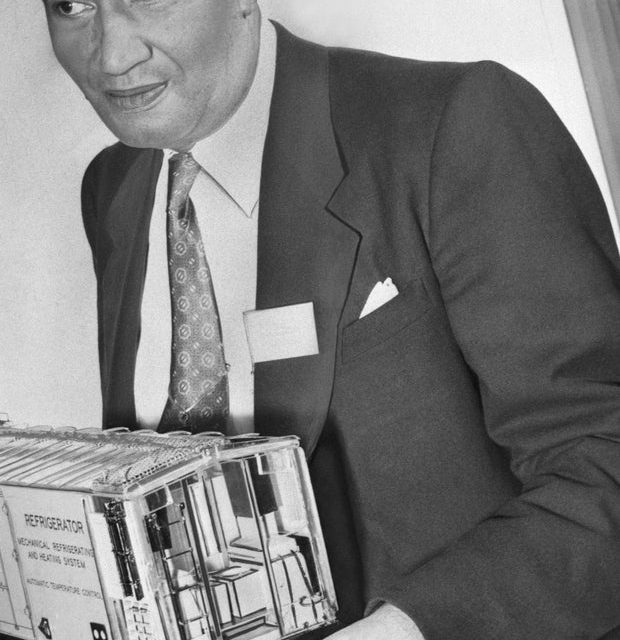
Frederick McKinley Jones later patented a refrigeration system for trucks, facilitating the transport of perishable foods to distant locations.
Transportation Advances
Transportation also evolved significantly. In earlier times, Americans relied on walking, horse-drawn carriages, or sailing, particularly challenging when moving upstream.
Inventors John Fitch and James Rumsey created mechanisms for steamboats to navigate upstream, laying the groundwork for commercial steamboats by Robert Fulton. This new mode of transportation was pivotal for delivering mail across vast distances.
The railroad industry expanded rapidly, reaching coast-to-coast by the 1870s. By 1903, air travel began with the Wright brothers successfully testing their 1903 Wright Flyer, receiving assistance from their sister Katherine Wright.
Despite facing difficulties in 1908, Katherine played crucial roles such as marketing and managing operations. Her contributions highlight the often overlooked roles women played in American history.
Advancements in Electricity
Electricity transformed the American lifestyle, allowing people to break free from the natural rhythm of sunrise and sunset. Charles F. Brush’s installation of an arc lamp in Cleveland marked the first successful use of electric street lighting globally.
This innovation enhanced public safety, permitted nighttime entertainment, and enabled factories to operate round-the-clock. Electricity is considered a cornerstone of American invention, with Thomas Edison amongst its leading figures, introducing the incandescent light bulb and advancing ways to apply electrical power.
A recent CBS News poll revealed that light bulb/lighting was considered America’s second greatest invention, behind only democracy/freedom.
Instantaneous Communications
Edison also enhanced communication by improving Alexander Graham Bell’s telephone, leading to better call clarity and volume. Additional innovations like the phonograph transformed communication in the 20th century.
Manufacturing Revolution
The evolution from artisanal crafts to manufacturing marked a significant shift. Eli Whitney Jr. and Samuel Colt contributed to producing interchangeable parts, leading to the assembly line concept.
Mass production gained momentum with innovations like Henry Ford’s Model T, facilitating rapid vehicle assembly and transforming manufacturing processes.
Fuel Discoveries
America’s petroleum era began with Edwin Drake’s first oil well in 1859. The discovery led to reliance on oil, shaping politics and global affairs. Though alternate energies like wind, solar, and geothermal are gaining traction, oil remains central.
Medical Milestones
Medical innovations improved life expectancy and understanding of the human body. Global advances, such as Robert Koch’s germ theory and Louis Pasteur’s immunity developments, led to vaccinations for rabies and cholera. World War II spurred the mass production of penicillin, and subsequent innovations included the polio vaccine, surgical advancements, and imaging techniques like ultrasound.
Recent medical innovations include COVID-19 vaccines, significantly impacting American lives.
Computing Innovations
Challenges in census data collection led to the development of computing solutions by Herman Hollerith. Later, computing technology advanced with developments like the ENIAC and IBM’s automation revolution.
Personal computing emerged in the 1980s, and the invention of smartphones like the iPhone revolutionized computing.
Visual Advancements
Photography and videos transformed media, providing visual evidence in legal contexts and entertainment avenues. Motion pictures and television grew rapidly, leading to global connectivity advancements like Telstar that broadened media reach.
In reflection, America’s innovations hold vast impact, illustrating how technological advancements illuminate life and enhance society.
 Roman Empire’s Road Network Study Challenges ‘All Roads Lead to Rome’
  Reflections on September 11: A New Yorker’s Perspective
  Ancient Ring Sparks Debate Over Connection to Pontius Pilate
  Confederate Statues and Historical Context
  Significant Historical Events in Chicago on September 3
  The Heat Wave of 1936: A Changing Attire in American History