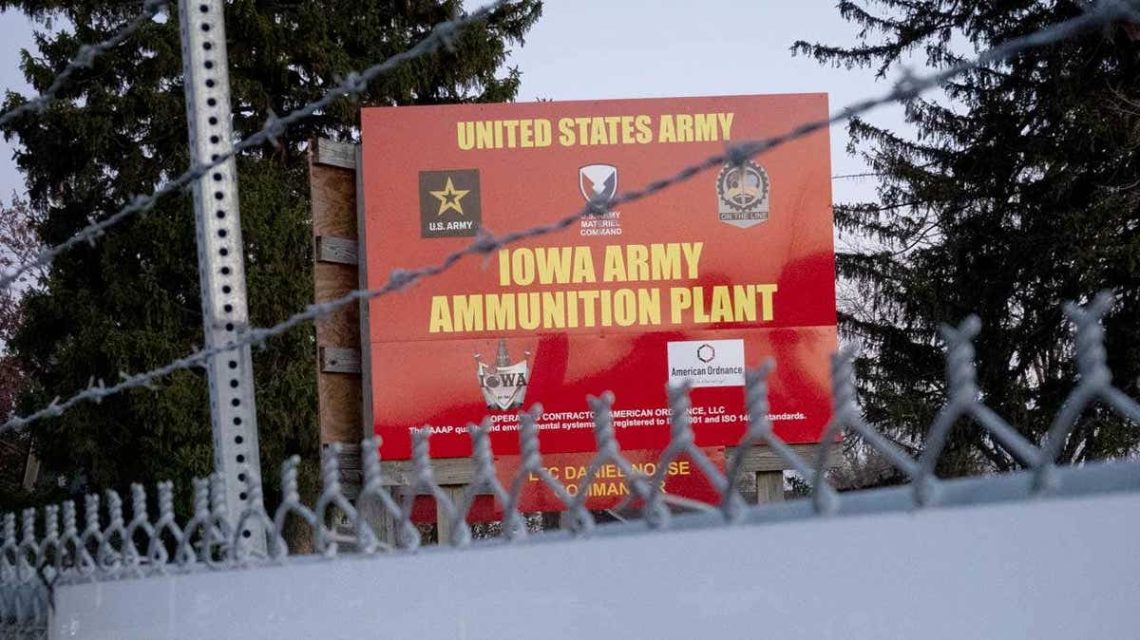
The Fox & Friends Weekend panel has examined a legal conflict following a court’s decision to halt the U.S. Army’s proposal to detonate hazardous bomb-making chemicals in Iowa. This plan raised concerns locally about the formation of a toxic lead dust cloud.
A federal appeals court on Monday removed a major legal barrier for the U.S. Army to proceed with detonating degrading explosives in Iowa. The situation remains uncertain as President Donald Trump stated that the detonation would not occur without the approval of both the Eighth Circuit Court of Appeals and Governor-elect Rob Sand. Trump’s decision requires concurrence from both parties before moving forward with the detonation of degrading lead azide at the Iowa Army Ammunition Plant. According to Trump, if either party does not agree, Governor-elect Sand will be held responsible for any resulting harm.
Delays and Legal Considerations
On Monday, an emergency appeal by the Iowa Environmental Council and the Sierra Club to stop the detonation was denied by the Eighth Circuit. The court emphasized that the choice is between a controlled detonation and a potential unplanned explosion.
Governor-elect Sand, in a statement on social media, refrained from making an immediate decision. He indicated that the administration should rely on expert advice from those who have been assessing the situation for weeks. Sand requested the federal government to publicly share briefing details soon.
Detonation Further Postponed
The Army announced a delay in the detonation until Wednesday, dependent on optimal weather conditions and mitigation strategies. Originally scheduled for Monday, the detonation aims to address safety concerns due to the destabilization risk posed by dropping temperatures.
Reasons for the Detonation
The Army’s environmental assessment highlights why detonation is the chosen method. In 2026, during a safety review, a degraded stockpile of the explosive lead azide was discovered. Its deterioration poses a risk to plant personnel and cannot be safely transported. The crystallized state of lead azide renders it highly sensitive and hazardous.
Impact on Local Communities
The Army’s advisory explained that extensive modeling predicts elevated lead particle levels in the air, though not exceeding EPA action levels. The detonation will produce noise, ground vibrations, and a temporary lead-containing dust plume, affecting local residents in Middletown.
Following legal challenges, the U.S. Court of Appeals for the Eighth Circuit issued a stay regarding the EPA emergency permit. The Army plans to invoke an emergency exclusion under the Resource Conservation and Recovery Act, allowing them to detonate the material without needing this permit. This action aims to prevent a larger risk from uncontrolled explosions.
Trump announced his detailed stance on social media, indicating the Military’s ‘clean up’ is essential due to previous storage mishaps during the Obama Administration.
Additional comments from Sand and the White House are pending.