Bleak Week is a unique film festival that began as a counter to the demand for cheerful movies following the pandemic. Initiated by the American Cinematheque, a nonprofit arts group in Los Angeles, Bleak Week offers a contrasting artistic experience. The festival occurs during the city’s June Gloom, an art house parallel to Shark Week.
Grant Moninger, the artistic director, expressed uncertainty about how audiences would react, either embracing it or possibly taking offense. In 2022, Moninger and Chris LeMaire curated a program filled with the most somber films from world cinema. They included films such as Elem Klimov’s anti-war masterpiece “Come and See” and Béla Tarr’s epic “Sátántangó.” Los Angeles-based film critic Katie Walsh saw great potential in the festival, enthusiastically expressing her support online.
Global Expansion of Bleak Week
Since its inception, Bleak Week has expanded internationally. In June, it takes place in 100 theaters across 73 cities in eight countries. In the U.S., it features in locations beyond just the major metropolitan areas, reaching places like Columbia, Missouri, Pittsburgh, and Albuquerque, New Mexico.
Moninger stated that despite its name, Bleak Week celebrates human experience. He emphasized that empathy and understanding are central to cinema. The festival’s seemingly somber titles sell out regularly and attract notable personalities both on and off stage. Notably, filmmaker Béla Tarr, who previously refused to visit the United States, attended Bleak Week in its second year. This success led to the festival’s expansion to other prestigious locations like The Paris Theatre in New York and The Prince Charles Cinema in London.
Diverse Programming
Katie Walsh, a frequent attendee and moderator, remarked on the wide array of emotions cinema provides. Bleak Week allows audiences to engage with a particular emotion, showing films that might not be available elsewhere. After watching, Walsh finds time for reflection often necessary.
The fifth edition of the festival features over 300 films. This year’s schedule includes appearances by renowned figures like Isabelle Huppert, Ari Aster, and Denis Villeneuve. The festival empowers local programmers to curate their own selections, ensuring a wide variety of genres. Animated films will be highlighted at Chicago’s Gene Siskel Film Center with works like Hayao Miyazaki’s “Princess Mononoke” and Martin Rosen’s “Watership Down.”
Finn Wolfhard, Autumn Durald Arkapaw, and Samantha Quan contributed their curated selections at Vancouver’s Park Theatre. Isao Takahata’s “Grave of the Fireflies” stands out as the most featured film, illustrating post-World War II hardship in Japan. Moninger describes “Come and See” as the quintessential bleak film, included every year for its powerful portrayal of adversity.
The Essence of Bleak Week
The festival maintains certain guidelines. All selected works must be narrative films, excluding documentaries. Bleak Week showcases how tragic experiences transform into art, celebrating resilience through cinema.
In Los Angeles, the festival traditionally closes with a lighter note. The screening of the three “Paddington” movies provides a delightful finish, humorously referred to as a “marmalade chaser.”
 Scott Eastwood Shares Story of Father Clint Eastwood’s Decision on Movie Set
  Jessie Cave Shares How OnlyFans Transformed Her Career
  Molly Sims Enjoys a Beach Day and Shares Fitness Secrets
 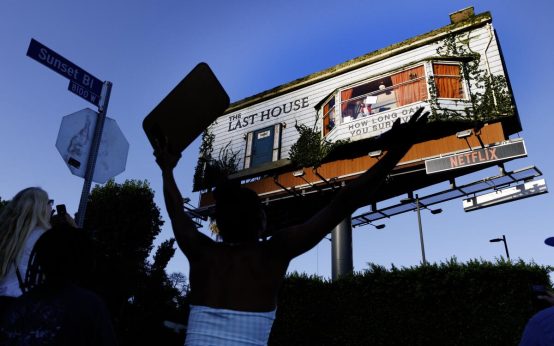 Billboard Stunt Promotes New Netflix Film in Los Angeles
  Antonio Banderas on Moving Back to Spain and His Acting Journey
  Debate on Wedding Gift Etiquette: To Gift Cash or Not?