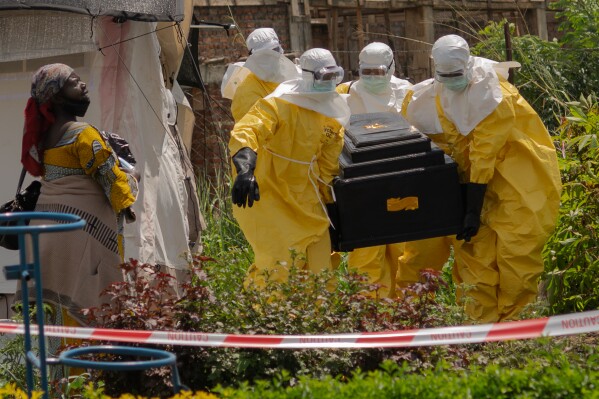
The outbreak in Congo, suspected of claiming over 130 lives, is due to a less common virus causing Ebola disease. This adds complexity to the response because there are no specific treatments or vaccines.
Challenges Faced by Healthcare Workers
Dr. Celine Gounder, an infectious disease specialist, emphasized the lack of ready vaccines for clinical trials. Healthcare workers and responders must rely on basic methods, facing heightened risks because of direct exposure to infected patients.
And so that means responders, healthcare workers and other aid workers are really back to the basics.
Bundibugyo Virus and Its History
Bundibugyo virus has caused two other outbreaks in the Congo River basin. The virus differs from others such as the Zaire virus, Sudan virus, and Taï Forest virus. Dr. Tom Ksiazek, a virologist, states these prior outbreaks offer insights into managing the current situation.
The virus spreads through contact with bodily fluids of infected individuals. Healthcare staff and family caregivers face the greatest risk of infection.
Mortality and Management of Bundibugyo Virus
Though Bundibugyo may be slightly less lethal than other Ebola viruses, a mortality rate of over 30% remains alarming. Data on the virus is limited, highlighting the challenges in precision and understanding.
Without treatments or vaccines, early identification and response are crucial. Proper protective equipment for healthcare workers and supportive care, such as hydration, are essential in reducing mortality.
Containment Efforts and Public Health Measures
Public health workers focus on identifying and isolating cases, contact tracing, and educating the public. Ensuring safe burial practices is critical, preventing additional infections during funeral rites.
It’s important to keep in mind that every single Ebola outbreak that has occurred in the (Democratic Republic of the Congo) — we’re on our 17th now — has been stopped.
Though the absence of vaccines poses challenges, other public health strategies remain effective. Protective equipment, public education, and swift testing contribute to containment efforts.
The Associated Press Health and Science Department acknowledges support from the Howard Hughes Medical Institute’s Science and Educational Media Group and the Robert Wood Johnson Foundation.
 The Impact of Private Equity on Hospitals
  A Mother’s Journey: Raising a Son with Down Syndrome
  Potential Impact of Changes to the National Vaccine Injury Compensation Program
  Living with Sickle Cell: The Glover Family’s Journey
  Living with Alzheimer’s: A Young Man’s Journey
  Understanding the Q-Collar: What Athletes Need to Know