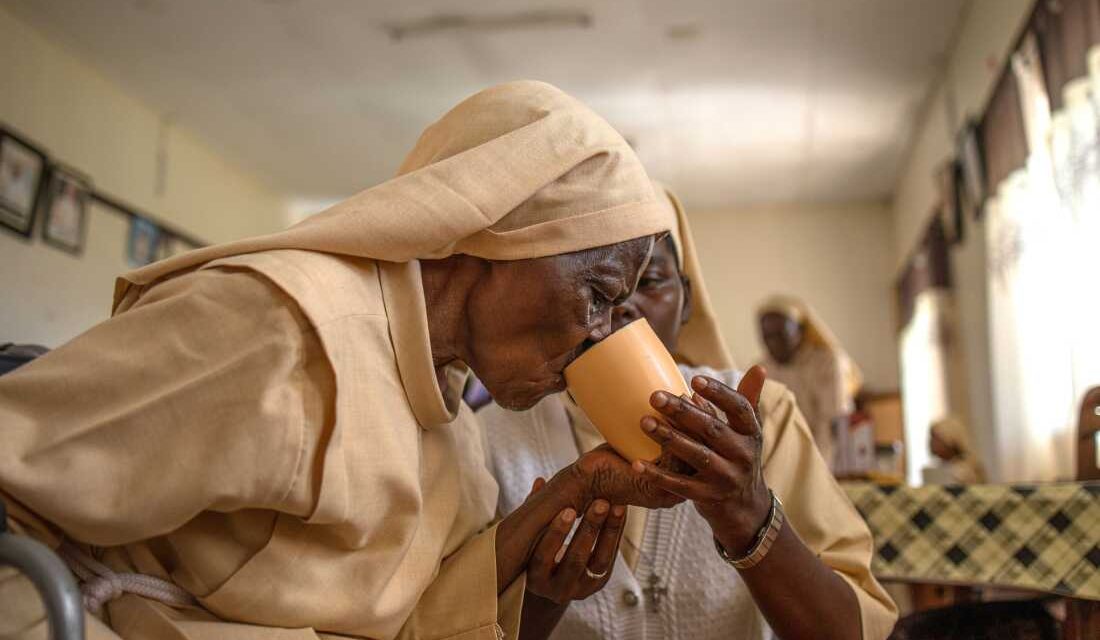
At the Little Sisters of St. Francis premises in Nkokonjeru, Uganda, Sister Mary Consolata Nakawooja assists an elderly nun during teatime. Sister Jane Frances Nakafeero, the superior general, walks through a cemetery filled with simple graves, many of which honor nuns who served as nurses, teachers, and social workers. The convent in Nkokonjeru trains aspiring nuns and provides shelter for retired ones. These retired sisters have limited resources and face significant challenges, generating growing concerns for Nakafeero.
Nakafeero explains that palliative care, which became recognized in the 1960s, remains underfunded and relatively unknown within the Church. These challenges are more prominent in African orders compared to their American and European counterparts. Young nuns often care for their retired peers, but resources like adult diapers, wheelchairs, and hearing aids are scarce. During the 2023 African Palliative Care Association meeting, Nakafeero highlighted these issues, capturing the attention of Jean Callahan, an influential figure from the Irish Hospice Foundation.
Callahan, inspired by her grandmother’s experience as a nun in Tanzania, saw similarities between the elderly nuns and her grandmother’s life. Together with Nakafeero, they created a pilot program to introduce hospice support for aging nuns. This initiative aims to address medical, material, and emotional needs of the nuns and includes psychological and mental stimulation activities for them. The program, initiated in September 2025, is still in its early stages.
Currently, researchers led by Eve Namisango, director of the African Palliative Care Association, are assessing the needs of around 50 retired sisters. These activities plan to expand palliative care in Ugandan convents by 2027. With approximately 82,000 nuns in Africa, up to 10,000 may need end-of-life care.
The daily routine for the 14 retired sisters at the Nkokonjeru convent begins with prayer. Father Joseph Balikuddembe, a young priest, recognizes the need to keep their minds active. Meals are simple, and the facility lacks sufficient wheelchairs. On significant days, like the inauguration of Ugandan President Yoweri Museveni, some sisters watch television, while others reflect quietly.
Sister Mary Hedwig Agoya, now 89, joined the convent at 14 and served as a teacher for decades. Sister Rosemary Luyiga, 95, recalls her time managing a school but struggles with loneliness and limited care.
Sister Mary Consolata Nakawoojwa, a trained social worker in geriatrics, leads a small team caring for the elderly nuns. The demands are rigorous, as many sisters experience depression and anxiety. Nakawoojwa emphasizes the importance of psychological support and palliative care, considering it crucial to provide dignity and identity at life’s end.
Callahan questions if gender biases contribute to the lack of support for nuns. Nakafeero shares this sentiment, noting that diocesan support prioritizes priests over nuns. Meanwhile, ongoing research and fundraising efforts aim to raise $135,000 to advance the program, assisted by an anonymous Irish donor.
Nakafeero’s personal experience in palliative care began with her father’s end-of-life care, inspiring the Naggalama Hospital program. As she looks toward her own future, Nakafeero envisions the care and support she desires for herself in retirement.
By Sophie Neiman, an award-winning journalist based in Kenya, focusing on regional issues.
 Former CEO Sentenced for Bank Fraud and Sanctions Evasion
  Russia’s Potential Incursion Into Estonia: NATO’s Resilience Under Scrutiny
  Senators Urge Action to Free Imprisoned Journalist in Iran
  Trump’s Address at UNGA and Key Political Developments
  Irish Athletes Urge Boycott Against Israel
  U.S.-China Summit and the Taiwan Dilemma