
The phrase “Go back to your country” often targets immigrants but overlooks those who lack a country to return to. Stateless individuals highlight a significant gap in U.S. immigration law, constructed under the assumption that everyone has national ties. This gap affects many, including those like myself, whose birth countries no longer exist. My family sought asylum in the U.S. when I was a child. By the time our asylum request was denied, the Soviet Union had dissolved. With Ukraine not recognizing me as a citizen, we had nowhere to return. We joined the approximately 218,000 stateless individuals residing in the U.S.
Stateless people face precarious situations with scant legal solutions. Without a passport, obtaining identification like a driver’s license becomes nearly impossible. This severely limits daily life, impacting the ability to drive legally, open bank accounts, secure housing, or fly domestically. Employment opportunities are scarce without a Social Security number, regardless of qualifications. Professional licenses, such as those for teachers and nurses, are often unattainable. Leaving the U.S. is not an option, as reentry might be denied. An ordinary encounter with law enforcement can result in prolonged detention due to a lack of expected documentation.
Despite these obstacles, many stateless individuals know no other home. They have grown up in the U.S., attended schools, pursued college degrees, and contributed to society by buying homes, marrying, and starting families. Stateless individuals often have temporary statuses like Deferred Action for Childhood Arrivals or Temporary Protected Status and maintain work authorization through yearly check-ins with immigration officers. The worst-case scenario involves prolonged immigration detention, sometimes for decades, because no nation accepts them. Conditions in detention centers have brought public awareness to this cruelty.
Statelessness occasionally surfaces in public discourse, particularly during debates on birthright citizenship, revealing fears of newborns becoming stateless. The Supreme Court’s protection of the 14th Amendment prevents this outcome by ensuring citizenship security for children. Passing the Stateless Protection Act offers a more enduring solution for stateless individuals long residing in the U.S. The bill would establish a process for recognizing stateless status, protecting individuals from detention and deportation, and enabling legal identification and employment.
The U.S. has yet to sign United Nations treaties on statelessness, such as the 1954 and 1961 Conventions, underscoring a legal oversight. Passing the Stateless Protection Act would address this shortcoming and provide stateless people with a sense of belonging. Karina Ambartsoumian-Clough, co-founder and executive director of United Stateless, advocates for this legislative action as a necessary step in closing gaps in immigration law and granting stateless individuals the rights they deserve.
 Kentucky Governor Andy Beshear Discusses Tariffs, Faith, and Political Ambitions
 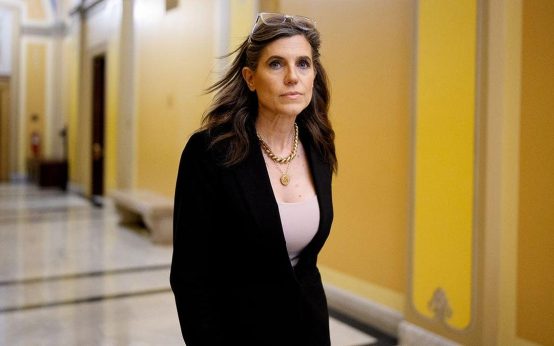 Sunday Highlights: Lane Kiffin, Nancy Mace, and College Football Drama
 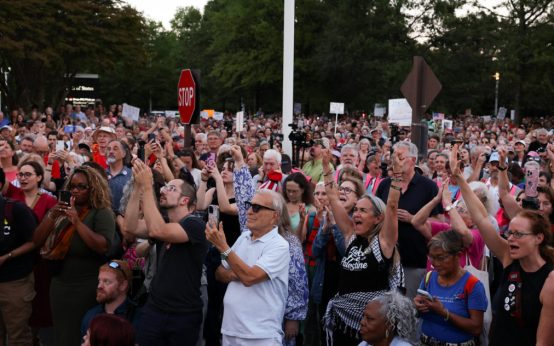 Protesters Rally Against Plans for Kennedy Center
  Nithya Raman: A Passion for L.A.
 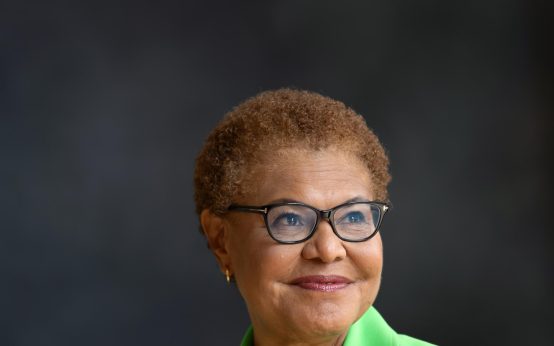 Los Angeles Mayor Karen Bass Discusses Her Tenure, Challenges, and Achievements
  California Republicans Distance Themselves from Trump Ahead of Elections