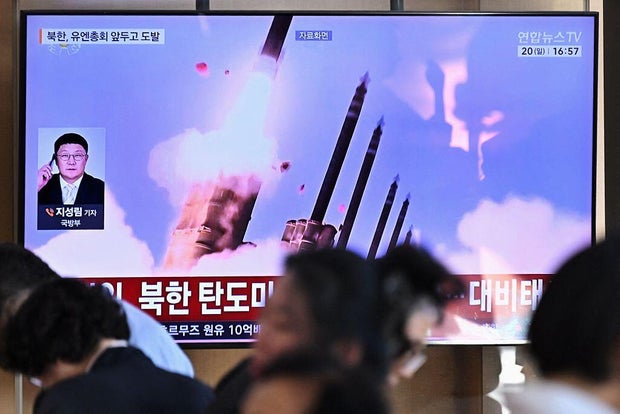
On September 20, 2026, North Korea launched two short-range ballistic missiles toward the sea, according to South Korea’s military reports. These launches coincided with North Korea’s recent reaffirmation of its nuclear status and rejection of a United Nations resolution that demanded cessation of its nuclear activity.
The missile launches are part of a series of weapons demonstrations, occurring even after President Trump reduced a joint military exercise with South Korea in a bid to resume dialogue with Kim Jong Un. The missiles were launched from the eastern coastal area of Wonsan in North Korea, with the first missile covering a distance of approximately 280 miles and the second one flying over 370 miles towards the eastern waters.
The South Korean Joint Chiefs of Staff announced that South Korean and U.S. authorities are analyzing the specifications of the missiles. A South Korean presidential statement urged North Korea to stop ballistic missile launches, which are banned under the U.N. Security Council resolutions. The military affirmed its readiness to counter any provocations from North Korea with the support of its alliance with the U.S.
Japan’s Defense Ministry detected a missile earlier on Sunday, but it did not enter Japanese territorial waters. Kim Yo Jong dismissed President Trump’s gesture to reduce the military drill, labeling it as still provocative. Subsequently, North Korea launched around ten short-range ballistic missiles, responding to the U.S.-South Korean drill.
Kim Yo Jong criticized another U.S.-led maritime exercise as an aggressive military maneuver. The “Pacific Vanguard” exercise, involving the U.S., South Korea, Japan, Australia, New Zealand, and Canada, was deemed by her as extending U.S. dominance in the Asia-Pacific. She argued that U.S.-led war exercises are exacerbating tensions on the Korean Peninsula and promised intensified actions for defending North Korea’s sovereignty. She reiterated North Korea’s unwavering commitment to strengthening its nuclear deterrence.
Earlier in the month, North Korea conducted a joint live-fire drill with missiles, artillery, and drones, following a trilateral military drill by the U.S., South Korea, and Japan. This North Korean drill featured simultaneous firing of multiple weapon types, allegedly intended to test its ability to challenge South Korean and U.S. air defenses.
 U.S. Plans for Permanent Army Base in Poland Amid Tensions with Russia
  Berlin’s Mayoral Race: A Candidate Inspired by New York Leadership
  Cuba Faces Sixth Power Grid Collapse Amid U.S. Fuel Blockade
  Daring U.S. Rescue Mission in Iran
  Inside the Daring Rescue of American Airman in Iran
 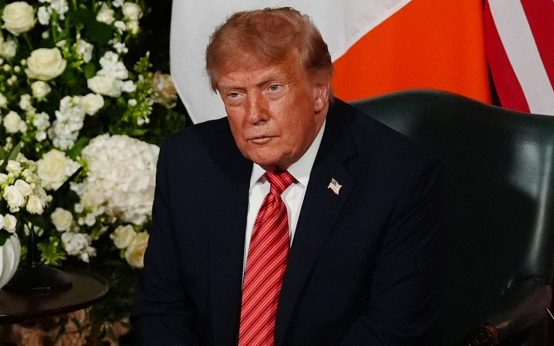 Trump Discusses Chinese Surveillance and Iran’s Missile Strike