
As a former public high school teacher and advocate for Jewish peace, I helped organize a summer workshop series titled “Challenging Zionism in Schools.” These four workshops aimed to address curriculum issues that confuse criticism of Israel with antisemitism, leading to censorship in education.
I have testified before school boards to clarify that antisemitism targets Jews for their identity, while anti-Zionism expresses political opposition to Israel as a nation-state. Mixing the two could unfairly endanger Jewish communities by attributing Israel’s military actions to them, actions labeled as “genocide” in Gaza by Amnesty International and the UN.
This misrepresentation may hinder students from questioning Zionism. Is Zionism a legitimate pursuit of Jewish statehood in their ancestral homeland, or is it an aggressive colonial venture against Palestinians? Such critical inquiry must not be restricted.
Our CodePink web series featured a session with Dr. Maha Nassar, a Middle Eastern studies scholar, clarifying that the chant “From the River to the Sea” holds emancipatory meaning for Palestinians. The workshop also examined the South Africa v. Israel case at the International Court of Justice. This involved studying the UN Genocide Convention and both supportive and opposing texts about Israel’s accusation of genocide by South Africa, leading students to explore whether Gaza meets the definition of genocide.
Another part of our series tackled the International Holocaust Remembrance Alliance’s antisemitism definition, prompting students to debate its merits with their school board. These discussions encouraged students to understand and argue multiple perspectives, which are necessary for critical thinking and include problem-solving, analysis, evaluation, and synthesis skills.
Our lessons conformed to national standards for literacy, emphasizing argumentation and evidence-based claims. As a member of the governing body of United Teachers Los Angeles, representing over 30,000 educators, I supported a motion for a workshop on antisemitism with an organization that relates it to other forms of systemic oppression.
This approach acknowledges all forms of discrimination, avoiding the exceptionalization of antisemitism that leads to isolation and potential harm to Jewish students. Critics of such educational initiatives argue for traditional methods, yet real learning requires engaging content that stirs debate.
Education should reflect the realities students encounter on social media and beyond, preparing them to participate actively in democratic debates. This includes discussing whether “never again” should be exclusive to the Holocaust or universally applied, including to those in Palestine.
Marcy Winograd volunteers with CodePink and serves on the governing body of United Teachers Los Angeles.
Copyright 2026 Nexstar Media Inc. All rights reserved. This content may not be published, broadcast, rewritten, or redistributed.
 Iowa Senate Race: Marist Poll Shows Democrat Josh Turek Leading Republican Ashley Hinson
 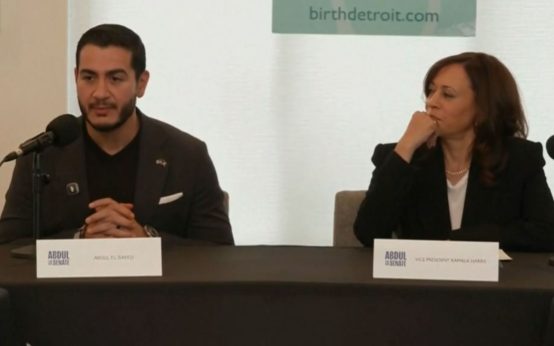 Kamala Harris and Abdul El-Sayed Campaign Together in Detroit
  Impact of Removing Tax-Exempt Status from Private Schools
  Challenges Facing the Supreme Court’s Public Perception
  California Democratic Aide Arrested for Visa Overstay by Federal Authorities
  Experts Doubt Export Ban Will Lower Fuel Prices