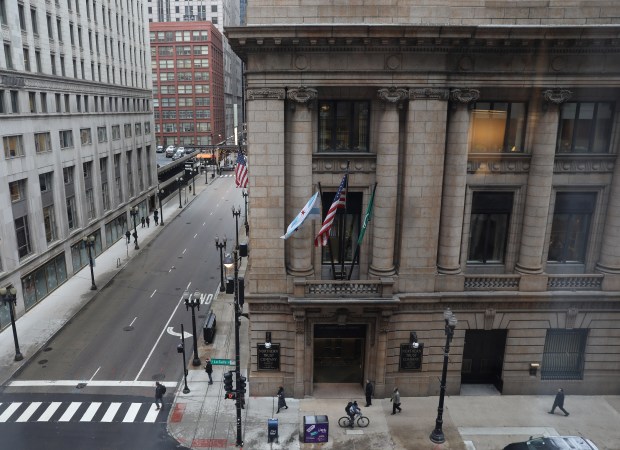
Chicago’s business community has long been a hallmark of civic engagement, contributing significantly to the city’s development. This active participation has led to the creation of exceptional public spaces such as Millennium Park and lakefront parks through the Burnham plan. Many business leaders, including those living in the suburbs, have invested their resources in enhancing Chicago due to the interconnected nature of the region.
The Civic Committee of the Commercial Club of Chicago is underscoring the importance of this collaboration in its recent report, “Growth for All.” The report highlights Chicago’s advantages compared to other metro areas, despite the stagnation in growth over the past decade. This stagnation has fueled many political conflicts, making the committee’s plea for cooperation even more crucial.
The report comes at a pivotal moment before a mayoral election, providing a comprehensive set of statistics that urge the city to leverage its strengths. Historically, Chicago’s success has relied heavily on the input and problem-solving abilities of its business community. Michael O’Grady, Chair of the Civic Committee and CEO of Northern Trust, emphasizes the need for a positive direction for the city that involves cultivating engagement among various stakeholders.
O’Grady notes that Chicago’s current global reputation is negative, which poses challenges for attracting new companies. He stresses that effective communication and marketing must be preceded by substantial improvement in the city’s fundamental issues. The committee is committed to engaging with key groups, including unions, philanthropic organizations, and universities, regardless of the city’s anti-business stance.
The committee aims to increase Chicago’s population to 3 million and double the region’s economic growth rate to 3%, addressing the structural deficits and fiscal concerns that deter investors. Addressing underlying problems such as pension obligations and debt load is essential for restoring confidence.
According to the report, weak growth forces leaders to make difficult choices among critical priorities or raise taxes while maintaining services. The city council has recognized the detrimental effect of over-taxation policies, calling for a more balanced approach.
For Chicago’s message to the outside world to be credible, it must involve the business community’s collaborative efforts. Their role is indispensable in resolving the city’s challenges with transparency and determination.
Share your thoughts through a letter to the editor by emailing [email protected].
 Latino Demographics in Chicago: A Shifting Landscape
  President Trump Calls for Changes in Vaccine Administration
  Court Declares Deportation Policy Unlawful
  Controversy at University of Texas Over Racist Incident
  FAA Approves Trump’s Proposed Triumphal Arch at Arlington
  Hegseth Supports Trump’s Media Ban in Defense of National Security