China’s Missile Development and Economic Impacts
China is enhancing its capability to strike Australian territory, as stated in a report by Australia’s Lowy Institute. The report highlights the rapid expansion of the People’s Liberation Army’s (PLA) arsenal, affecting the military dynamics in the Indo-Pacific region. This shift poses pressure on regional governments to align more with Beijing’s interests.
A focus remains on Taiwan, a self-governing island supported by U.S. security commitments, which is categorized as a high priority by the PLA. Additionally, China aims to extend its military reach with missiles, aircraft, and ships capable of reaching Australia.
PLA Military Branches and Their Potential Threats
The Lowy Institute assesses various PLA divisions, including rocket and cyber units, indicating a significant shift in military strength, impacting Australia even without direct attacks. The Chinese government insists its defense enhancements are for national security and sovereignty, aimed at peaceful developments, not targeting specific nations.
Missile Threats
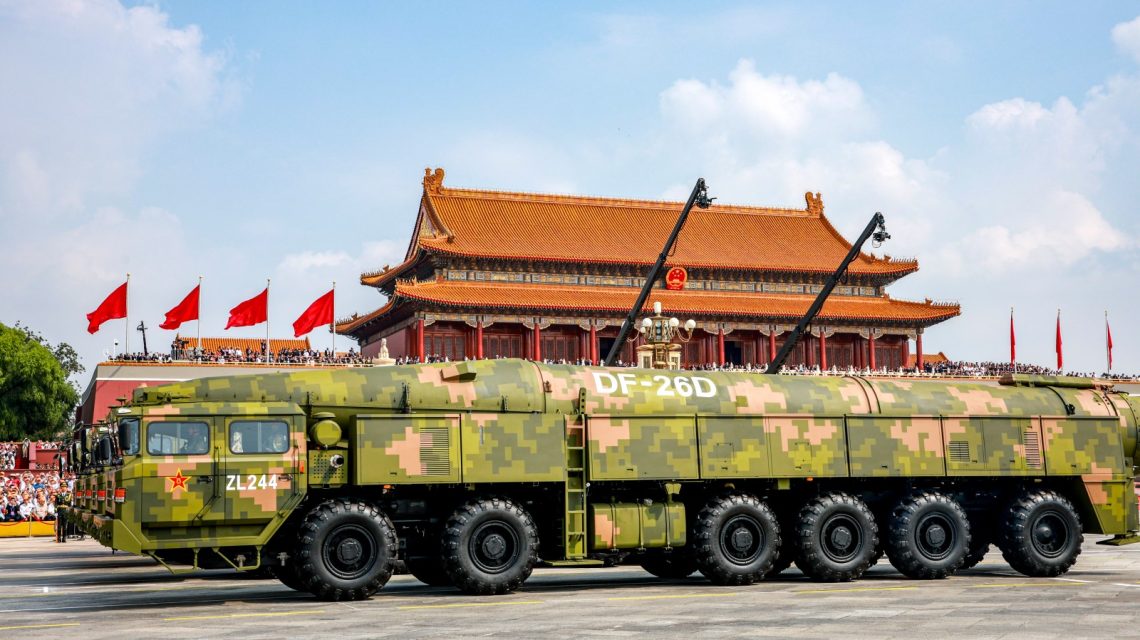
Chinese missiles can presently hit Australian territories from sea or air platforms. The DF-26 missile is the only conventional, land-based option that can reach northern Australia from South China Sea bases. A newer DF-27 missile potentially covers the whole Australian landmass, and could be operational, according to U.S. Defense Department data.
In a conflict involving Australia and U.S. alliance efforts, targets could range from offshore oil facilities to government infrastructure. The report excludes considerations of China’s nuclear arsenal, though it mentions the potential tripling of China’s nuclear stockpile by 2035, supported by an expansive defense budget.
Naval Threats and Economic Vulnerabilities
Australia’s essential maritime trade routes face risks according to the Lowy report. These routes facilitate 99% of Australia’s international trade, amounting to substantial economic transactions.
“Maritime traffic to Australia could be restricted by a quarantine, a demonstration of force via the sinking of one or more ships, a distant blockade of ships trading with Australia, or a close blockade of Australian ports,” the Lowy authors said.
Chinese naval activities in proximity to Australia have elevated concerns, particularly recent maneuvers in March 2025, demonstrating possible future regular deployments.
Australia’s Strategic Response
To address these regional tensions, Australia has strengthened its defense budget and collaboration with the U.S., acquiring nuclear-powered submarines via the AUKUS agreement and accommodating U.S. military presence.
Capability and Intent: Strategic Dynamics
Australian Defense Minister Richard Marles identifies China’s military growth as the most extensive since World War II. The U.S. voices concerns about China’s lack of engagement in arms control discussions, suspecting ambitions beyond regional impacts. Some American officials anticipate China’s readiness to seize Taiwan by 2027, but stress that such actions may not be immediate.
The Lowy authors argue against focusing on China’s intentions, suggesting preparations should be based on available capabilities.
 Trump’s Diesel-Deal Feud with Zelensky Obscures a More Important Effort
  Ukraine Requests Stronger U.S. Action as Energy Hostilities Continue
  US Policy Shift: Aid Threat to Ukraine and Sanctions Relief for Russia
  Trump’s Foreign Policy Approach Amidst Russian Actions
  Concerns Over Pervasive Chinese Espionage in the U.S.
  Zelenskyy Expresses Skepticism Over Russia’s Commitment to Energy Ceasefire Amid Continued Attacks