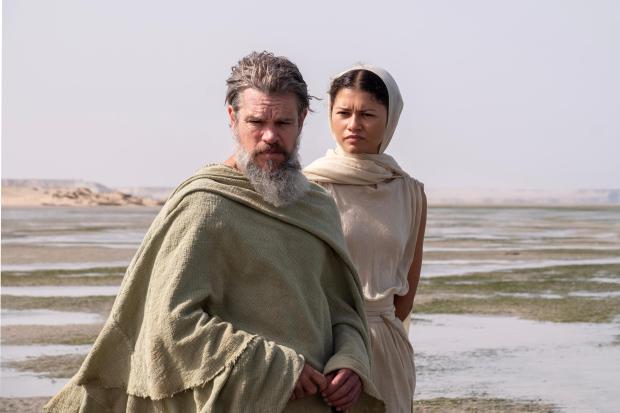
Christopher Nolan has produced a wide range of films covering themes from bombs in “Oppenheimer” to heroism in “Dunkirk.” He has explored heroes in “Batman Begins,” villains in “The Dark Knight,” and the gray areas in “The Dark Knight Rises.” His filmography includes family in “Interstellar,” time in “Tenet,” and dreams in “Inception.” He has touched on memory with “Memento,” magic in “The Prestige,” and mystery in “Insomnia.” His debut film, “Following,” focuses on a writer, while his latest, the 13th, addresses mythmaking in “The Odyssey.”
Nolan’s adaptation of Homer’s poem incorporates his thematic interests into visually and audibly striking frames. By borrowing from “The Odyssey,” which dates back to the eighth century B.C.E., Nolan aligns his movie with one of the foundational pieces of human storytelling.
In “The Odyssey,” he explores trauma and guilt, reminiscent of the themes of “Oppenheimer.” The Trojan horse, an infamous trick, symbolizes a strategic yet cruel tactic haunting its creator, Odysseus, portrayed by Matt Damon. Despite his return journey to Ithaca taking a decade, his story delves into the challenges and the transformations experienced along the way.
Odysseus faces numerous obstacles, from mythical creatures to divine retributions, finding temporary solace with Calypso, played by Charlize Theron. Yet visions of the goddess Athena, played by Zendaya, plague him. Meanwhile, his family, Queen Penelope (Anne Hathaway), son Telemachus (Tom Holland), and servant Eumaeus (John Leguizamo), engage in a tense waiting period, resisting suitors in his homeland.
The family yearns to be reunited but are afraid to face each other and themselves after all the years lost to war.
Nolan’s cinematic rendition is a marvel due to its grandeur and beauty. Shot entirely in IMAX by Hoyte van Hoytema, the film features global locations from Morocco to Iceland. The narrative’s authenticity resonates with viewers, enhanced by Ludwig Göransson’s dynamic score. Editor Jennifer Lame constructs battle scenes with relentless energy, immersing the audience in chaos.
Odysseus recounts his past to Calypso and Penelope, unraveling a complex narrative with flashbacks. Misguided perceptions of heroism unfold; Odysseus’s choices violate Zeus’ laws, initiating perpetual unrest. These thematic elements resonate in contemporary contexts as Nolan invites viewers to reflect on societal violence.
The cast includes Jon Bernthal as Menelaus, capturing vivid character nuances. Anachronistic elements, like modern slang, reinforce the film’s relevance. In Hades, an emotionally charged scene confronts Odysseus with the fallen soldiers’ grievances, achieving a connection absent in Nolan’s previous works.
Overall, Nolan’s “The Odyssey” leverages spectacle to deliver a profound message, capturing the human condition across time.
The Odyssey — 4 stars (out of 4)
MPA rating: R (for violence and some language)
Running time: 2:52
How to watch: In theaters July 17
 Bunnie Xo’s Post-Divorce Adventures Spark Debate Over Age Gap
  Alan Ritchson Faces Backlash Over Political Remarks
  Ella Langley’s Record-Breaking Chart Success: The Rise of ‘Choosin’ Texas’
  Presley Gerber’s Death: Tributes from Friends and Family
  Exploring the 2025 Booker Prize Shortlist
  Speculation Around Aaron Rodgers and Mallory Edens’ Alleged Relationship