
Public perception is crucial as we approach midterm elections. Voters across political lines are making their voices heard about data centers. Recent polls show Republicans running for Senate recognize voter concerns about these centers, especially their construction and impact on communities.
Senator Jon Husted from Ohio stated at the GOP’s midterm convention in Dallas that the decision to have data centers should rest with local communities rather than the federal government. He believes that local decisions allow for varied opinions, saying, “Some people will say yes, some people will no.”
The data center companies haven’t explained why they should be permitted to develop in communities,” Husted noted.
A Gallup Poll from May revealed that 70% of Americans oppose new data centers for AI in their areas, citing concerns like increased water and electricity costs. These centers are a common topic on the campaign trail for Republicans, including Husted.
Husted recently attempted to introduce a Senate floor bill aimed at tackling rising electricity costs. The bill aimed to prevent AI and tech companies from transferring costs of infrastructure upgrades to taxpayers. However, it faced opposition and blocking by Senator Martin Heinrich from New Mexico.
“Congress needs to pass real legislation with real teeth,” Heinrich said, contrasting voluntary pledges from companies.
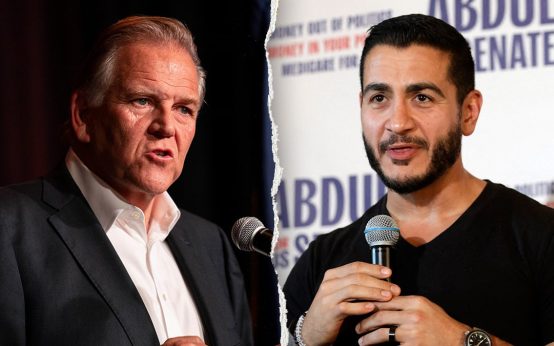
Former Representative Mike Rogers, participating in competitive elections in Michigan, has echoed concern about data centers. He proposed a moratorium until voter queries are resolved. Rogers emphasizes not imposing a federal ban, cautioning that federal authority could impose other mandates.
Rogers advocates for data centers to use closed water systems, avoid burdening residents’ electric bills, and ensure tax benefits return to taxpayers.
“You don’t give it to the government to give out,” Rogers proposed. “It goes right back to the very people who have one of these in their neighborhoods.”
John Thune, Senate Majority Leader from South Dakota, prefers limiting federal involvement, believing local governance offers “soundest decisions with the most input from the American people.” In tandem with Senator Amy Klobuchar from Minnesota, Thune aims for a “light-touch approach” to regulating AI.
Thune stresses transparency in AI operations, arguing against “heavy-handed regulatory regime,” preferring public disclosure and reporting of AI activities.
Alex Miller writes for Fox News Digital, focusing on the U.S. Senate.
 Trump Pressures Senate Republicans to End Filibuster to Prevent Democratic Dominance
  Jared Golden Endorses Mike Lawler for Re-election
  Jewish Democrats in Michigan Show Support for GOP Candidate
  Mayor Mamdani and President Trump Discuss Housing and Immigration in NYC Meeting
  MAGA Movement Gains Popularity Over Socialism Amid Democratic Party Debates
  Austin Democrats Criticized for Comments on ICE Shooting