The belief that millennials and Gen-Z’s financial struggles are due to frivolous spending, like on avocado toast, overlooks the significant rise in housing costs. Between 2015 and 2025, the price of homes in America nearly doubled, while mortgage rates saw a similar increase. A starter home that cost $175,000 in 2015, with a monthly mortgage of $835, rose to $350,000 by 2025, with a monthly payment of $2,259. Clearly, financial challenges stem from far more than lifestyle choices.
A comparable misunderstanding exists in education policy. Critics often argue that school choice programs financially drain states. ProPublica highlighted Arizona, suggesting its program significantly affects the state budget. Yet, data reveals otherwise. Across school choice states, expenditures for vouchers, tax credits, and Educational Savings Accounts make up about 0.7% of total state spending. In states with comprehensive choice programs, this figure is slightly higher at 1.3%.
If choice programs were the source of fiscal strain, their spending should be both large and rapidly increasing, which isn’t the case. Furthermore, these programs would need to be purely expenses with no fiscal benefits. In reality, choice programs are a small portion of state budgets. Arizona’s extensive program only accounted for $882 million, or 8% of K-12 education spending, 5.4% of state general fund expenditures, and around 1% of the total state budget.
Arizona’s K-12 system had 1.1 million public school students and 85,000 choice program students by fiscal 2025. Despite educating 7.6% of students, the choice program utilized only 5.5% of the allocated taxpayer funds, indicating a cost-saving measure rather than a budgetary burden.
Focusing on increased expenditures reveals that from 2015 to 2025, per-pupil spending in public education rose from $13,000 to $19,000, marking a 31% increase. After inflation adjustments, this still reflected a 7% rise, driven mainly by traditional public school costs.
The allocation of funds raises questions. Phoenix Elementary School District, despite a 39% drop in student numbers over seven years, increased staffing by 5%, with growth observed entirely in non-teaching roles as the teacher count fell by 7%. This pattern isn’t isolated to Phoenix. Denver Public Schools saw a 2% student decrease coupled with a 3% staff increase. Chicago experienced a 10% student drop, yet expanded its staff by 20%, and Miami-Dade, despite losing 5% of its students, grew its staff by 1%.
Advocates of current education structures frequently target school choice programs for perceived budgetary waste. However, similar to the misguided judgment on millennials’ spending habits, blaming these programs for fiscal deficits misses the mark. True challenges lie beyond the minimal, carefully managed expenditure of choice programs. Understanding this distinction is crucial in addressing the real issues impacting state budgets.
 Impact of Removing Tax-Exempt Status from Private Schools
 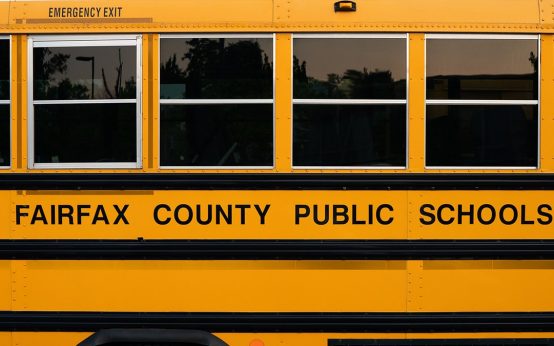 AFL Investigates Fairfax County Schools’ 9/11 Teaching Guidance
  Challenging the ‘Trust the Experts’ Narrative in School Libraries
 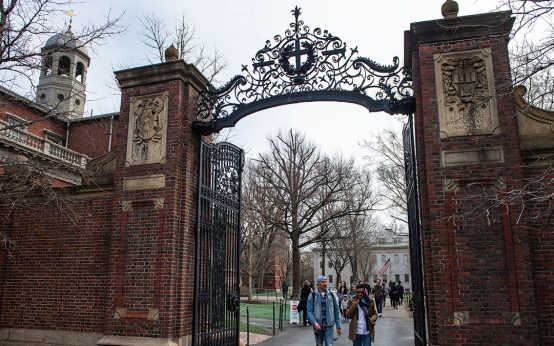 Implications of AI in College Admissions
  Preparing Students for an AI-Shaped Workforce
  Concerns Over Racism and School Funding Inequality Discussed by ‘The View’ Co-Host