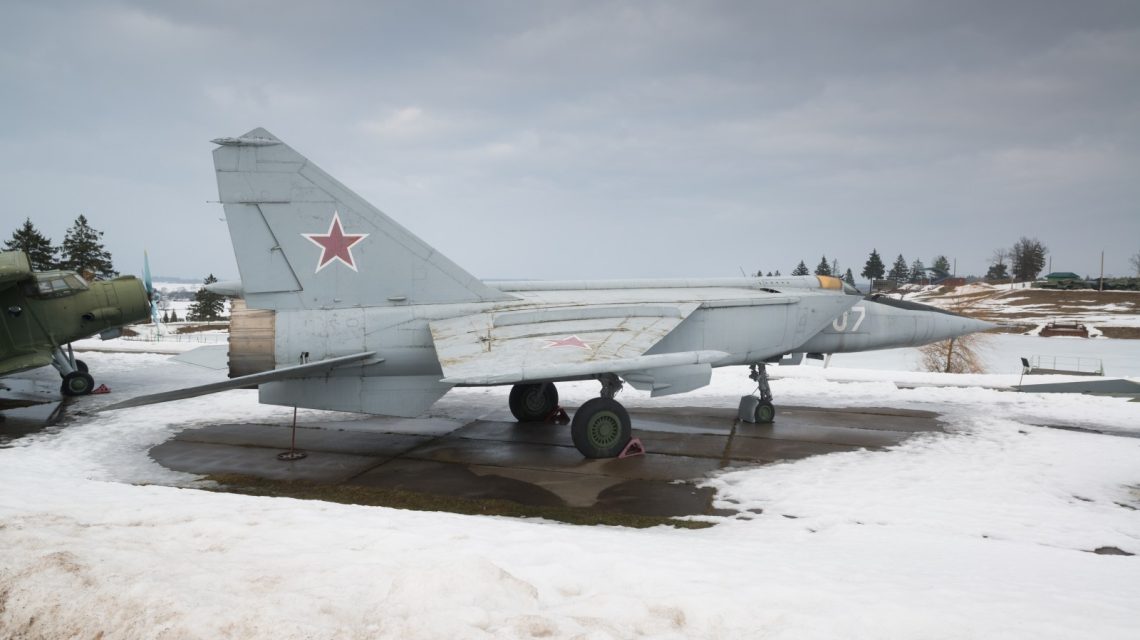
Fifty years ago, Soviet pilot Viktor Belenko made a historic decision. On September 6, 1976, he flew his MiG-25 Foxbat from Chuguyevka Airbase to Japan, handing the United States a significant intelligence asset during the Cold War.
Belenko’s escape was dramatic and narrowly successful. His aircraft diverted from its path, avoiding radar detection, and he landed with mere seconds of fuel remaining on a civilian runway in Hokkaido. He met astonished onlookers with a request to defect to the United States. His defection was celebrated by then-CIA Director George H. W. Bush as an ‘intelligence bonanza.’ Belenko was granted asylum, gained citizenship, worked in the aerospace sector, and lived in the U.S. until his passing in 2023.
Current Defections
Today, as Russia continues its aggressive stance in Ukraine, its government faces a similar challenge. Several high-profile individuals have defected, though none in the same style as Belenko. Wealthy businessmen, diplomats, soldiers, and security personnel have left their posts, with some offering substantial insider knowledge.
Anatoly Chubais, formerly a key figure in Russian economic reforms and a close associate of Putin, relocated to Israel and founded the Center for Russian Studies in Tel Aviv after fleeing Russia. He and former colleagues have faced financial and legal repercussions in Russia, with Chubais denouncing such actions as repressive.
Gleb Karakulov, once a captain in the Federal Protective Service, escaped during a trip to Kazakhstan in 2022. He later shared insights into Putin’s tightly controlled circle and technological practices.
Defector Miroslav Simonov provided knowledge of Russia’s drone warfare after crossing into Ukraine. Each defector brought distinct expertise and insights, contributing to the understanding of Russian operations.
Motivations and Risks
Ukraine encourages defections by offering financial incentives for Russian personnel who deliver military equipment. A fighter jet yields $1 million, and a helicopter brings $500,000. These defectors receive new identities and safe passage. In 2023, pilot Maksym Kuzminov took advantage of this. He flew a Mi-8 helicopter into Ukrainian territory with valuable parts.
Kuzminov’s decision ultimately led to his death in Spain, with indications suggesting reprisal from Russian interests.
Russia’s legal system encourages loyalty through harsh penalties. Desertion, treason, and voluntary surrender result in severe prison terms. The fate of Mikhail Zhilin, who sought asylum but ended up in a Siberian penal colony, exemplifies the risks defectors face.
The Broader Impact
Mass emigration weakens Russia beyond military aspects. Vladimir Putin’s 2022 mobilization announcement led to a significant outflow of citizens. Many of these emigrants are young, educated, and skilled workers in sectors like IT and science.
The loss of such talent poses a strategic challenge for the Kremlin. While many have left, a complete defector package akin to Belenko’s—bringing technology, knowledge, and personal safety—remains elusive.
The next impactful defection might involve state-of-the-art technology or vital intelligence, reshaping the dynamics of ongoing conflicts.
 Federal Appeals Court Decision Against Trump’s ‘Third-Country’ Deportation Policy
  President Trump’s Controversial Ban on Media Outlets Sparks Press Freedom Concerns
  Ed Sheeran’s Philadelphia Concert Amid Controversy
  U.S. Secures Strategic Control Over Greenland
  U.S. Security Agreement in Greenland Sparks Optimism and Concerns
  Cook County’s Property Tax Bridge Loans