Introduction
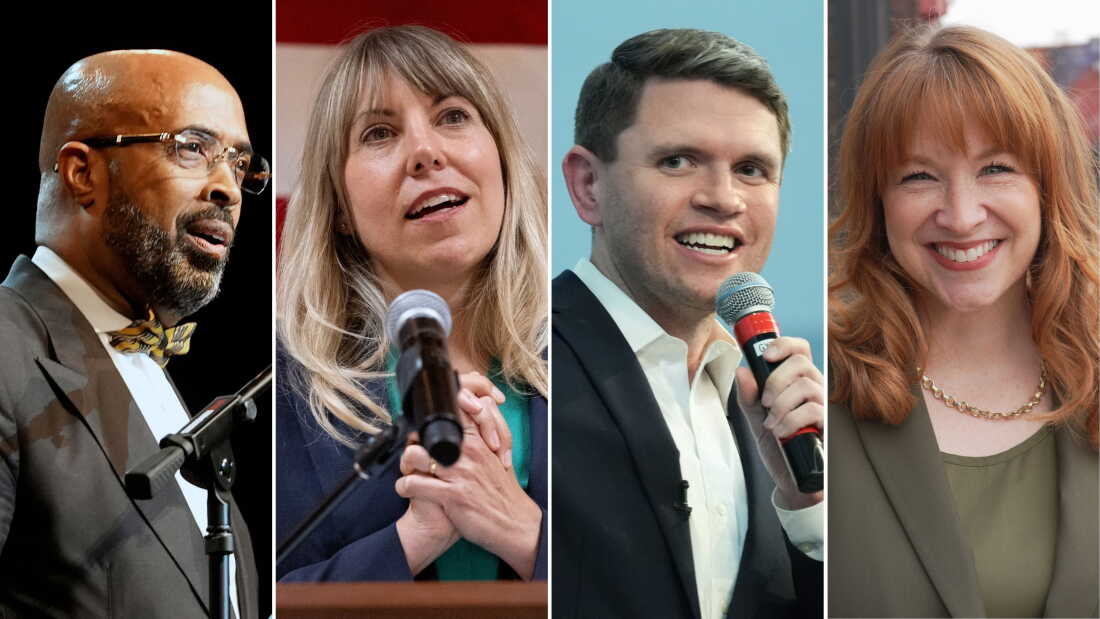
Democratic candidates have increasingly integrated faith into their congressional campaigns. This trend includes those like James Talarico, Frederick Haynes, Sarah Trone Garriott, and Lindsay James, highlighting their religious perspectives while addressing political issues.
Faith in Politics
In Houston, James Talarico, a candidate for U.S. Senate, shared his Christian beliefs with the congregation at Brentwood Baptist Church. He emphasizes that Christianity offers insights into resolving political turmoil, seeing past the nation’s challenges with compassion.
Historically, religion has not been central to Democratic campaigns. In this cycle, several clergy members are running for Congress, blending their religious teachings with political platforms on healthcare, veterans’ issues, and economic opportunities.
Criticism and Defense
Republicans have criticized these candidates, some accusing them of using religion insincerely. Texas Lt. Gov. Dan Patrick labeled Talarico’s approach as blasphemous, claiming it goes against traditional Christian values. Talarico counters by arguing that policies denying healthcare to fund tax cuts are the real blasphemy.
Faith and Government
Despite emphasizing faith, Talarico contends that religion should not control government, advocating against theocracy. He voices concern over Christian nationalism, attributing such influences to the Trump administration, particularly within the Defense Department.
Talarico’s opponent, Ken Paxton, has questioned his religious authenticity, alleging that he misrepresents his faith to voters.
Public Reception
At a town hall, Talarico drew a crowd of nearly 700, who showed support with campaign paraphernalia focused on neighborly love. Some, like nurse practitioner Brandon Sterling, appreciate the blend of faith and politics as a way to engage Southern voters.
Others, such as Kristin Kott, prefer religion separate from policy, emphasizing concerns like education and community recovery.
Other Democratic Candidates
Frederick Haynes, a seasoned pastor in Dallas, runs for the U.S. House, inspired by legislative redistricting affecting minority representation. He invokes religious teachings to advocate for the poor and marginalized.
Despite criticisms from his Republican opponent, Haynes organized an interfaith forum addressing housing and voting rights, drawing varied faith leaders including Muslims.
Clergy in Politics
Sarah Trone Garriott, an Iowa state senator and Lutheran pastor, incorporates faith into her campaign. Her interpretations center around inclusivity and helping those marginalized, following teachings from the Gospel of Luke.
Balancing Faith and Secular Concerns
In northeast Iowa, Lindsay James, a Presbyterian chaplain, connects health care issues to her religious beliefs. She interacts with voters over concerns about healthcare funding, demonstrating her commitment to public service.
Her opponent, Joe Mitchell, criticizes her stance on gender rights, framing himself as adhering to traditional Christian values.
Democratic candidates face the challenge of presenting their faith-based convictions as valid political motivations, hoping to resonate with voters on both spiritual and practical levels.
Conclusion
These Democrats use biblical narratives, like the parable of the Good Samaritan, to frame their political mission as a collective effort to improve societal structures rather than isolated acts of charity.
 Oregon’s Wildfire Crisis Calls for New Solutions
  The U.S. DOGE Service and Government Dysfunction
  Selective Accountability in Education Raises Concerns
  Republicans Face Challenges in Upcoming Midterm Elections
  Bobby Pulido’s Unique Congressional Bid
  The TV President’s Image Without Network Footage