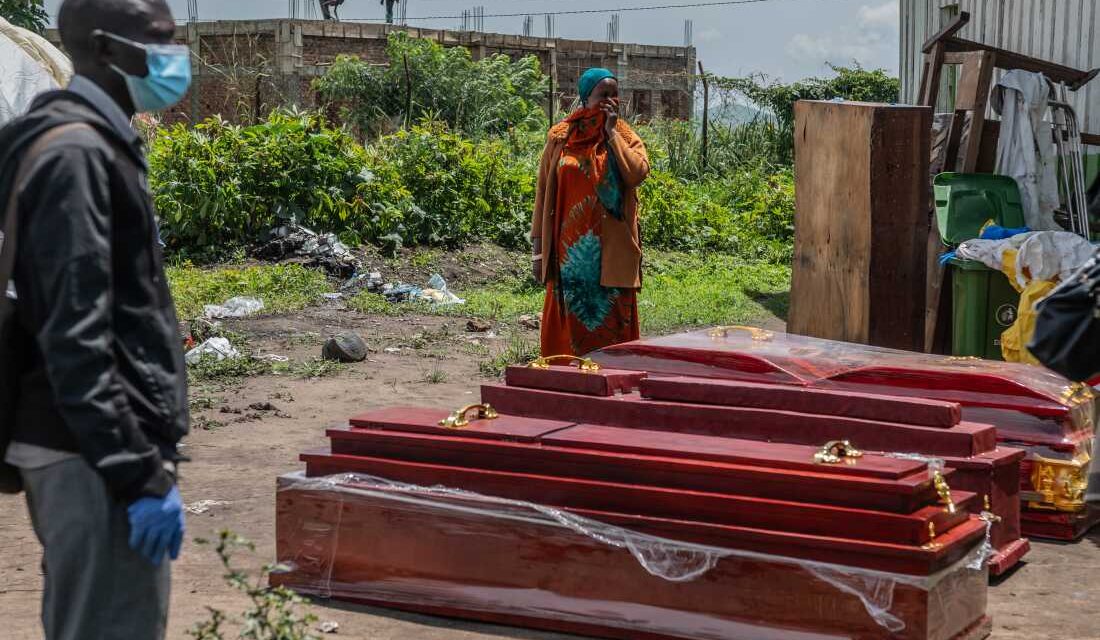
A recent Ebola outbreak in eastern Congo has caused significant concern among healthcare workers who feel unprotected and inadequately trained. The outbreak involves a rare form of the virus and takes place in a region often facing attacks by armed groups. This instability further complicates crisis management efforts. In a tragic development, militants connected to the Islamic State group reportedly killed at least 17 individuals in Alima village, Ituri province, which has become the focal point of the Ebola outbreak.
The World Health Organization (WHO) has acknowledged a low global risk but emphasized that ‘patient zero’ remains unidentified. “It’s truly sad and painful because we’ve already been through a security crisis, and now Ebola is here too,” said Justin Ndasi, a Bunia resident. Health supplies have been delivered to Bunia, where the initial death was announced last week. However, residents report difficulties in obtaining masks, and prices for disinfectants have increased significantly.
A Mother’s Heartache
In Rwampara, families of suspected Ebola victims witnessed healthcare workers in protective gear disinfecting bodies for secure burials. The disease often mimics other illnesses like malaria at first, leading to rapid deterioration. Botwine Swanze, who lost her son, recounted, “He told me his heart was hurting. Then he started crying because of the pain. … Then he started bleeding and vomiting a lot.” Ebola spreads through contact with bodily fluids such as blood and vomit and presents with symptoms including fever, vomiting, diarrhea, and muscle pain.
WHO’s Response
The WHO has declared the outbreak a public health emergency of international concern due to its “scale and speed.” While it could persist for several months, efforts to identify the outbreak’s origin continue. So far, 51 cases have been confirmed in Ituri and North Kivu provinces, with additional cases in Uganda. WHO Director-General Tedros Adhanom Ghebreyesus indicated nearly 600 suspected cases and 139 deaths, but cautioned that the actual figures could be much higher. The London-based MRC Centre for Global Infectious Disease Analysis estimates the true case count may exceed 1,000.
This marks Congo’s 17th Ebola outbreak, but most prior incidents involved a more common strain. A vaccine for the current Bundibugyo virus will not be available for several months. Dr. Vasee Moorthy of WHO noted that eastern Congo already faces severe challenges from ongoing conflict, displacement, and a weakened health system, exacerbated by years of underfunding.
U.S. Involvement
Secretary of State Marco Rubio emphasized U.S. commitment, with a pledge of $23 million and plans to fund 50 emergency clinics. In Bunia, life continues with some precautions. Masks are used in public, but isolation wards remain scarce. Trish Newport of Doctors Without Borders highlighted overcrowded facilities, where suspected cases share wards with other patients.
In Mongbwalu, normal activities proceed, but public awareness is increasing. Chérubin Kuku Ndilawa, a civil society leader, mentioned the lack of public handwashing stations. Hospitals are fragmentally staffed and poorly trained, raising concerns about handling confirmed cases.
International Transfers
A U.S. national tested positive for Ebola in Congo and is now in German isolation for evaluation, according to German Health Ministry spokesperson Martin Elsässer. Another American doctor from Uganda, free from symptoms, was evacuated to the Czech Republic. Dr. Satish Pillai from the CDC noted that logistical decisions were made based on immediate conditions and the necessity for rapid action.
 Controversial Death in Russia Sparks Concerns
  10 Key Principles for Healthy Longevity
  Russian Scientist’s Death Raises Concerns Over Plague Exposure
  Alan Alda Reflects on Life, Career, and Parkinson’s
  Voice Disorders Linked to Dementia Risk
  Understanding the Misperceptions and Inaction in Addressing Sexual Violence