Health officials in the Democratic Republic of Congo (DRC) grew concerned about potential Ebola cases in mid-April. Deaths in the northeastern region, suspected to stem from the virus, prompted sample collection. These samples were sent to a lab in Bunia for testing.
Jean-Jaques Muyembe, director of DRC’s national biomedical research center (INRB), noted the first samples tested negative for Ebola on April 30 using the GeneXpert machine, designed to detect viral DNA. Subsequent samples also returned negative results. Later, when samples were sent to Kinshasa for advanced testing, they tested positive for Ebola.
The GeneXpert machine, vital to DRC’s Ebola monitoring, failed to detect the rare virus strain circulating in the area, leading to a significant delay. By mid-May, officials declared an outbreak of Ebola Bundibugyo as the situation worsened. Suspected cases surged past 1,100 while labs faced a backlog.
Caia Dominicus, senior adviser for the International Pandemic Preparedness Secretariat, highlighted the initial response being hindered by inadequate diagnostics. Timely testing is key to isolating patients and preventing further spread.
WHO’s Abdirahman Mahamud confirmed an improvement in the diagnostic capacity, yet warned it was insufficient for an outbreak projected by the CDC to reach 20,000 cases by August.
A Difficult Diagnostics Situation
An improvement in testing came with RADI-One, a machine efficient in detecting Bundibugyo in samples with minimal training and equipment. This makes it suitable for smaller, nearby clinics. Currently, eight labs, including one mobile lab, handle tests in northeastern DRC. Larger labs, such as the one in Bunia, process over 100 samples daily.
NPR was informed by a technician that samples are promptly analyzed, reducing the turnaround time to one to twelve hours. Africa CDC aims to deploy 50 RADI-One units by June. However, according to Dominicus, more are required, and there’s limited availability. Discussions are underway with KH Medical, a South Korean manufacturer, to acquire more machines.
Other tests need validation before deployment, necessitating staff training. The logistics of sample transport further complicate diagnostics. Remote and conflict-ridden regions pose accessibility challenges, along with community mistrust.
The Role of Rapid Tests
Rapid tests could enhance response efforts by providing faster results. Similar to those used during COVID, these tests can yield results in minutes. Rapid tests may lack sensitivity compared to lab tests but are crucial for grasping the scope of outbreaks.
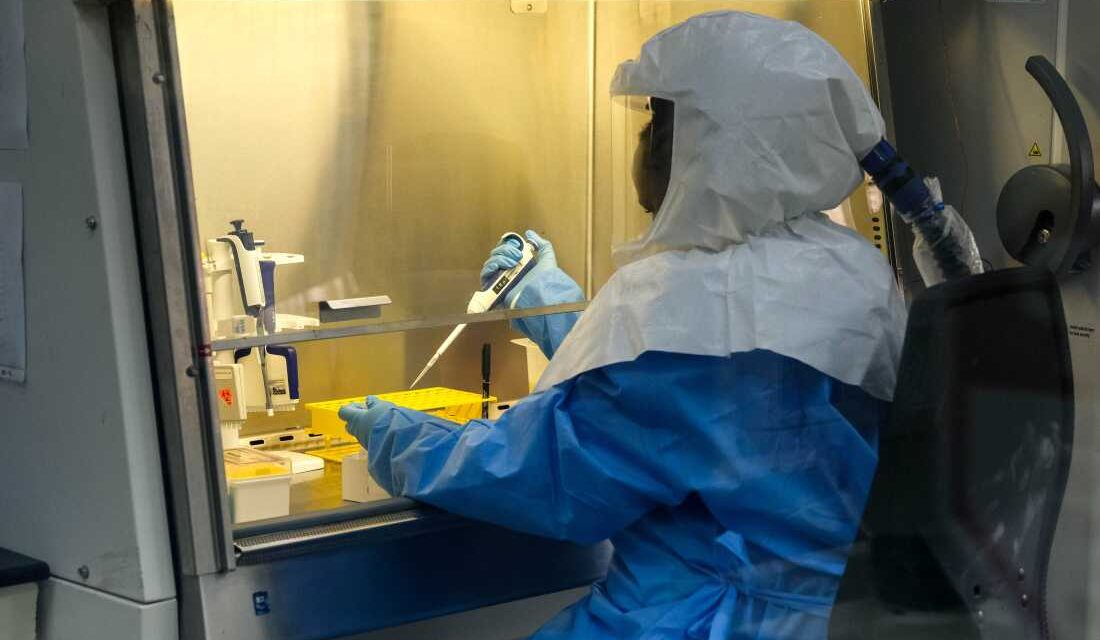
Sophia Mulei, a laboratory technologist, works with a control sample inside the Viral Hemorrhagic Fever Laboratory at Uganda Virus Research Institute in Entebbe, Uganda. Jobs that involve working in such conditions and with complex equipment require careful attention to detail and adherence to protocols.
Using rapid tests on deceased individuals can inform burial practices to prevent virus transmission.
Despite the need, no rapid tests for Bundibugyo have been approved. Some existing tests for other strains might be effective but need field validation. Developing a test specific to Bundibugyo might take a few months, suggested Robert Garry from Tulane University.
Global health physician Ranu Dhillon advised developing rapid tests as it takes less time compared to vaccines or therapeutics. Concurrently evaluating existing tests against traditional results can offer insights.
Investment in both lab and rapid testing is crucial. Diagnostics often receive less attention than treatments or vaccines, yet they provide essential information for key decisions.
Bundibugyo is uncommon, but with proper diagnostics, the outbreak’s severity might have been mitigated. Dominicus stressed that the delay in testing capability significantly delayed the response.
 Recall of Meat Products from Star Meat Delivery Inc.
  Questions Arise After Presley Gerber’s Death in Rehab
  Upcoming Concerns and Influence in Health Politics
  Fraud Task Force Saves Billions by Tackling Obamacare Misuse
  Presley Gerber’s Passing Raises Addiction Recovery Concerns
  Understanding October SNAP Benefits: Payment Dates and Changes