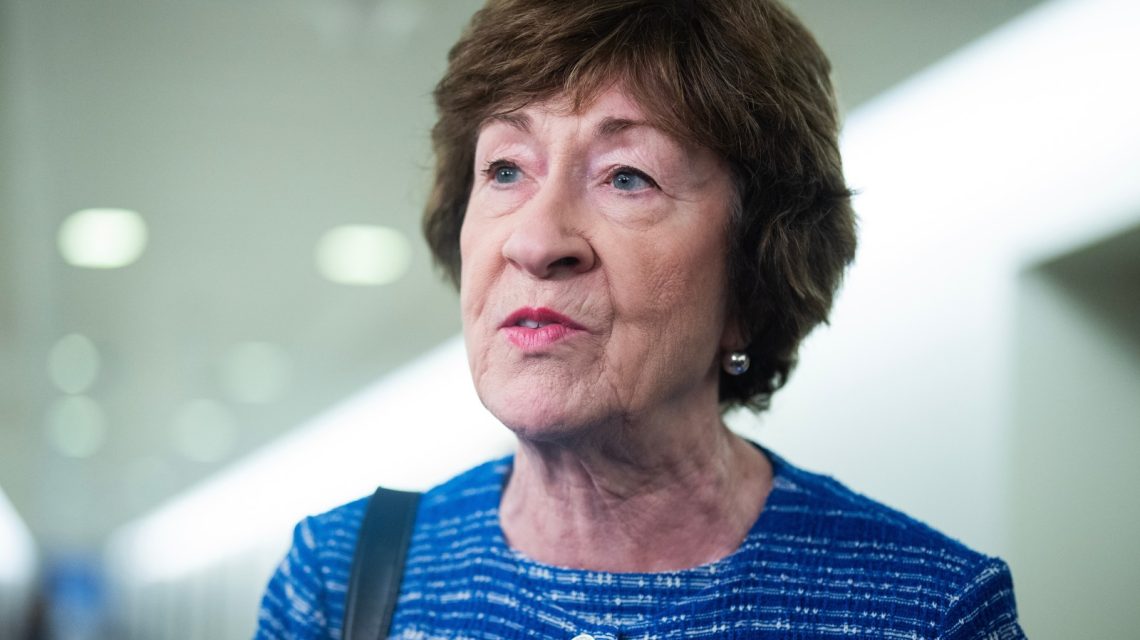
Senator Susan Collins is encountering a significant economic challenge in her reelection campaign as home heating oil prices reach unprecedented levels ahead of the 2026 midterm elections. Rising fuel costs have become a major vulnerability for Republicans across the nation as they attempt to maintain their majorities in the House of Representatives and Senate, with only about five weeks remaining until the midterms. The increase in prices is largely due to disruptions in the Strait of Hormuz, a crucial passageway for global oil amidst the ongoing Iran war.
This situation presents a unique difficulty for Collins in Maine, the state most reliant on home heating oil. According to the Northeast Gas Association, more than 50 percent of Maine residents use oil as their primary heating source, and prices have been consistently rising as winter approaches, adding pressure to the financial situations of Mainers as they consider whether to reelect Collins.
Home heating prices averaged $6.02 per gallon statewide last week, marking a rise from $3.33 per gallon a year earlier, according to the Maine Department of Energy Resources. More conservative, rural areas of the state are experiencing especially high costs.
The previous peak was recorded in May 2022, with prices reaching $5.92 per gallon during a post-pandemic inflation wave. Heating costs remain a persistent concern in Maine, even during summer, as noted by Mark Brewer, a professor of political science at the University of Maine in Orono.
Collins’ reelection efforts are further complicated by her competition with Democrat Troy Jackson, the former Maine Senate president. Affordability continues to be a major issue for voters both in Maine and nationally. The Iran war has not been well-received in polls, with former President Trump’s approval rating declining after launching strikes against Tehran in February. If voters attribute rising heating costs to Trump’s actions, Collins may face backlash, according to Brewer.
Jackson, however, is unlikely to secure the more conservative regions of Northern and Central Maine, where heating costs average $6.05 and $6.09 per gallon, respectively. But he could diminish Collins’ margins by focusing on these prices.
Meanwhile, Collins is expected to emphasize her backing for the Low-Income Home Energy Assistance Program (LIHEAP), which offers financial support for energy expenses of low-income households in Maine.
Democrats have criticized Collins regarding the heating prices. Cheyenne Gallivan, Jackson’s spokesperson, accused Collins of decades of decisions that supposedly raised Mainers’ energy costs. Maine Democratic Party spokesperson Misha Linnehan also criticized Collins’ position on the war, noting the financial burden on Maine families as weather gets colder.
Recently, Collins and Senator Angus King urged former President Trump to release supply from the Northeast Home Heating Oil Reserve to help lower costs.
Polls indicate a close race between Collins and Jackson. A recent survey showed Collins leading Jackson by three points, while others showed Jackson ahead or tied with Collins.
Democrats aim to capitalize on a potentially favorable national environment and view the Maine Senate race as crucial to gaining a Senate majority. However, Republicans are portraying Jackson as too progressive for Maine.
Notably, prediction markets favor Jackson to flip Maine, showing a 61 percent chance of his victory over Collins.
The Maine Senate race remains a highly contested battleground in this year’s midterms, categorized as a pure toss-up by political forecasters.
 Texas Governor Declares Emergency to Tackle Fuel Prices
  Debate Over AI Regulation Postponed Until After Midterms
  Confusion Surrounds UK Bomb Plotting Probe
  Democratic Women’s Caucus Economic Agenda Unveiled
  Partial Reopening of Lafayette Square Near White House
  Innovative Child Care Plans by Mayor-Elect Mamdani