Energy industry leaders recognize the need for additional power sources. They are investing in new technologies and infrastructure to address this demand. Exelon CEO Calvin Butler stated, As an industry, we are investing approximately $1.1 trillion in our infrastructure over the next five years to ensure that we’re meeting that need and that demand.
In 2024, data centers used about 1.5% of global electricity. Demand has risen since then. Current estimates suggest data centers will soon become the world’s fifth-largest energy consumers, with usage comparable to Japan and Russia.
Exelon’s Role in Power Infrastructure
Exelon ranks among the largest electric utility holding companies in the U.S. It operates electric grid infrastructure, providing electricity to homes and businesses. Butler explained the company’s mission: We’re a pure transmission and distribution company. My responsibility is to operate a safe, reliable, and resilient grid. So, I’m your pipes and wires. I do not control the generation.
He noted that in the PJM area, supply costs have increased by 645% since 2024.
Innovation in Fusion Energy
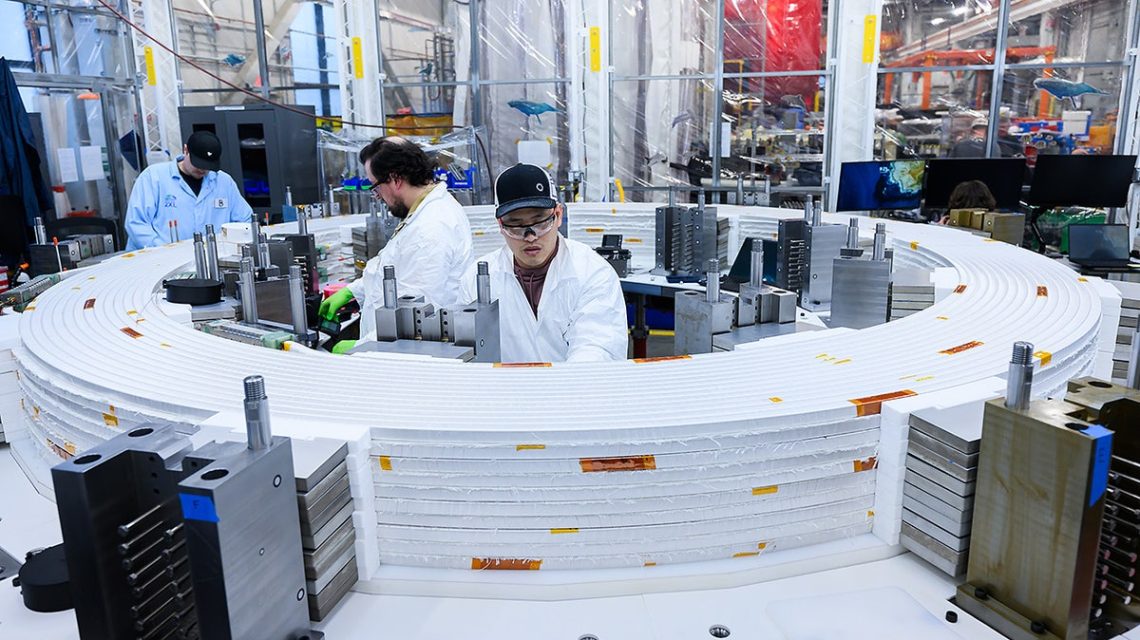
To meet growing energy needs, companies are exploring innovative solutions such as fusion technology. Commonwealth Fusion Systems, based in Devens, Massachusetts, is developing fusion energy. This could provide a new, carbon-free power source.
Brandon Sorbom, the company’s co-founder and chief science officer, said, When you take light nuclei like hydrogen, and you combine them together, and you release energy in that process. That energy is released in the form of heat, which then you can convert to electricity.
Commonwealth Fusion Systems’ ARC fusion power plant could produce 50 times more power than it consumes, potentially powering a small city for a year using minimal fuel.
While optimistic, the science community acknowledges uncertainties. MIT researchers estimate fusion could provide 10% to 50% of electricity by 2100, but the technology remains expensive.
Moving Data Centers to Energy-Efficient Locations
Some companies are relocating data centers to areas with lower power requirements. The Nordic countries offer advantages such as stable governance, abundant green energy, and lower industrial demand for power.
Nscale, which builds and operates infrastructure for data centers in the Nordics, emphasizes the benefits. Philippe Sachs of Nscale stated, There’s abundant power—it’s green, it’s cheap. There’s not a lot of competing industrial demand.
The cool climate helps reduce energy needed for cooling hardware.
EcoDataCenter, based in Sweden, designs and operates data center buildings. They work with major tech companies to meet computing needs efficiently. John Wernvik of EcoDataCenter noted that, Given that it’s cold for many months of the year, we can utilize the heat generated by the servers to heat homes.
Nordic countries house about 134 data centers, with 71 more planned soon. They offer affordable energy prices and reduced industrial competition for power.
Despite challenges adapting to increasing power demands, global companies strive to find solutions. Sorbom concluded, There’s a strong correlation between energy usage and quality of life. You want to find ways to make more energy in a clean and safe way.
 President Trump Proposes ‘Super Intelligence’ as New AI Term
  First Lady Melania Trump’s AI Education Push Amid Concerns
  Expansion of Data Centers Fueled by AI Development
  Beijing’s Tactical Undermining of U.S. Supremacy Through AI
  Controversy Surrounds Automated License Plate Readers Across the U.S.
  Trump and Harp Sued Over Truth Social Subscriber Program