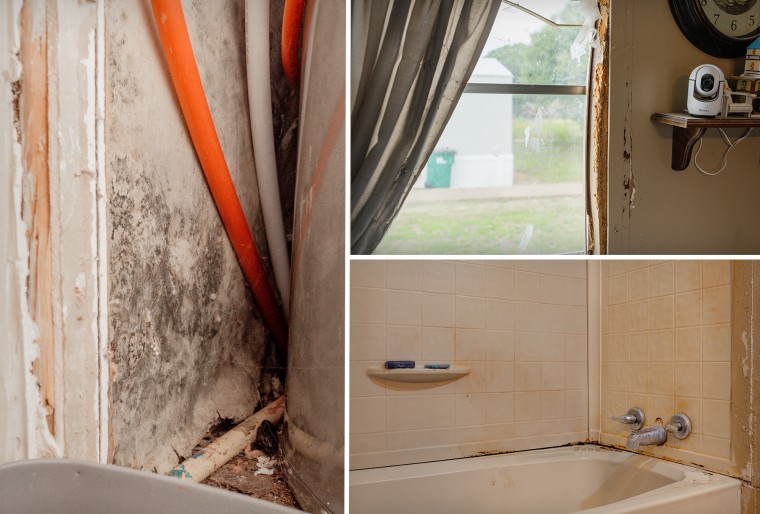
In recent years, residents of mobile home communities in the United States have faced mounting difficulties. Aliea Brown, a resident of Buck Island Manufactured Home Community in Mississippi, rents Unit 62 and has endured severe living conditions since 2023. Facing issues like an improperly hung door, mold growth, unsealed windows, and insect infestations, the situation worsened as a sewer pipe burst, adding to her water bill and releasing foul wastewater under the home. “The rancid sewage smell came up through the cracks in the edge of the floor in the bathroom,” Brown noted, referring to the unpleasant odors permeating her living space. Brown, 41, and her partner, Mason Obradovich, 39, pay $675 a month for the unit.
Despite repeated pleas for repairs, the corporate owner, Homes of America, deemed the repairs too costly relative to the unit’s value. The management offered to sell the unit for $1,000, suggesting a transition from rental to ownership for residents. The couple, struggling with bad credit and Brown’s chronic obstructive pulmonary disorder, felt trapped. Moving was not an option due to financial constraints.
Mobile home communities currently house around 22 million Americans, often providing a refuge for those who lack other affordable housing options. Yet, experts and inhabitants report a trend of increasing unaffordability brought by corporate acquisitions that drive rent and fee hikes. NBC News spoke with 20 residents from various states, all reporting similar experiences post-acquisition.
Some of the new owners seem to deal with their residents in a fairer way and some are just ruthless.– John Calabrese, President, Florida Federation of Manufactured Home Owners
Buck Island, owned by Homes of America, part of Alden Global Capital, exemplifies this trend. The larger corporate strategy often focuses on revenue generation rather than residents’ welfare. Despite attempts to contact management for comments, representatives from Homes of America and Alden Global Capital were unavailable.
Data indicates that 7.2 million mobile homes account for 5.4% of U.S. housing. Particularly in southern states such as Florida, Louisiana, and Mississippi, these communities serve seniors, people with disabilities, and low-income families primarily. Although manufactured homes are cheaper than traditional homes, costs are rising.
President Donald Trump proposed a halt on purchasing single-family homes by investors, but no similar action targets mobile home acquisitions. States like Maine have begun tackling these issues, implementing protective legislations such as granting residents purchase rights when their parks are sold.
A lawsuit filed by former employee Elvin Zapata alleges unethical practices by Homes of America, including neglecting mold problems and exploiting low-income tenants. This “Abandoned Trailer” scheme purportedly involves selling dilapidated units cheaply to avoid the cost of repairs. Homes of America has yet to respond to these claims in court.
Other residents, like Jim Hodgkins from Illinois, recounted similar grievances post-acquisition by Homes of America. Heat loss during extreme cold conditions and ignored repair requests typified his experience. Residents were pressured to purchase their units to avoid eviction, complicating life for those unable to afford essential repairs.
Residents like Brown have sought external assistance from organizations like Housing Education and Economic Development (HEED), which confirmed the unit’s deteriorated state. Consequently, Buck Island’s management offered subpar alternative housing options.
While some residents leave to escape buying requirements, people like Brown, with financial and health limitations, find themselves stranded. With ongoing legal assistance, they continue to fight for a livable resolution.