The United States launched military strikes on Iran early Tuesday following President Donald Trump’s announcement of reinstating a blockade on Iranian ports and charging for safe passage through the Strait of Hormuz. Iran retaliated with attacks on U.S. allies in the Middle East. This escalation disrupts an interim deal aimed at halting hostilities, reopening vital maritime routes, and providing time for negotiating a permanent settlement.
Strategic Importance of the Strait
The Strait of Hormuz is crucial for global energy supplies, with a fifth of traded crude oil and natural gas passing through it during peacetime. Iran’s closure of the strait with threats and attacks on ships has resulted in increased oil prices and impacted the global economy. The interim deal intended to reopen this passage but has been hindered by further Iranian attacks.
U.S. Military Response
U.S. Central Command confirmed strikes on Iran targeting coastal defenses, missile sites, and maritime capabilities. Iran acknowledged the strikes but did not immediately disclose casualty figures. Trump’s decision to reinstate the blockade suggests plans for further military action.
Iran’s Counterattacks
In response, Iran targeted Bahrain and Jordan, along with three tankers, igniting at least two and causing casualties. The United Arab Emirates threatened retaliation, and a Dutch ship was attacked, although crew members remained safe.
Renewed Hostilities
Reports indicate renewed attacks in Iran’s city of Bushehr and targeted missile alerts in Bahrain. Jordan’s military intercepted missiles from Iran, highlighting growing regional tensions.
Impact on Interim Peace Deal
Recent exchanges of fire challenge the interim peace deal, aimed at resolving Iran’s nuclear program and easing regional tensions. Trump’s blockade declaration adds uncertainty to its success.
Economic Implications
Oil prices have surged, with Brent crude reaching over $87 per barrel, threatening increased costs worldwide and influencing global economic stability.
Continued Negotiations in Rome
Israeli and Lebanese delegations plan to meet to resume U.S.-mediated negotiations. The presence of Hezbollah in the conflict complicates Israeli withdrawal and disarmament efforts. Although a truce holds in Lebanon, its fragility under potential full-scale conflict between the U.S. and Iran is concerning.
The escalating situation demands diplomatic solutions to prevent further conflict and economic disruption.
 Where is Austin Tice?
  Trump’s Speech Targets Iran’s Nuclear Ambitions at U.N.
 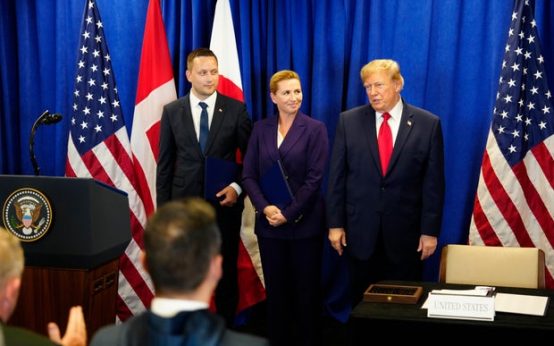 U.S., Denmark, and Greenland Sign New Security Agreement
 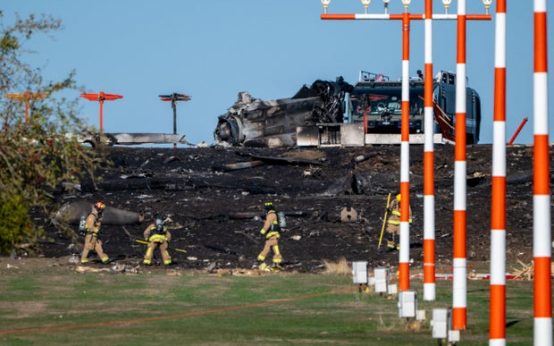 U.S. Military Aircraft Crash at Spangdahlem Air Base
 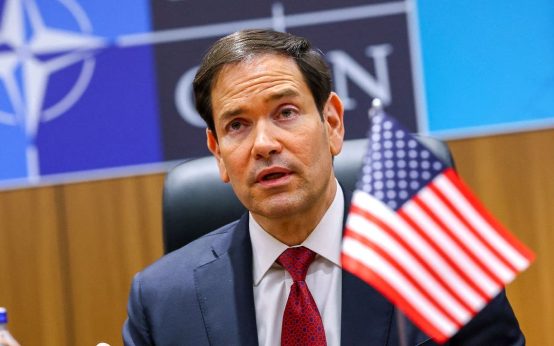 Marco Rubio Criticizes NATO’s Role Amid Middle East Conflict
  Israeli Prime Minister’s Visit to the U.N. Amid Controversy