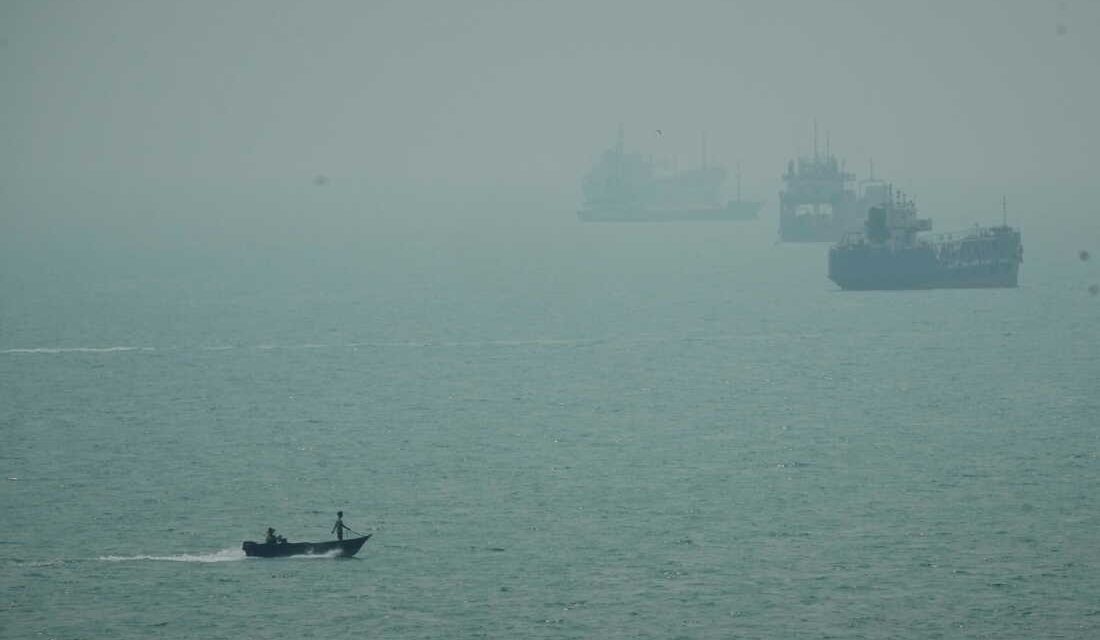
WASHINGTON — Tensions between the United States and Iran have intensified with the U.S. military’s recent destruction of five Iranian oil tankers. This act was a response to Iranian attacks on American warships, further escalating the ongoing conflict that reignites hostilities in a war lasting over six months.
Iran retaliated by launching missiles targeting U.S. positions in Jordan. Jordanian forces successfully intercepted 18 missiles, with two others landing in unpopulated areas. Jordan remains a key U.S. ally, hosting American military forces, making its bases susceptible to Iranian missile strikes.
The U.S. Central Command has remained reticent regarding the latest developments. President Donald Trump faced challenges to end the conflict, employing both military strategies and economic sanctions. The Trump administration has imposed sanctions targeting Iran’s aviation sector, affecting numerous commercial and private airlines, along with foreign cargo providers. These actions aim to isolate Iran economically.
Control over the strategic Strait of Hormuz remains a central issue. This corridor previously facilitated a significant portion of global oil trade, impacting energy prices and posing political challenges for Trump ahead of upcoming elections. On Tuesday, Brent crude oil prices surged, reaching $99.46 per barrel.
In an ongoing confrontation, U.S. forces previously destroyed three Iranian tankers following Iranian missile attempts against a U.S. aircraft carrier and destroyer. The U.S. vowed to dismantle Iran’s precarious oil fleet as a countermeasure. Iran announced intentions to establish an “exclusion zone” near the Strait, restricting unauthorized vessel movement.
Secretary of State Marco Rubio reiterated the U.S. stance against Iran’s aggression towards U.S. naval assets, emphasizing retaliatory actions against Iranian tankers. Rubio asserted this stance publicly during a visit to Colombia, reinforcing the U.S. response to Iranian hostility.
Experts warn that such reciprocated strikes escalate tensions, affecting global stability. Danny Citrinowicz, associated with Israel’s Institute for National Security Studies, critiqued attempts at imposing solutions on the Strait, suggesting increased risk of uncontrollable escalation.
The latest U.S. military strikes reportedly followed Iranian ballistic missile attacks on a Navy warship. U.S. forces successfully evaded these assaults without personnel casualties. Destroyed Iranian vessels included Kivik, Charminar, Horizon 1, Riesco, and Derya. Prior warnings were issued for crews to evacuate before the strikes.
Iranian media confirmed the U.S. strikes near Jask and Kharg Island, with evacuated crews reported. Additional strikes on Iranian tankers near Jask were also broadcasted, as were attacks near Kharg Island.
In retaliation, Iran’s Revolutionary Guard issued warnings for tanker crews near Kuwait and Bahrain to evacuate, threatening retaliatory strikes for U.S. actions. It accused these nations of bolstering U.S. military operations.
The conflict has resulted in economic strain on Iran, limiting oil exports through port blockades enforced by the U.S. A few vessels transit via the Strait under U.S. protection, while Iran pushes for its maritime route preference in the internationally contested waterway.
 Bishop Criticizes Concert Series at St. Paul’s Cathedral
  High-Profile Illinois Child Murder Case Gains Attention
  U.S. Military Strikes Iranian Tanker Ships Amid Ongoing Conflict
  Far-Right Party’s Electoral Victory Sparks Complex Reactions
  ‘South Park’ Renamed as ‘South America’ Following Presidential Encouragement
  Amazon Prime Air Cargo Plane Crash: Safety Allegations and Investigation