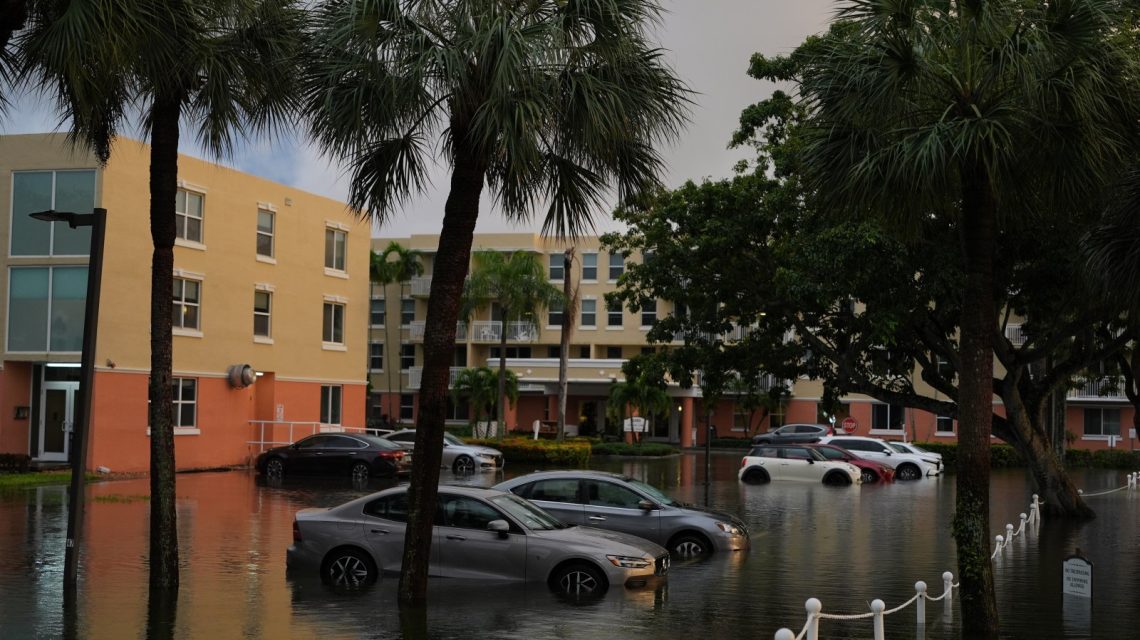
Florida has expanded its state of emergency to include approximately 6.5 million more people across seven additional counties. The decision comes as severe rainfall and flooding continue to impact large areas of the state. The executive order, issued Wednesday, now includes Broward, Duval, Flagler, Miami-Dade, Monroe, Putnam, and St. Johns counties. This expansion brings the total number of affected counties to 21, with Miami now at the center of the emergency area.
Governor Ron DeSantis initially declared the state of emergency on November 2 for Brevard, DeSoto, Hardee, Highlands, Indian River, Martin, and St. Lucie counties. The list was expanded two days later to encompass Glades, Hendry, Lake Okeechobee, Palm Beach, Seminole, and Volusia counties. Currently, an estimated 11.24 million people are potentially impacted by these conditions.
“As heavy rainfall impacts communities across Florida, the state is continuing our active response efforts,” DeSantis said in a statement on X. “Florida will continue deploying resources and working alongside local partners to protect residents and respond to the needs of impacted communities.”
Flood warnings have led to the closure of schools, parks, libraries, and government buildings. Nearly a third of Florida is now at risk of flooding.
Florida has mobilized hundreds of National Guardsmen, state guard members, and emergency personnel to aid in the response. This emergency response will remain in effect until January 1. The state has also set up over 6,000 feet of flood control barriers, prepared shelters, and positioned emergency resources like generators and vacuum trucks for quick deployment.
Submerged State
South Florida has faced torrential rains throughout November, with some areas receiving over 12 inches in just two days. More rainfall is expected, with forecasts predicting 3 to 7 inches for the east coast and up to 10 inches in localized spots. The floodwaters pose a threat to homes near the St. Johns River, which has reached major flood stages.
AccuWeather meteorologist Alex Sosnowski stated, “The rain may stop, but the flooding could last for months. Water drains so slowly through the St. Johns River system that some homes and businesses could remain inundated into 2027, even if no additional rain falls through the end of the year.”
Ongoing slow-moving rains and thunderstorms are expected to add more water to already saturated areas, increasing the risk of further flash flooding. On Wednesday, the South Florida Water Management District issued an emergency order to authorize pumping in affected regions to mitigate flooding risks.
Emergency Powers
The Executive Order 26-227 grants state officials significant powers to expedite response and recovery efforts. The flooding has impacted critical infrastructure such as roads, airports, and schools. The head of the Division of Emergency Management has been named State Coordinating Officer, with powers to invoke mutual aid agreements, seek federal assistance, and command state and local personnel.
DeSantis has authorized the activation of the Florida National Guard and the Florida State Guard as needed. The order also permits the Transportation Department to waive tolls, close roads, and adjust size and weight limits for emergency supply vehicles. Pharmacists can dispense 30-day emergency refills of medications, and certain hospital pharmacies are allowed to provide up to 72 hours of medicine.
Additionally, state and local agencies are exempted from drone-use restrictions to assist in documenting damage, supporting rescue operations, and preventing danger. Public schools and government buildings may be converted into shelters if necessary. The order took effect immediately and is set to expire 60 days later on January 1, 2027, unless extended.
 Advocates Attend NWSL Championship Amid Tensions
 U.S. Army Plans Controlled Detonation of Explosives in Iowa Despite Court Order
 Significant Events in Chicago’s History on November 22
 Carmelo Anthony’s Defense of Baltimore Sparks Controversy
 Thanksgiving Remembrance: A Family’s Tribute to NYPD Detective Wenjian Liu
 Developments in Bar-tailed Godwit’s Migration, Trump-Cornyn Dispute, and Measles Resurgence