A pastor from Florida has been convicted for involvement in a plot to assassinate Haitian President Jovenel Moïse. This plan, according to prosecutors, was devised in South Florida and partly financed using U.S. COVID-19 relief funds to pay hired mercenaries.
Christian Emmanuel Sanon, who holds dual Haitian and American citizenship, was found guilty on eight federal charges after a nearly eight-week trial in Miami. He faces a potential life sentence at his sentencing scheduled for February 10.
Prosecutors stated that conspirators initially aimed to make Sanon the president of Haiti, offering him agreements for security and infrastructure contracts. They later switched their support to another candidate just weeks before the assassination.
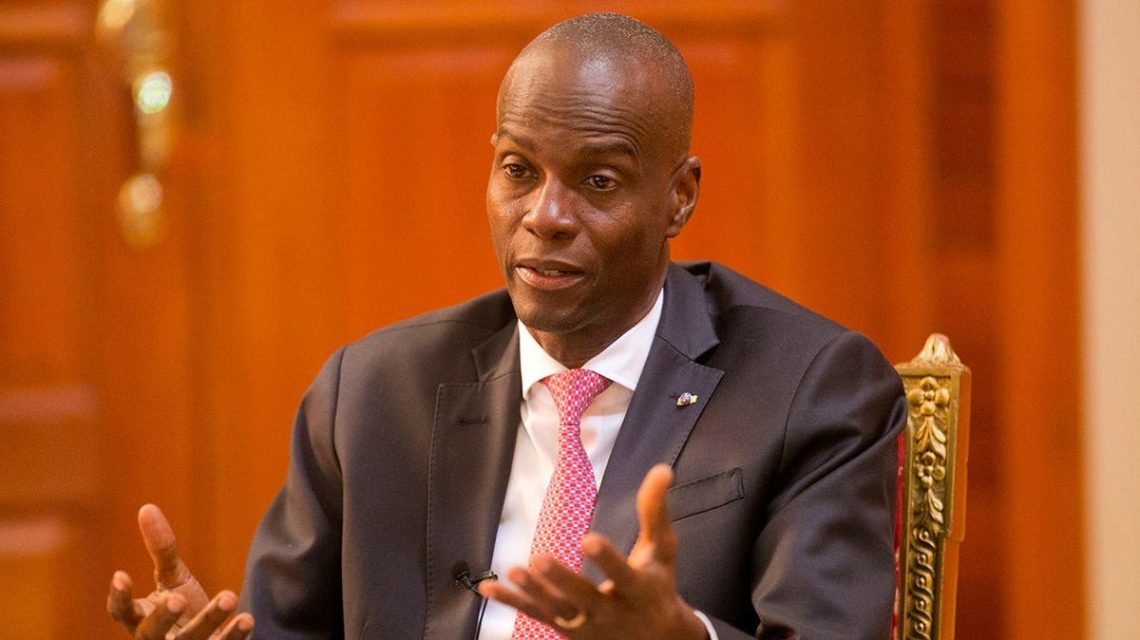
Haiti’s President Jovenel Moise speaks during an interview at his home in Petion-Ville, a suburb of Port-au-Prince, Haiti, Feb. 7, 2020.
A team, mostly comprising retired Colombian soldiers, attacked Moïse’s residence on July 7, 2021. The assault resulted in the death of President Moïse and injuries to his wife. Sanon denied any knowledge of a murder plot, claiming that he had been in touch with individuals interested in replacing the Haitian leader but that they had chosen another candidate before the assassination took place.
Sanon’s attorney, Zeljka Bozanic, expressed disappointment over the verdict and announced plans to appeal.
Prosecutors linked South Florida as the center for planning and funding this conspiracy, which included about two dozen foreign mercenaries. Part of the funding source was federal pandemic relief money meant for aiding businesses.
Fox News cameras captured the arrival of 18 suspects in the 2021 killing of Haitian President Jovenel Moise out of Haiti on Sunday, Sept. 20.
The indictment noted the plot commenced in April 2021, when Sanon, a former Haitian senator, and several U.S. businesspeople met in South Florida. The group agreed that if Sanon became president, he would allocate contracts for infrastructure, security, and military equipment to two companies based in Florida.
These companies initially recruited around 18 Colombian ex-soldiers for Sanon’s security. Over several months, conspirators secured weapons, body armor, and attempted to build connections with Haitian gangs.
Haiti’s President Jovenel Moise, center, leaves a ceremony marking the 215th anniversary of revolutionary hero Toussaint Louverture’s death, at the National Pantheon Museum in Port-au-Prince, Haiti, April 7, 2018.
Prosecutors presented evidence showing Sanon’s involvement in fundraising for the conspiracy and in coordinating travel and accommodation arrangements in Haiti for himself and others.
By June 2021, plot participants decided Sanon lacked the constitutional prerequisites and popular support to assume the presidency, thus, shifting their allegiance to another candidate.
Sanon is one of twelve people convicted in the U.S. investigation regarding Moïse’s assassination, with more than forty individuals charged and five already serving life sentences. Four others were convicted in May for conspiring to kill or kidnap Moïse, providing material aid for the plot, and violating the U.S. Neutrality Act, also facing potential life sentences.
Haiti has been without a president for over five years since Moïse’s assassination, deepening political instability in the nation. A presidential election is planned for the following year.
 Highlights from Recent News Stories
 Pentagon Releases Declassified UFO Files with Intriguing Plans and Reports
 Sinaloa Violence Erupts After Capture of Cartel Leader
 Trump, Xi, and Putin’s Shenzhen Meeting Echoes Historic Yalta Conference
 Trump Urges Nvidia to Reinstate Huang Amid Controversy
 Canada and China Strengthen Trade Relations Amid U.S. Tensions