France is grappling with a significant intelligence lapse after authorities misjudged the scale of nationwide protests that led to riots and looting. The chaos has prompted President Emmanuel Macron to initiate a security review. High-ranking officials have acknowledged the police lost control in several cities, and some government members have offered to resign due to their inability to foresee the disorder.
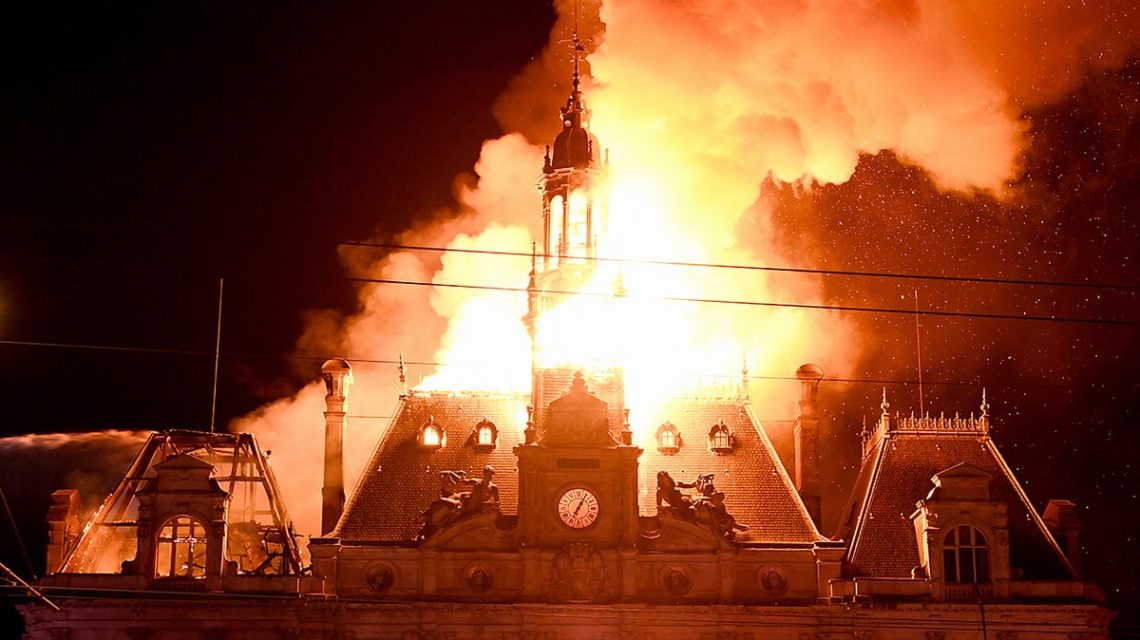
The Interior Ministry reported around 550,000 people joined 110 marches nationwide on Saturday, far exceeding an initial estimate of approximately 200,000 demonstrators. Organizers claimed the turnout reached 800,000. Cars were set ablaze, over 1,500 stores were either ransacked or destroyed, and public buildings were attacked. In Limoges, a 19th-century city hall was breached and torched, leading to the collapse of its roof.
By Monday, the Louvre was closed as students blocked its entrances, prolonging the disruption over another day.
This photo shows a fire destroying the city hall in Limoges during ongoing protests against the ‘high cost of living’ on October 17, 2026. The protests combined various groups like former ‘Yellow Vest’ activists, students, climate activists, and farmers.
After weeks of student protests, France now faces broader demonstrations concerning living costs, signaling potentially difficult times as the presidential election approaches. A police source indicated that about 200,000 could participate, with 40,000 expected in Paris.
During an Interministerial Crisis Meeting at the Interior Ministry, Prime Minister Sebastien Lecornu joined other ministers as authorities scrambled to stem public discontent. Despite deploying 60,000 police, gendarmes, and security personnel, nearly 1,000 enforcers were wounded, and 2,400 people were arrested. Authorities estimate around 3,000 businesses were damaged.
As crowds grew, police were stretched thin across multiple locations as rioters vandalized storefronts, set fires, and clashed with security forces. Some city authorities failed to prevent looters from advancing into commercial areas.
Interior Minister Laurent Nuñez acknowledged, “Yes, Saturday, in certain large cities, we lost control.” He admitted an oversight in anticipating the demonstrators’ numbers and the violent groups exploiting the unrest. Nuñez offered his resignation, which Macron refused, opting for a review of the intelligence failures. Justice Minister Gérald Darmanin commented on the oversight, pinpointing flaws in intelligence and challenges with monitoring the ultra-left.
The unruly demonstrations were not without prior warnings. Protests initially emerged in September, originating from student dissatisfaction over teacher shortages and poor school conditions. The movement expanded to include teachers, labor unions, and other groups concerned about rising living costs and declining public services.
Violence had already started infiltrating demonstrations with fires set at schools and cars, leading to clashes with riot police. French intelligence services were aware of the shift.
A protester watches a fire burn in Paris on October 17, 2026. The unrest emerged from protests against the high cost of living.
Authorities underestimated the protests’ trajectory, which morphed into urban violence, attributing its roots to the hard-left France Unbowed party. However, little foresight was shown in the escalating events.
The protests encompassed students, trade unionists, and Yellow Vest veterans under a “convergence of struggles.” While many marched peacefully, smaller rioter groups broke away to loot, set fires, and engage the police. The situation has fueled political contention over immigration, with right-wing leaders across Europe drawing connections between migration policies and the violence.
President Donald Trump criticized France’s migration policies while Macron’s government cited ultra-left militants and criminals as exploiting the demonstrations. The events underscore a political battle reshaping France ahead of the 2027 elections, giving the right ammunition on issues of immigration, crime, and public order.
Images of burning buildings and disrupted social order have landed at a frail moment for the political landscape. With Macron unable to run in 2027, there is an open contest as immigration, security, and purchasing power emerge as central issues.
The riots have sparked debates on the causes—whether they stem from policing failures, economic grievances, or policy on immigration and integration—issues likely to influence France’s political discourse long after the unrest subsides.
For Macron’s government, the immediate question is why the security services, despite monitoring a volatile protest movement, still failed to foresee the extent of Saturday’s violence.
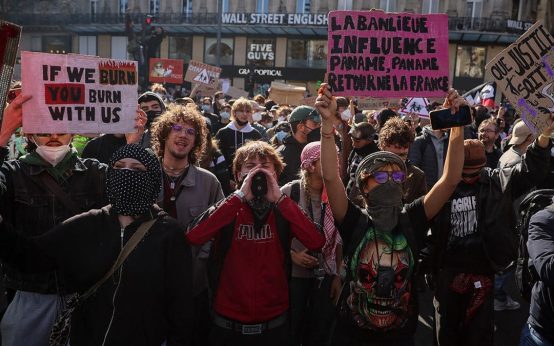 Macron Blames U.S. Iran Conflict for French Unrest
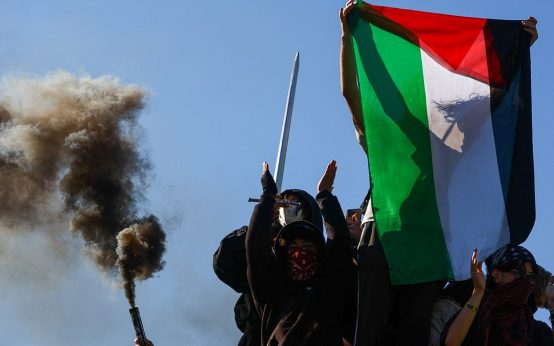 Unrest in France: Jewish Community Faces Challenges Amid Protests
 Formula 1 Plans Africa Grand Prix in Rwanda Amid Concerns
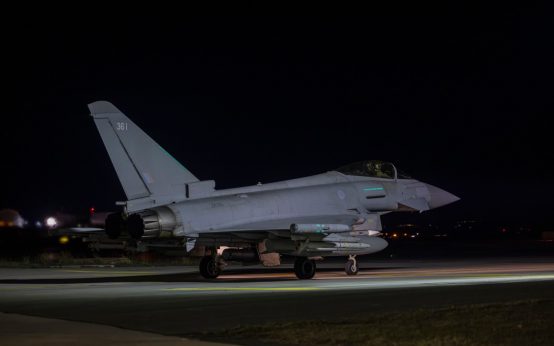 U.K. Deploys RAF Typhoon Jets to Saudi Arabia
 Prince Harry Stresses Reconciliation Amid Royal Family Rift
 Animal Cruelty Verdict for Canadian Tourist and Political Developments in International and U.S. Politics