President Donald Trump’s executive order to rename Lake Ontario as “Lake America” has brought attention to geographic names, particularly those sharing his surname. This move raises questions about renaming landmarks, especially in Canada.
Canadian Procedures for Renaming Landmarks
In Canada, provincial and territorial naming authorities, along with the Geographical Names Board of Canada, approve geographic names. The federal government manages the Canadian Geographical Names Database, but most naming decisions start at the provincial or territorial level with input from local communities and Indigenous groups.
Trump-Named Geographical Features in Canada
Across Canada, several geographic features bear the Trump name, including lakes, islands, and waterways, mostly in Ontario and Newfoundland and Labrador. These features are not typically linked to Trump or his family and predate his political career.
Examples include the Trump Islands in Notre Dame Bay, Newfoundland, now an unpopulated site for recreational visits. Ontario features Trump Lake, East Trump Lake, West Trump Lake, and Trump Creek, listed in the federal database.
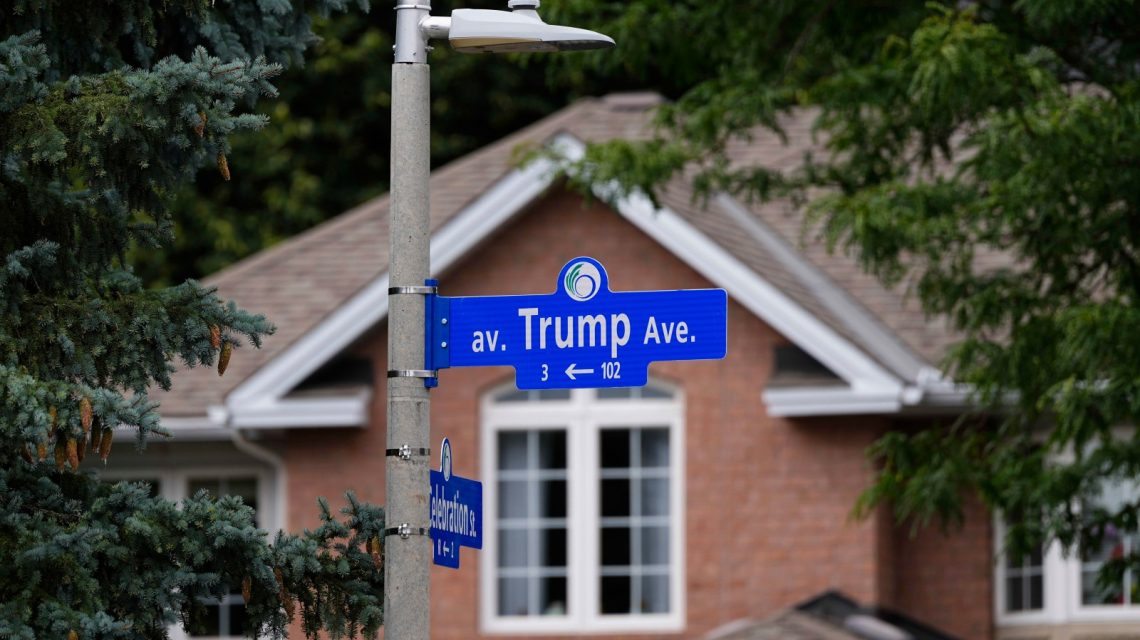
Renaming Trump Avenue in Ottawa
Ottawa officials are considering renaming Trump Avenue, a street named after Trump as part of a New York City-themed neighborhood. Ottawa Councilor Riley Brockington aims to change the name, citing embarrassment over its current designation. In 2021, a divided vote among residents halted a previous attempt.
Suggestions for new names include “Taco Avenue,” referencing an acronym about Trump’s policies on tariffs, and others like Pelosi Avenue and Obama Avenue.
Renaming Lake Ontario
Trump’s executive order directed federal agencies to use “Lake America” instead of “Lake Ontario” in U.S. documentation. The order emphasizes the lake’s historical and commercial importance to the U.S. However, the name change only affects federal agencies. Trump cannot enforce this name on Canada or private entities.
Canadian Prime Minister Mark Carney opposed the change, noting “Ontario” originates from the Wendat word “Ontari’io,” meaning “the lake is beautiful, the lake is big.” Canadian officials maintain the original name outside U.S. federal jurisdiction.
This U.S. directive follows similar attempts, such as proposing “Gulf of America” for the Gulf of Mexico. The Trump administration’s actions underline the significant strategic and economic role the Great Lakes play in U.S. national interests.
Despite escalating diplomatic tensions, most Trump-named landmarks in Canada are long-standing. They bear no direct connection to the former U.S. president.
 Chinese Viewers Perceive American Political Chaos as a Lesson in Civics
  Midterm Polls Show Competitive Senate Races
  Trump’s Approval Among Non-MAGA Republicans Declines Amid Economic Concerns
  Ukraine’s Satellite Access Crisis: Starshield Restrictions and Implications
  Hurricane Trudy Approaches Mexico’s Pacific Coast
  Cook County MWRD Election: A Closer Look